In today’s business landscape, customer expectations have shifted dramatically. They expect fast, accurate, and seamless support across channels, whether that’s chat, email, social media, or voice. For PeopleOps professionals who manage the human side of service organisations (hiring, training, tools, workflows), the move toward automation via chatbots and AI agents isn’t just an IT project, it’s a strategic lever for blended human-plus-machine teams.
In this article we’ll explore:
- What “automating customer support” really means (with chatbots and AI agents)
- The key problems and pain points that organisations face today
- How to think about solution design and implementation (people, process, technology)
- Real-world scenarios showing how it works
- How PeopleOps plays a pivotal role in making automation successful
- Pitfalls, risks and best practices
1. What does “automation with chatbots & AI agents” mean?
Let’s clarify the terminology and capability levels.
Definitions & spectrum
- Chatbots: computer programs that interact with customers via predefined flows or rule-based logic (for example: “What is your order number? → show status”). These have been around for many years.
- Conversational AI bots: next generation chatbots that use natural language processing (NLP) and understand more flexible user inputs. They may surface knowledge-base articles, ask clarifying questions, and handle more varied queries.
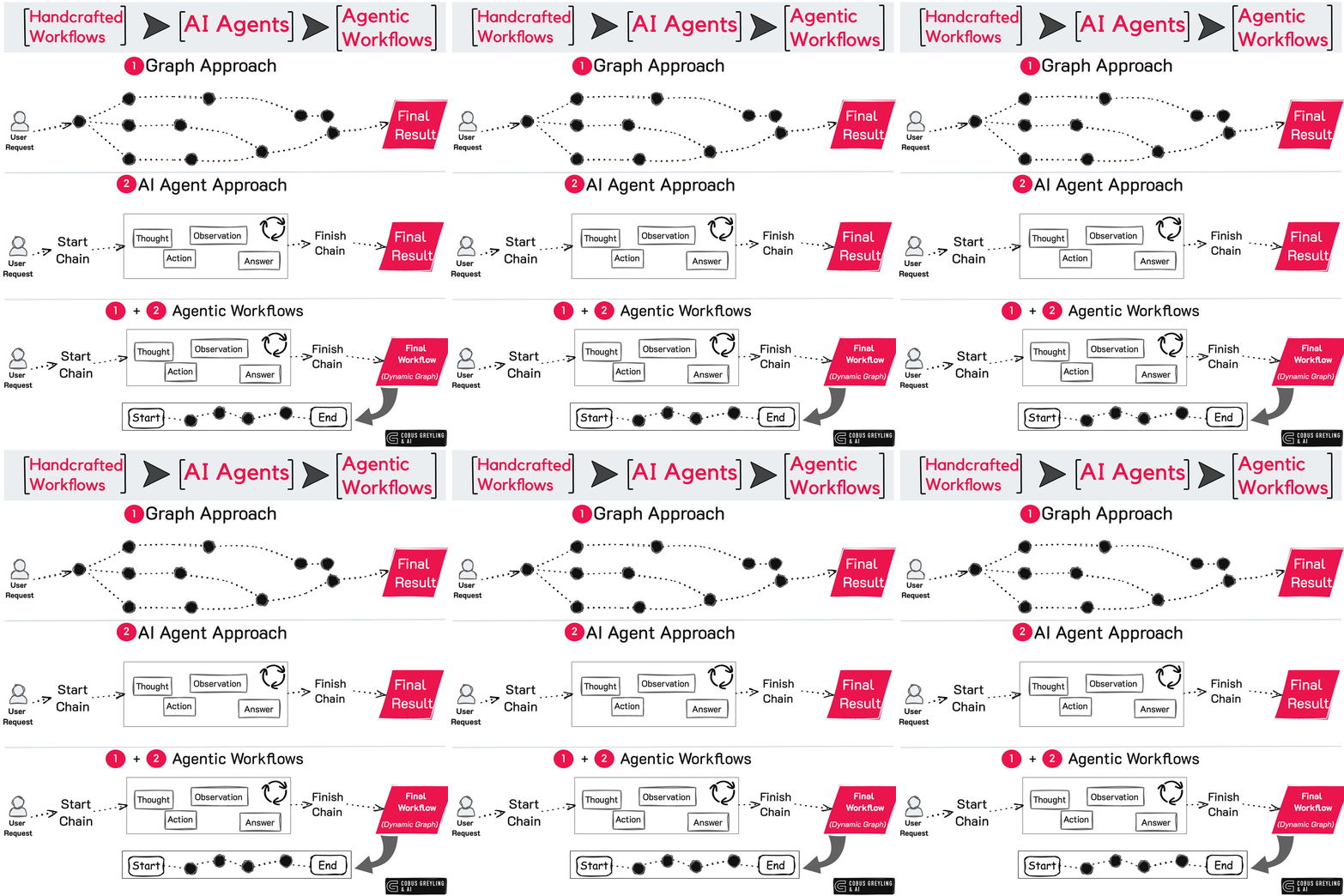
- AI Agents (or Agentic AI): a more advanced class of automation where the system not only converses but takes action, orchestrates workflows, resolves tasks end-to-end and may access multiple systems. For example: detect intent, open a ticket, update CRM, send a follow-up, or escalate if needed. Research and industry commentary point to this as the next big wave. Zendesk+2everworker.ai+2
- Omnichannel and orchestration automation: The automation is not just in chat windows but spans channels (voice, email, social) and integrates with backend systems, knowledge management, routing, analytics. The Future of Commerce+1
Why this matters now
- According to industry data: by 2025, 80 % of customer service / support organisations are expected to use generative-AI to improve agent productivity and overall experience. The Future of Commerce
- AI is replacing legacy chatbots: modern “AI agents” can handle more complex issues, learn over time, and operate closer to human-agent capabilities. Zendesk+1
- There is cost, speed and scalability pressure: one forecast suggests conversational AI may cut contact-centre agent labour costs by US$80 billion by 2026. Crescendo.ai+1
2. The problems & pain points in customer support today
For PeopleOps professionals, it’s essential to understand the pain points the business is trying to solve, because automation isn’t about cool tech, it’s about solving real issues.
Problem / pain point #1: High volume of repetitive, low-complexity queries
Many support teams spend a large proportion of time answering queries that are easy to categorise: order status, password resets, FAQ responses, billing inquiries. This leads to:
- Agent boredom / low engagement
- High cost per interaction
- Longer wait times for customers when the queue builds
Automation via chatbots can take over a large slice of this “simple work”, freeing human agents for more complex tasks.
Pain point #2: Customers expect 24/7 and channel flexibility
Digital-native customers expect to get help outside office hours, across chat, mobile, social and voice. If support is limited to office hours, fixed channels, you risk customer frustration. Automation enables always-on coverage and channel consistency.
Pain point #3: Inconsistent quality and long resolution times
As queries become more complex, human agents often face fragmented systems (CRM, knowledge base, legacy IVR), poor data connectivity, and no unified view. This slows handling, reduces first-contact resolution, and erodes customer satisfaction. AI agents promise to unify context, fetch data, drive correct workflows and reduce Average Handling Time (AHT). arXiv+1
Pain point #4: Scaling support while controlling cost
As businesses grow, the cost of adding more human agents, training them, and maintaining quality rises. Automation offers a way to scale capacity without linear headcount growth.
Pain point #5: Agent burnout and turnover
Heavy volumes, repetitive work, fragmented tools and performance pressure lead to burnout and churn in support teams. Automation helps reduce monotony, improve agent experience, and let human agents focus on higher-value tasks (empathy, escalation, strategic issues).
3. How automation helps, solution architecture and PeopleOps role
Here we describe how automation with chatbots/AI agents works, and how PeopleOps must engage.
Key components of an automation solution
| Component | Description | Why it matters for PeopleOps |
|---|---|---|
| Intent & entity recognition engine | The system uses NLP to understand what the customer wants (intent) and extract key information (entities) | Determines how many queries can be automated vs forwarded to human agent |
| Knowledge base & decision logic | A repository of FAQs, workflows, policies; decision logic maps customer-inputs to actions or responses | Maintains content quality, ensures consistency |
| Chatbot / conversational interface | The front-end where customers interact (web chat, mobile, social, voice) | Determines the experience and service channel strategy |
| AI Agent / orchestration engine | The “brain” that triggers workflows: e.g., open ticket, update system, escalate, ask human help, provide follow-up | Enables deeper automation beyond simple responses |
| Routing & escalation rules | When automation fails or cannot resolve, the system hands off to human agent with context | Ensures seamless hand-over, prevents failed interactions |
| Analytics & continuous learning | Data on conversations, failed automations, hand-offs, customer satisfaction; feedback loops to refine models | Critical for continuous improvement, training and optimisation |
The PeopleOps role: aligning people, process, tech
Here’s how PeopleOps can contribute:
- Workforce planning & role redesign
- Determine how many human agents are needed once automation takes over a portion of workload
- Redesign roles: e.g., “human agents” focus on complex issues, empathy, escalation, while “bot-fleet” handles standard items
- Upskill/support staff: training agents to work alongside bots, interpret bot-hand-over, and manage exceptions
- Change management & culture shift
- Automation can create fear (“the bot will replace me”), PeopleOps needs to manage communications, emphasise augmentation not replacement
- Build new workflows collaboratively: involve agents in designing bot-rules, escalation logic, knowledge base curation
- Promote a culture of continuous improvement and learning (both bots and humans evolve)
- Talent development & training
- Train agents on new tools (dashboard, bot-handover, analytics)
- Develop soft-skills: empathy, problem-solving, escalation management
- Establish certification/skills-mapping: e.g., “Bot-escalation specialist”, “Customer empathy lead”
- Performance metrics & incentives
- Define KPIs that reflect the human-plus-machine model: e.g., bot-resolution rate, hand-over quality, customer satisfaction post-handover
- Adjust incentive structures: reward agents who effectively work with, not compete against, bots
- Track agent engagement, satisfaction, retention: ensure automation improves rather than degrades human experience
- Governance, ethics, quality
- Ensure transparency in bot behaviour, escalation rules, customer disclosures
- Monitor for bias, errors, customer frustration with bots
- Ensure human oversight: PeopleOps defines “when bot must hand-over to human”, monitors escalations, sets governance
Implementation roadmap, people-centric view
Here’s a simple phased approach:
- Phase 1: Explore & pilot
- Map typical query volumes, types, agent workload
- Identify high-volume, low-complexity tasks suitable for bot automation
- Pilot a chatbot on a limited channel (e.g., website FAQ)
- Collect data (volume, hand-over, customer sentiment)
- Involve agents from day one to co-design flows
- Phase 2: Expand automation + refine
- Expand to other channels (mobile, social, voice)
- Introduce AI agent-capabilities: workflow orchestration, backend integrations
- Update role definitions, train agents for escalations
- Update KPIs & incentives
- Phase 3: Full integration & human-plus-machine operation
- Bots/AI handle major portion of simple queries; human agents handle exceptions and high-value work
- Continuous learning loops: monitor failed bot sessions, HA-time, CSAT, agent satisfaction
- PeopleOps partners with tech to refine models, update knowledge base, and redesign roles over time
4. Real-world scenarios
Let’s look at a few concrete examples to illustrate how it all works.
Scenario A: E-commerce retailer handling order status and returns
Problem: A busy e-commerce company receives thousands of “Where is my order?” and “I want to return/exchange” queries daily. Wait times are high, agents are overwhelmed, resolution inconsistent.
Solution:
- Deploy chatbot on website/mobile that asks: “Order number?”, “What would you like: status or return?”
- Instant lookup in order management system → display status, shipping info.
- If user chooses return/exchange: bot triggers workflow: verify eligibility, show options, generate RMA label, confirm by email.
- If condition falls outside automated scope (e.g., damaged item, complex refund), bot hands off to human agent with full context.
- Agents now focus on “exception cases” (damage, complaints, escalations).
Impact:
- Reduction in volume of simple queries to human agents
- Improved first-response time and customer satisfaction
- Agents report higher job satisfaction by working on more interesting issues
Scenario B: Telecom provider using AI agents for multi-step workflows
Problem: A large telecom operator has multiple products (mobile, broadband, billing) and customers often call with issues that span accounts, billing, upgrades. The agent has to switch systems, ask many questions, causing long AHT (Average Handling Time) and low first-contact resolution.
Solution:
- AI agent sits behind the scenes: when a customer starts chat or voice, the system recognises intent (“upgrade plan”, “bill dispute”) + retrieves customer profile.
- The AI agent triggers sub-task workflows: verify eligibility, check plan inventory, quote upgrade, schedule technician, update billing.
- The human agent (or the AI agent directly) executes or hands off accordingly. All relevant systems are unified.
- Over time, the AI agent gets smarter via continuous feedback loops and agent-in-the-loop models. arXiv+1
Impact:
- Shorter AHT, higher first-contact resolution, improved CSAT
- Human agents handle fewer system-switching tasks and can spend time on customer relationships
Scenario C: Global multilingual support with omnichannel automation
Problem: A B2B SaaS company with global customers needs support in many languages, across chat, email, in-product widget. Hiring multilingual agents is expensive and scaling is tough.
Solution:
- Chatbot platform supports 40+ languages, deployed across website chat widget, in-app help, WhatsApp.
- The bot resolves common Tier-1 issues: password reset, onboarding questions, subscription renewal.
- Complex Tier-2/3 issues (technical bugs, custom integrations) are routed to human agents; bots capture context beforehand.
- PeopleOps defines roles: multilingual-bot supervisors, human escalation specialists, knowledge-base authors.
Impact:
- Global scale support at a lower cost base
- 24/7 coverage supported by bots
- Agents specialise in high-value tasks, reduced burnout
5. Why PeopleOps should champion this automation
As PeopleOps professionals, you are uniquely positioned to ensure that chatbot/AI-agent initiatives succeed, not just technologically, but in people, culture, and performance.
Strategic alignment with business goals
- Automation isn’t just cost-cutting: it’s about improving customer experience (CX), enabling agent productivity, and building a future‐ready workforce.
- By aligning automation goals with business metrics (CSAT, first-contact resolution, agent turnover), PeopleOps ensures the initiative drives value.
Employee experience matter
- Agents must feel empowered, not replaced. PeopleOps must design roles, training, and career paths where bots augment humans.
- Monitoring agent sentiment, adjusting incentives, creating development opportunities become key.
Change leadership & capability building
- Introduce new competencies: “bot-trainer”, “AI-workflow designer”, “escalation analyst”.
- Build cross-functional teams: PeopleOps, IT, customer service, knowledge-management must collaborate.
Metrics and success measurement
- Beyond cost savings: track agent engagement, customer feedback on bot interactions, rate of bot-hand-over, bot-escalation effectiveness.
- PeopleOps must embed these into performance dashboards and continuous improvement practices.
Governance, ethics & workforce planning
- Decisions about when automation should hand off to humans are partly cultural: trust, transparency, fairness. PeopleOps needs to own the governance framework.
- Workforce planning: as automation scales, headcount, roles, skills will shift. PeopleOps must forecast and manage that transition.
6. Pitfalls & best practices
Automation offers huge benefits but only if done well. Here are key pitfalls to avoid and best practice guidance.
Pitfalls to avoid
- Over-promising the bot: If the chatbot fails frequently or hands over without context, customers get frustrated.
- Ignoring hand-over design: Without smooth escalation to humans, automation can become a pain point rather than a support.
- Neglecting human agents: If agents are sidelined or not trained to work with bots, morale and service quality suffer.
- Data & knowledge-base deficiencies: Bots will only be as good as the knowledge they draw from. Poor documentation = weak bot outcomes.
- Lack of measurement and learning loop: Without metrics and continuous optimisation, performance stagnates.
- Ignoring channel coverage or language/culture: Particularly in global operations, missing languages or local nuance will degrade experience.
Best practice guidelines
- Start small, iterate fast: Pilot in one channel, measure results, then scale.
- Define clear scope of bot automation: What types of queries the bot handles vs escalates must be explicit.
- Design for seamless hand-over: Context must flow from bot to human agent without customers repeating themselves.
- Invest in knowledge-management: Maintain and curate FAQs, workflows, rule-sets.
- Train human agents for augmented work: Agents should understand bot logic, review bot-hand-overs, refine the system.
- Use analytics and continuous feedback loops: Track metrics (bot resolution rate, escalation rate, CSAT, AHT), analyse failures, update models.
- Communicate and manage change proactively: Hire/training, role changes, clarity of purpose (automation augments humans) matter.
- Maintain transparency and ethics: Make it clear to customers when they are interacting with a bot, ensure human backup, and monitor for bias or error.
- Ensure omnichannel consistency: The experience should be smooth across chat, social, voice, in-app support.
- Plan workforce transition: As bots take over more “simple” tasks, design new roles and growth paths for human agents.
7. How PeopleOps can measure success
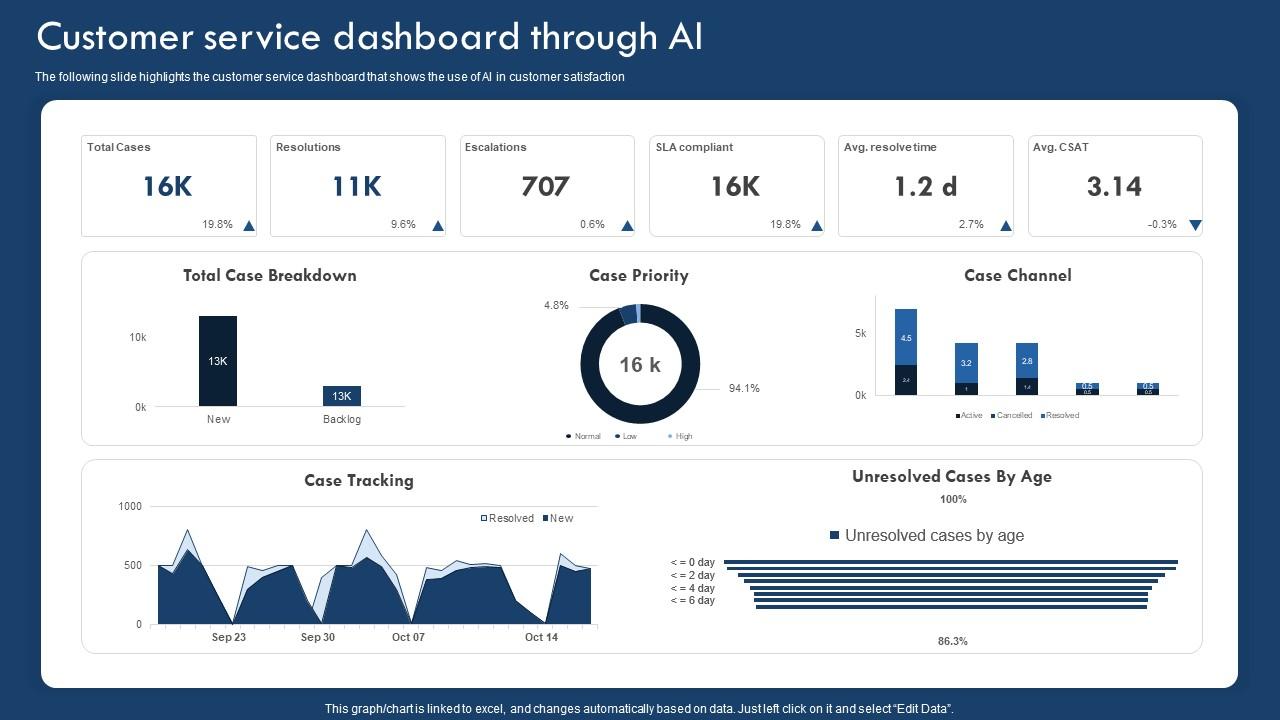
Useful KPIs for a combined human-plus-automation support model:
- Bot resolution rate: % of customer interactions resolved by bot/AI without needing human hand-over.
- Escalation hand-over quality: % of escalated conversations where context was carried properly, and human agent needed minimal clarification.
- Average handling time (AHT) reduction for human agents.
- First-contact resolution (FCR) improvement.
- Customer satisfaction (CSAT/NPS) for bot & human interactions separately.
- Agent engagement/turnover: Did automation improve agent workload, satisfaction, retention?
- Cost per contact reduction.
- Time to implement/update knowledge base: How fast the system adapts.
- Training & role-transition metrics: Number of agents retrained, new roles created, % of workforce aligned with automation strategy.
PeopleOps should partner with customer-service leadership and analytics to build dashboards around these.
8. Final thoughts
Automating customer support with chatbots and AI agents is no longer optional, it’s becoming a core part of modern service operations. But the real differentiator isn’t the technology alone, it’s how well the human-technology interface is designed, how well your team is prepared for change, and how deeply you embed the new way into your culture, training, governance and metrics.
For PeopleOps professionals, your role is strategic. You’re not just helping roll out automation, you’re leading the redesign of human work, enabling agents to be more productive, happier and higher-value. You’re bridging customer-experience goals with workforce planning, role design, capability development and culture.
Leave a Reply