In today’s fast-paced business world, organisations look to automation not just as a nice-to-have, but as a critical enabler of growth, productivity and competitive edge. However, automations that aren’t built for scale or worse, that break under increased load or complexity become liabilities rather than assets. In this article for a PeopleOps audience, we’ll explore how to build scalable automations that don’t break, what pain-points people face, and how a Partner like us (PeopleOps) can help you succeed.
Why scalability in automation matters
As businesses grow, change and face increasing expectations, automation programs must keep pace. If they don’t, you’ll see a range of problems:
- Automations built as “one-off” solutions become brittle and difficult to maintain.
- Maintenance overhead skyrockets.
- New processes or exceptions get added manually, defeating the purpose of automation.
- The automation stack becomes a back-office burden rather than an enabler.
- Risk of operational failure or business continuity issues increases.
According to industry research, scalability is not just about handling more volume, it’s about flexibility, reliability and maintainability. Rootstack+2Testsigma Agentic Test Automation Tool+2
For example: UiPath’s white paper emphasises that scaling large‐scale automation requires a shift in mindset from isolated projects to an enterprise model: “painting an inspiring automation vision”, “investing early in skills” and establishing governance. Blanc Labs
From a PeopleOps / business-ops perspective, this means that automation must be aligned to operational workflows, HR processes, compliance, employee experience and business metrics not just technical scripting.
Common pain points when automations break
From our work with clients and the market at large, here are typical pain points:
- Hard-coded logic and fragile scripts
Many initial automations embed hard-coded values (file paths, environment names, user-IDs). When any of these change, new version, new environment, they break. “Avoid hard-coded values … Use configurations, paths, variables and structured files as much as possible.” Testsigma Agentic Test Automation Tool+1 - Lack of process visibility / exceptions not accounted for
If you automate a “happy path” but ignore exceptions, your automation will fail when reality deviates. According to research you must map variations and exceptions before you scale. Skan - Automation sprawl without governance
When you start a dozen scripts in different teams, with no common standards, you end up with inconsistent tooling, duplicate logic, different naming, and no one owns maintenance. Skan+1 - Tooling and infrastructure not built for scale
You may pick an RPA or automation tool that works for 10 transactions/day, but when you hit 1,000/day or 10,000/day, the architecture fails. According to analysis: “Scalable tools that integrate … centralised bot management, API integration capabilities … monitoring and analytics” are required. Skan+1 - Maintenance overhead is high
When you scale but don’t design modularity, you’ll spend most of your time managing broken scripts, updating logic for exceptions, dealing with flaky automations. For example, the test automation world emphasises “modular design”, “configurable data management”, “parallel execution” to scale efficiently. Ranorex+1 - Lack of metrics / ROI transparency
Scaling is not just about doing more; it’s about doing more with value. Without metrics such as “volume handled”, “error rate reduction”, “cost per transaction” you cannot prove the business case. Skan+1
Four-phase roadmap for building scalable automation
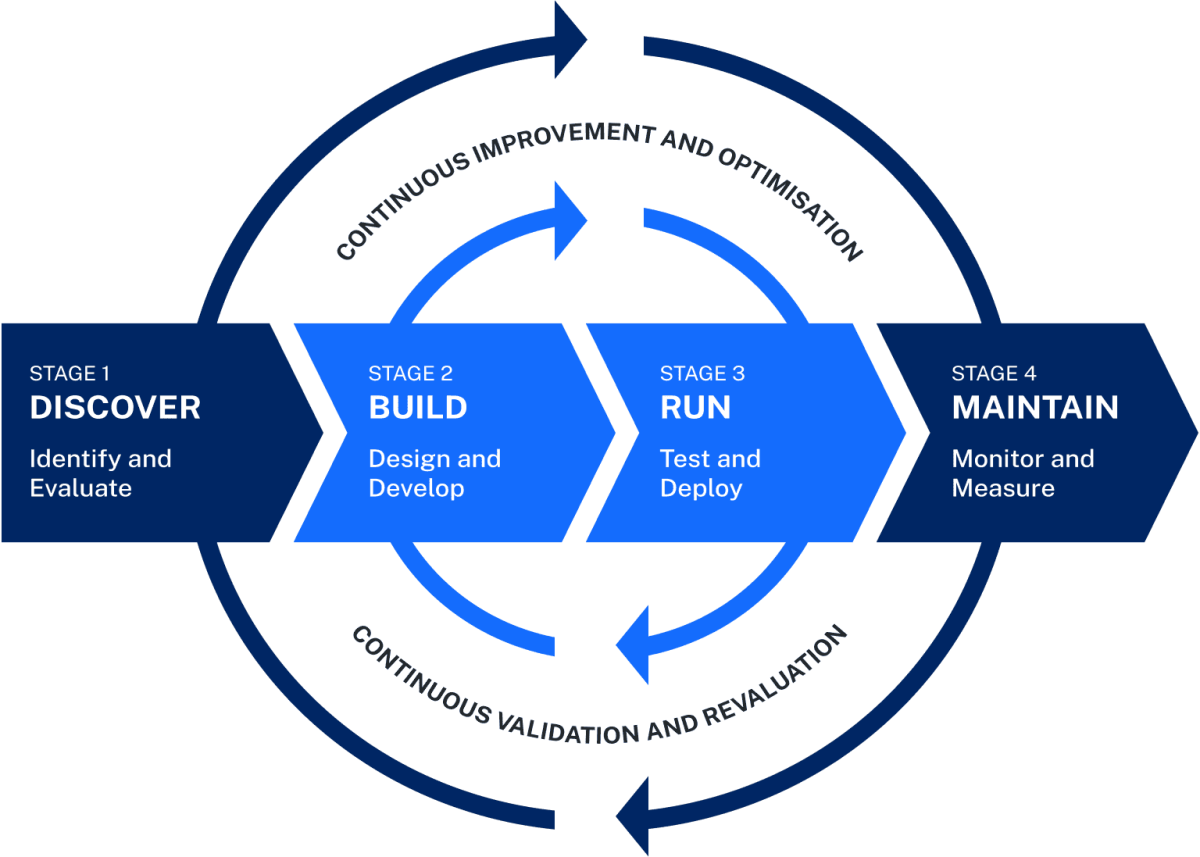
Here’s a practical roadmap you can follow. This is rooted in vendor best practices and real-world scenarios:
| Phase | Focus | Key Outcomes |
|---|---|---|
| Phase 1 – Foundation / Pilot | Pick a smaller number of high-impact processes, set up governance, tool-selection, team roles. Automation Anywhere | Proof of value, governance framework, initial toolkit. |
| Phase 2 – Production & Stabilise | Move from pilot to production, monitor, handle exceptions, build monitoring & alerting. Skan+1 | Stable automations, fewer failures, established ownership. |
| Phase 3 – Scale Out | Expand beyond initial processes, enable parallel automations, reuse modules, optimise. Ranorex | Larger coverage, modular assets, improved efficiency. |
| Phase 4 – Continuous Improvement & Governance | Ongoing review, metrics, optimisation, governance embedded. Blanc Labs+1 | Automation-capable organisation, low maintenance cost, high reliability. |
Real-world scenario
Consider a mid-sized firm’s HR onboarding process. Initially they automate “new joiner data entry into HRIS” as a pilot. They hard-coded department names (HR, Sales, Marketing). Six months later, they add “Customer Success” division. The script fails.
If instead they had designed the automation to read a department list from a configuration file, parameterised the division, and built exception handling for “other” departments, then when scaling to 100 new joiners/month, it will hold up.
Key design principles for automations that don’t break
Here are actionable design principles you should apply. These apply whether you’re automating HR-admin tasks, finance workflows, or cross-team orchestrations.
1. Modularity and Reusability
Break your automation logic into reusable modules. For example: a “load new joiner data” module, a “create user account” module, a “send welcome email” module. According to test automation research: “Use modular test design … reusable components … eliminates duplication …” testRigor+1
Benefit: when one module changes (e.g., login process changes), you only update it once rather than multiple scripts.
2. Parameterisation and Configuration
Avoid hard‐coded values. Use configuration files or environment variables for environment names, file paths, department lists, thresholds, etc. This makes your automation adaptable and less prone to break when something changes. Testsigma Agentic Test Automation Tool+1
3. Exception Handling & Variations
Automations must assume things go wrong. Map out alternate workflows, handle errors gracefully (retry logic, logging, alerting), and ensure the automation doesn’t fail silently. The earlier stage of process transparency emphasises capturing variations and exceptions. Skan
4. Monitoring, Logging & Alerting
You cannot “set and forget” automation. You need real-time visibility, how many transactions processed, error rates, performance, queues. Logging allows debugging. Without monitoring, you won’t know when automations degrade. testRigor+1
5. Scalability in Tooling and Architecture
Select automation platforms that support load, parallelism, integration, centralized management of bots or workflows. When using orchestration, APIs, micro-services, ensure your stack can handle growth in volume, users, exceptions. Skan+1
6. Governance, Ownership & Lifecycle Management
Ensure you have a defined process: who owns which automation, how changes are managed, how you retire old automations, how you track technical debt. Without this, your automation estate becomes chaotic. Blanc Labs+1
7. Metrics and Continuous Improvement
Define metrics: cycles saved, cost per transaction, error rate, automation coverage, time to deploy new workflows. Regularly review and optimise. According to recent guidance: “key metrics for scalable process automation: number of processes automated, time to deploy new bots, ROI across automation portfolio.” Skan
How PeopleOps helps you build scalable automations
At PeopleOps, our role is bridging the gap between technical automation teams and business / operational stakeholders so your automations deliver real business value, reliably, and at scale. Here’s how we can support:
- Process discovery & mapping: We help you map end-to-end workflows, capture variations and exceptions (pain point: lack of process visibility).
- Tool & Vendor Evaluation: Helping you pick automation platforms (RPA, workflow orchestration, API integrations) that support scalability, reuse, and enterprise needs.
- Governance and Centre of Excellence (CoE) setup: Establishing automation standards, defining ownership, version control, change management, maintenance guidelines.
- Designing for scale: Applying modular architecture, parameterisation, robust error handling, monitoring, logging, metrics from day one.
- Change management & training: Ensuring business teams adopt the automation solutions, understand exceptions and know how to escalate when things don’t behave.
- Continuous improvement cycles: Periodic reviews of automation estate, retirement of obsolete workflows, optimisation of performance, tracking ROI.
Example offering
Imagine your HR operations function: onboarding, off-boarding, role changes, system access, compliance tasks. We’d help:
- Map those workflows end-to-end, identify repetitive tasks, data flows, exceptions.
- Prioritise high-volume, high-impact processes for automation (e.g., new joiner setup).
- Architect reusable modules (e.g., account creation module, email notification module).
- Configure the automation engine so that when new divisions or locations are added, the system adapts via config rather than new hard-coded scripts.
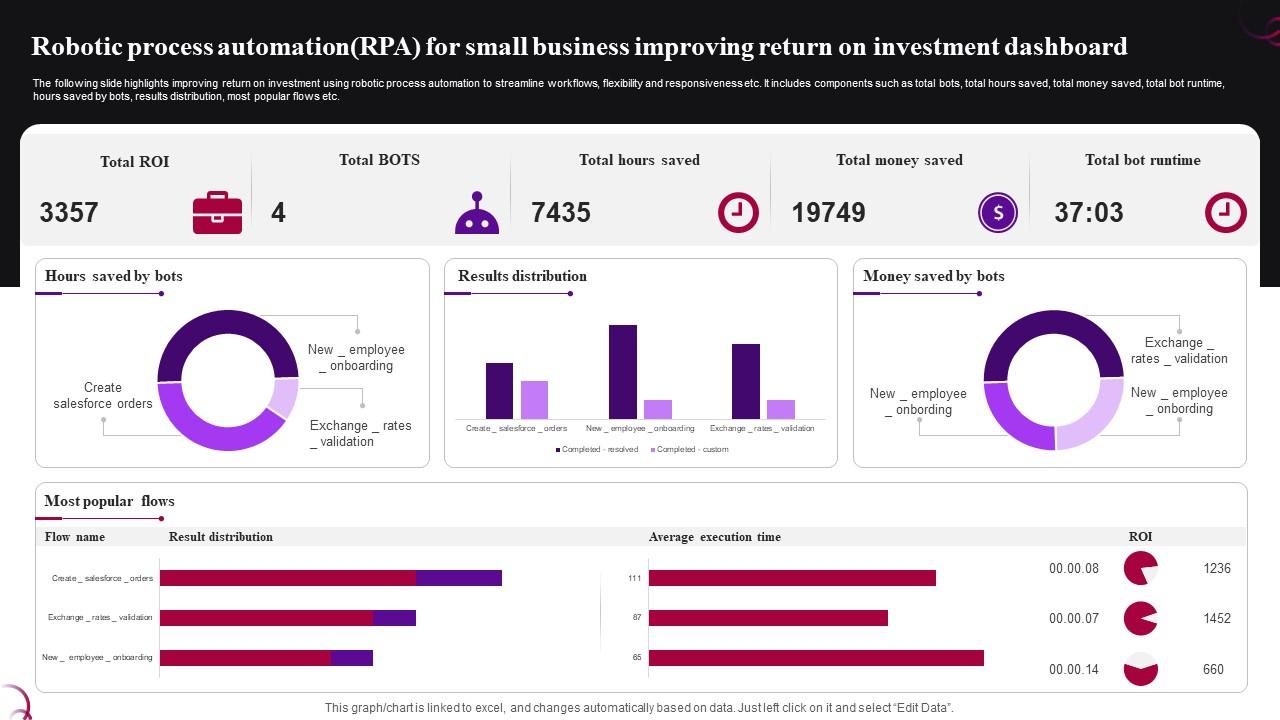
- Set up dashboards showing how many new joiners processed, how many errors flagged, how many manual hand-offs remain.
- Governance: assign an Automation Owner in HR; schedule bi-monthly review to surface changes (e.g., new local laws, new systems).
- Over time, scale to off-boarding, role changes, access rights reviews without reinventing each process every time.
Common Mistakes to Avoid
- Starting with low-impact or complex processes: Trying to automate a highly variable process before you’ve built the foundation can fail. One vendor warns about the “pilot trap” (endless proofs of concept, never production). Skan+1
- Not building for exceptions: Automating only the ideal scenario is dangerous.
- Skipping monitoring & metrics: “If you cannot measure it, you cannot improve it.”
- Lack of ownership / governance: Without someone owning the automation lifecycle, things degrade.
- Tooling mismatch: Picking a tool purely because it was “free” or “popular” without checking scale, integration, future needs.
- Hard-coding and poor modularity: Leads to brittle automations.
- Neglecting maintenance: Automation isn’t one-and-done; business changes, systems change — your automation must adapt.
- Ignoring change management: Business users must trust automation and know backup paths if it fails.
Conclusion
In summary: building scalable automations that don’t break is about more than scripting tasks; it’s about architecting for growth, maintainability and business alignment. It’s about picking the right tools, establishing governance, building modular reusable layers, monitoring proactively and continuously improving.
For PeopleOps leaders, the automation conversation must span both technical architecture and business operations: we must ensure automations serve the people side (employees, HR, compliance) and the operational side (efficiency, cost, reliability).
If you’re thinking about scaling your automation programme, whether HR, Finance, Ops, IT, now is the time to design it with scale, flexibility and future-proofing in mind. At PeopleOps we’re ready to help you map the journey, define the blueprint and build a robust automation estate you can trust.
Leave a Reply