

In today’s business-environment where automation, artificial intelligence (AI), and machine-learning (ML) dominate conversations, one recurring question in PeopleOps and technical operations is: if machines can do a task, do humans still matter? The answer is a resounding yes and the concept of human-in-the-loop (HITL) systems is central to explaining why.
In this article for PeopleOps professionals (and for the business leaders you support), we’ll explore what human-in-the-loop systems are, why they matter (especially from a PeopleOps, workforce and process standpoint), the pain points and challenges you’ll face, and how PeopleOps can help organisations implement HITL systems so that both automation and human talent work together rather than compete.
What are Human-in-the-Loop Systems?
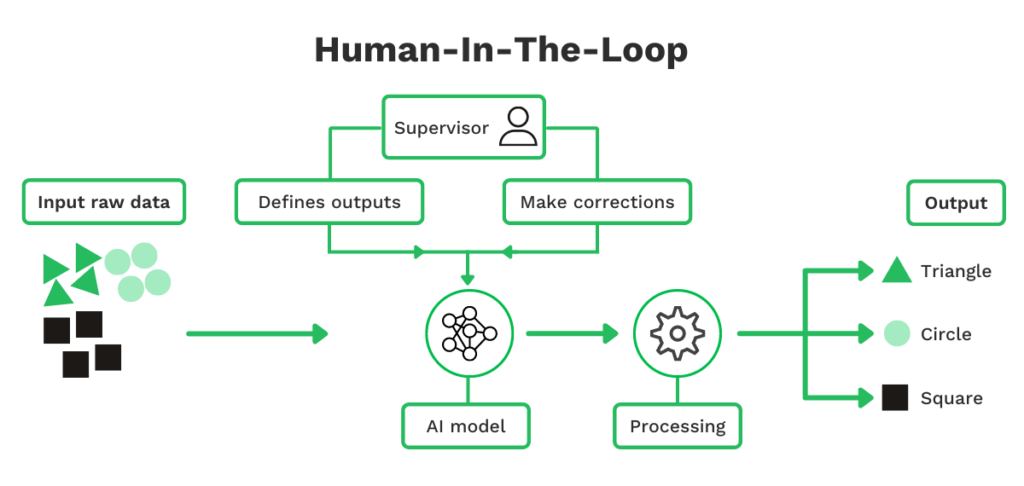
At a high level, “human-in-the-loop” (HITL) refers to automation or AI systems in which human judgement, intervention or oversight is intentionally built into the process. Rather than a fully autonomous system that makes decisions and acts without human input, a HITL system actively includes people at one or more decision points.
The concept in more detail
- According to a recent industry blog, HITL automation “incorporates humans into automated systems that require a certain level of decision-making to take place.” SS&C Blue Prism
- Another source puts it this way: “It’s a partnership, a feedback loop where machine efficiency meets human judgment, and where automation is guided by values, not just logic.” WorkOS
- Importantly, in highly regulated industries the use of HITL helps ensure automation is “safe, auditable and compliant” by adding human decision-points where risk, ethics or complexity demand it. Multimodal
Why the “loop” part matters
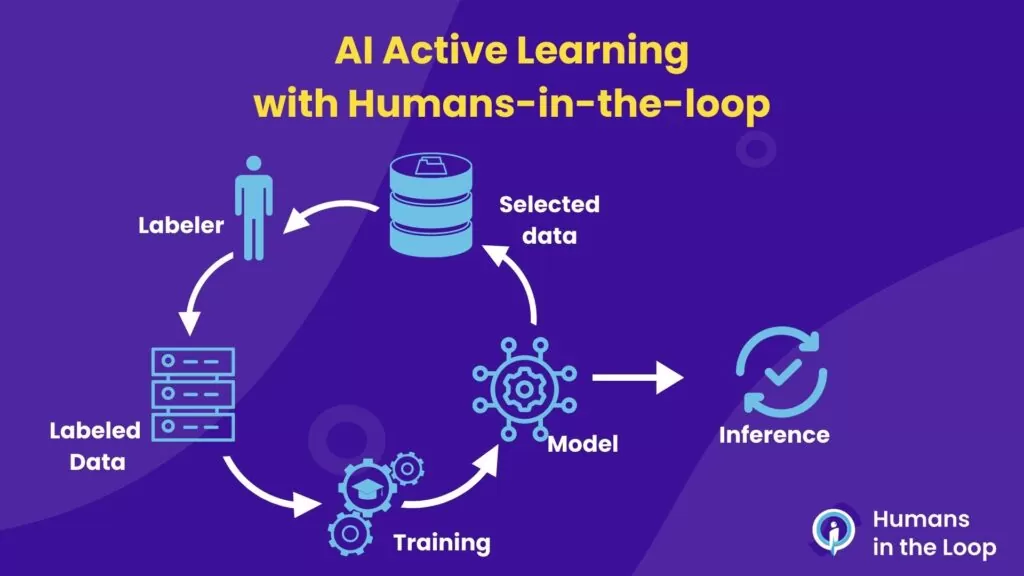
The “loop” implies ongoing involvement: humans are not just “once at the start” and then gone; they intervene, review, correct, guide, provide feedback, help the machine learn, and so on. In other words: automation without human feedback may be efficient, but it typically isn’t resilient or trustworthy.
A quick example
Imagine a customer-service chatbot that handles most routine queries. The bot handles “What is my account balance?” or “How do I reset my password?” but when a customer asks a nuanced question, e.g., “This charge looks fraudulent and I don’t recognize the merchant”, the system hands the query over to a human agent. That human reviews the context, intervenes, and resolves the case. This is a HITL example: automation + human judgment.
Why People Still Matter in Automation (and What PeopleOps Should Care About)
From a PeopleOps standpoint, the shift to automation often raises concerns: What happens to employees? Are we replacing humans with bots? Will people feel redundant or lose engagement? HITL systems offer a way to augment rather than replace, drawing on human strengths. Here are key reasons why humans still matter.
1. Context, nuance & empathy
Machines are great at rules, repeatable processes, patterns. But humans excel at contextual judgment, dealing with ambiguity, interpreting nuance, and applying empathy.
- For example: In customer service, understanding the emotional state of a caller or the subtlety of a situation often needs human insight.
- In compliance, legal or regulatory tasks, humans can assess whether something is technically correct and ethically acceptable. As one blog says: “Subjective analysis … is critical, such as when assessing … customer satisfaction or emotional responses.” Camunda+1
PeopleOps must recognise that humans bring what machines lack: social intelligence, creativity, intuition. If we remove them entirely, we risk automation that is “technically correct” but fails human stakeholders (employees, customers) in meaningful ways.
2. Improving decision-quality & reducing risk
HITL systems allow organisations to combine machine speed + consistency with human oversight.
- One vendor writes: “This collaboration results in better-informed decisions that are both efficient and effective.” Camunda
- In regulated industries, human involvement reduces compliance, reputational and operational risks. Multimodal
For PeopleOps, this means that instead of focusing purely on “how to automate”, we also need to consider “how to embed human checks” so that the workforce is empowered to add value where automation alone is insufficient.
3. Learning loops & continuous improvement
When humans are in the loop, they provide feedback that the system uses to get better. Machine-learning models improve, workflows get refined, exceptions reduce.
- For instance: “Automated systems can learn from themselves over time. When humans are in the loop, they can make their own contributions… thereby enabling algorithms to become more powerful more quickly.” ctwo.com
From a PeopleOps viewpoint this means: staff can become co-creators of the automation journey. Rather than automating them out, you’re upskilling them as automation collaborators.
4. Trust, transparency and ethics
Automation often evokes fear: bias in AI, lack of transparency, decisions with no human accountability. HITL helps mitigate that.
- Recently: “The most powerful, trustworthy and impactful AI systems … are the ones that work with us.” WorkOS
For organisations, implementing HITL means more transparent workflows, clearer human accountability, and stronger ethical safeguards. For PeopleOps, this touches directly on fairness, employee trust, and how people feel about automated processes in their work.
5. Employing humans where they add the most value
Rather than using humans for repetitive tasks (which automation can handle), HITL models free humans to work on tasks where they add unique value. This is both efficient and motivating from an employee-experience perspective.
For PeopleOps: You can frame automation as an opportunity for staff to shift toward higher-value tasks: judgment, creativity, relationship, strategy.
Pain Points & Challenges in Implementing HITL Systems
Of course, HITL is not a panacea. There are real trade-offs, risks and execution challenges. Here are some to keep in mind, plus how PeopleOps can help navigate them.
Challenge 1: Determining where human intervention is needed
One of the common mistakes is either too much human involvement (which defeats automation) or too little (which risks errors). The question: “Which decision points must a human review?”
- As one article points out: “‘Human-in-the-loop’ means systems that require direct human involvement. … However … this can create bottlenecks, especially in fast-paced environments.” Trackmind Solutions
From PeopleOps: you can help map processes, identify where human judgment is critical (risk/priorities/complex context) and where full automation is safe. That helps optimise the human-machine balance.
Challenge 2: Training, skills and change management
Humans in the loop need to be prepared. They need training on how to interpret machine output, how to intervene, how to handle exceptions. That is a change management task.
For PeopleOps: plan for skill-development, define new roles (e.g., “bot-supervisor”, “exception-handler”), communicate how automation + human collaboration works so employees don’t feel their role is being diminished.
Challenge 3: Bottlenecks and scalability
Human review slows things down; if too many tasks get escalated to humans, you lose efficiencies.
- From the research: “When decisions carry significant ethical or legal consequences … but scalability may suffer.” Trackmind Solutions
PeopleOps must work with process/tech leads to monitor escalation rates, set thresholds for automation confidence levels, ensure human workloads remain sustainable.
Challenge 4: Accountability and role confusion
Who is responsible when something goes wrong? The machine? The human reviewer? The process designer? Without clarity, things can fall through the cracks.
- One academic paper states that “human comparative responsibility … is often low, even when major functions are allocated to the human.” arXiv
For PeopleOps: ensure roles, responsibilities, and escalation paths are clearly defined. Build audit-trails, decision-logs, and ensure human reviewers understand their accountability.
Challenge 5: Avoiding “automation complacency”
When humans trust too much in machines, or step away from active engagement, blind spots emerge.
- As highlighted: “With humans on the loop, there is a risk of ‘automation complacency’. … If operators grow too reliant on the system, they may fail to intervene in time during critical situations.” Trackmind Solutions
PeopleOps needs to help maintain human vigilance, through training, periodic reviews, job rotation, “red-team” style checking of automation outputs.
How PeopleOps Can Lead & Support HITL in Organisations
Given the benefits and challenges above, here are practical steps from a PeopleOps lens to help your organisation implement and embed human-in-the-loop systems effectively.
Step 1: Align on strategy and define roles
- Work with leadership to define the why: “Why are we using HITL rather than full automation?” Is it compliance? Quality? Employee experience?
- Define new or evolving roles: “automation-reviewer”, “exception-handler”, “machine-collaborator”.
- Update job descriptions, KPIs and performance frameworks to reflect human-machine collaboration rather than pure task automation.
Step 2: Map processes & identify human-touch-points
- Conduct a process audit: which steps are fully automatable? Which steps still require human judgement, empathy, or anomaly-handling?
- Using the audit, build decision-trees: where machine output triggers escalation to human; where human review feeds back to improvement loop.
- From a PeopleOps angle: involve employees early in this mapping, their knowledge of what tasks require nuance is invaluable.
Step 3: Train & up-skill your people
- Build training programmes that equip staff to: interpret machine outputs, know when to intervene, follow escalation protocols, provide feedback to automation systems.
- Make the shift from “I am being replaced” to “I am being elevated”: show how their role evolves.
- Encourage cross-skilling so employees don’t get stuck only in “monitoring mode” (which can become disengaging).
Step 4: Monitor workloads & escalation rates
- Track metrics: how many cases the machine handles, how many escalate to humans, time to resolution, error-rates with/without human review.
- If escalation rates are too high, reconsider thresholds or further train the machine. If too low, ensure humans are not being bypassed when they should step in.
- Use PeopleOps insights: monitor human reviewer workload, burnout risks, job satisfaction, to ensure sustainability.
Step 5: Embed continuous improvement & feedback loops
- Encourage human reviewers to log exceptions, edge-cases, and provide feedback. Automation models can learn from this.
- On the PeopleOps side: treat this as a development opportunity for employees, they’re not just “checking work”, they’re improving the system.
- Regularly review the interplay: Are humans adding value? Are machines producing too many false positives/negatives? Refine.
Step 6: Uphold ethics, transparency and trust
- Communicate to employees: how is automation used? When do humans intervene? How is their judgement valued?
- Create audit-trails: human decisions in loops should be logged for traceability.
- From a PeopleOps viewpoint, preserve fairness and transparency in how automation + humans interact, avoid situations where humans feel the machine is “above them” or their role is ambiguous.
Real-World Scenario: HITL in Action
Let’s walk through a real-world example to illustrate how human-in-the-loop plays out and what PeopleOps can do.
Scenario: Invoice Processing in a Financial Services Firm
Context: A mid-sized financial services company automates its invoice processing using Optical Character Recognition (OCR) + Intelligent Document Processing (IDP). The system reads invoices, extracts data, matches them against purchase orders, flags mismatches and then posts payments.
Pain-points:
- The automation handles ~80% of invoices perfectly, but roughly 20% contain anomalies: missing fields, unusual vendor names, suspicious amounts.
- If no human review occurs, wrong payments or duplicate payments could slip through, risk of financial loss/regulatory audit.
- The staff feel their role is becoming “just monitoring bots” — disengagement risk.
HITL Implementation:
- The process is redesigned so that: all invoices go through the automated system; the system assigns a confidence score. If confidence ≥95%, direct-post. If <95% or flagged for unusual items, the invoice is handed to a human reviewer (the “loop”).
- Reviewer checks the flagged invoice, adds context (e.g., vendor name change, special discount), approves or corrects. Their decision is logged and fed back into the model (learning loop).
- The job role of “Invoice Automation Reviewer” is created, with KPIs focusing not purely on volume but on quality of review, reduction of false positives and continuous improvement.
- PeopleOps leads training for reviewers: understanding what the bot flagged, how to review efficiently, how to log context for training the system.
- Metrics tracked: % of invoices auto-processed, % escalated, error rate post-review, reviewer engagement scores.
Outcome:
- Automation handles ~90% over time as the model improves (due to feedback). Human reviewers focus on exceptions, higher-value judgement work.
- Employees report higher satisfaction: their role is more about decision-making, not mechanical checking.
- Financial error rate drops, audit trail improves, compliance risk reduces.
Key Takeaways for PeopleOps
- Automation does not mean “humans out”. The most effective automation strategies embed humans where they add most value.
- PeopleOps should lead the narrative: show employees how their roles evolve in HITL systems, not disappear.
- Focus on skills, culture and process: train people to work with machines, not just be bypassed by them.
- Ensure process design includes human-touchpoints, review workloads, manage escalation rates and maintain ethical transparency.
- Use real-data, monitor, iterate: HITL is not a “set and forget” automation— it’s a dynamic human-machine partnership.
Final Thoughts
As organisations embrace automation, it can be tempting to imagine a future where machines replace human labour entirely. But the reality, especially for knowledge work, PeopleOps, compliance, customer experience, is that humans still matter. The concept of human-in-the-loop systems reminds us that automation is not about removal of humans but augmentation of human capability.
From a PeopleOps perspective this is a powerful shift: you’re not just automating processes, you’re evolving your workforce, your culture and your value proposition. By embedding HITL design, you ensure that your organisation gains efficiency, quality, trust, and human-responsiveness. And your people feel valued, skilled and engaged in the journey rather than left behind.
Leave a Reply