
Introduction
In today’s fast-moving business environment, the pressure on revenue teams is intense. Sales cycles are getting longer, buyers are more informed, and competition is tougher. According to the 2025 sales report by Outreach, lead qualification now ranks as the #1 seller challenge. Outreach+2Outreach+2
That’s where sales automation, powered by artificial intelligence (AI), steps in. By leveraging AI to qualify leads and automate follow-up interactions, organisations can free expensive sales resources for high-value tasks (relationship building, closing deals) and ensure no lead falls through the cracks.
In this article we’ll walk through:
- The problem landscape (pain points) in lead qualification and follow-ups
- What AI-driven sales automation means, and how it works
- Real-world scenarios and benefits
- Implementation considerations for PeopleOps, RevOps and Sales Ops teams
- How your organisation (and PeopleOps) can help drive this transformation
- Risks, challenges and key success factors
Let’s dive in.
1. The Problem Landscape: Why Lead Qualification & Follow-Up Are Such Bottlenecks
Pain Points
Some of the common issues companies face:
- Huge volume of leads, low signal: Marketing generates many inbound leads; but sales teams often struggle to determine which prospects are actually qualified. Manual qualification is time-consuming and inconsistent.
- Delayed follow-ups: Studies show when follow-up is delayed, conversion rates drop significantly. With longer sales cycles (many 1–2 quarters) it becomes harder to keep leads engaged. Outreach+1
- Mis-prioritisation: Sales resources chasing low-value leads while high-potential leads get less attention. As one article notes: “AI driven lead qualification goes beyond traditional scoring by continuously analysing real-time data.” Nooks
- Repetitive tasks & manual work: Sales reps and SDRs spend a large percentage of time on administrative or non-selling activities (research, data cleanup, repetitive outreach) instead of closing deals.
- Inconsistent messaging and follow-up cadences: Without automation, follow-up timings vary, touchpoints are missed, and personalised outreach at scale becomes hard.
- Data silos and disconnected tools: When the sales tech stack is fragmented, automation suffers. AI needs unified, clean data to work effectively. Outreach+1
Why the Top-of-Funnel Matters More Than Ever
According to the same 2025 report from Outreach:
“Lead qualification is the #1 seller challenge in 2025” and teams using AI tools cut research and personalisation time by 90%. Outreach
This means that the stage before the first meaningful meeting is where most deals stall or get lost: identifying, engaging and qualifying the right leads quickly and efficiently.
2. What is AI-Driven Sales Automation (for Lead Qualification & Follow-Ups)
Definitions & Key Concepts
Lead qualification involves evaluating a prospect’s fit (company size, industry, budget, need) and engagement (website visits, intent signals, content downloads) to decide whether to move them into “sales ready” status. Traditional lead scoring methods use manual rules. Wikipedia+1
Sales automation refers to the use of software to automate repetitive or rule-based tasks in sales workflows: e.g., sending follow-up emails, scheduling calls, updating CRM fields. AI-driven means the system uses machine learning or predictive analytics, adapts over time, and makes smarter decisions. monday.com+1
How AI Changes the Game
Here’s what AI brings to the table:
- Predictive lead scoring & prioritisation: AI models analyse historical data + real-time behaviour (engagement, firmographics, intent signals) to identify which leads are most likely to convert. Outreach+1
- Automated engagement & follow-up cadences: AI can trigger sequences of outreach (email, chat, SMS, voice) personalised to each prospect, at optimal times. SuperAGI+1
- 24/7 research & triage: AI “agents” or bots can engage website visitors, ask qualifying questions via chat, update CRM records and route leads to human sales reps when ready. B2B Rocket+1
- Data-driven coaching & insight: AI can highlight which outreach messages are working, suggest next best actions, track when timing matters most. For example, deals closed within 50 days have a 47% win rate vs ~20% beyond that. Outreach
- Scalability + consistency: With AI you can handle large volumes of leads without adding headcount. Outreach says “teams using AI cut research and personalisation time by 90%”. Outreach+1
A Typical Workflow
Let’s visualise a workflow for lead qualification + follow-up using AI:
- Marketing passes inbound leads into CRM or marketing automation tool.
- AI module enriches lead with firmographic + intent data (company size, role, website behaviour).
- AI model triggers a lead-score and classifies leads: e.g., “high-value – send to AE”, “medium nurture”, “low – archive”.
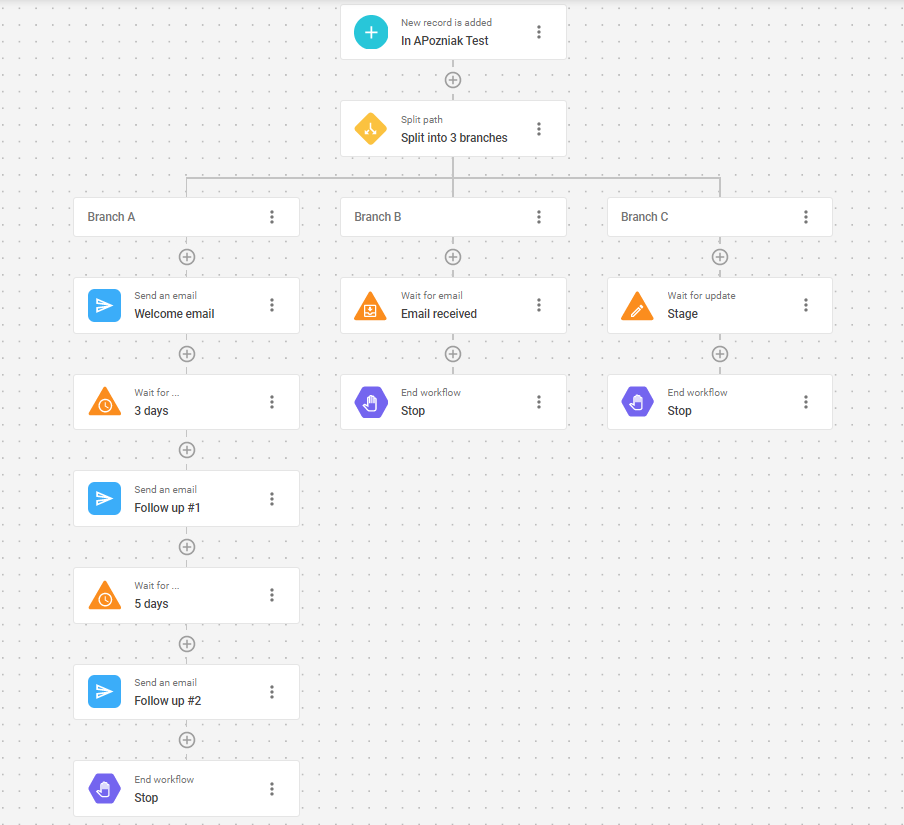
- For “nurture” or “medium” prospects, a sequence auto-starts:
- Chatbot or email immediately engages (< 5 minutes).
- AI monitors responses (opens, clicks, replies, website revisit).
- When behaviour crosses threshold, AI escalates to human sales rep with notification + background summary.
- Follow-up tasks (email, SMS, call reminders) are automated with personalisation (name, company details, previous interactions).
- Sales rep picks up when the lead is warm, focuses on building relationships and closing.
- Data from every touch is logged in CRM, fed back into AI model for future learning.
In this way, the system ensures no good lead is left unattended, human effort is focused on high-value work, and the process is consistent, measurable and scalable.
3. Real-World Scenarios & Benefits
Scenario 1: SaaS startup with small SDR team
Imagine a SaaS business with two SDRs and limited budget. They receive 500 inbound leads per month, but many are unqualified (wrong company size, region, budget) and follow-ups slip.
By introducing an AI lead-scoring tool plus an automated follow-up sequence:
- The AI filters out leads that don’t meet ICP (ideal customer profile) quickly.
- Chatbot engages website leads after hours, so no lead falls through while SDRs sleep.
- SDRs focus on “high-value” leads flagged by AI, reducing time wasted by, say, 40%.
- Automated follow-ups (e.g., email 1, email 2 after 24 h, SMS if no reply) ensure timely outreach, improving conversion rate.
According to a recent guide, AI-sales automation helps startups compete with larger companies by handling tasks like lead scoring and email follow-ups, freeing teams to focus on closing deals. monday.com
Scenario 2: Enterprise B2B company with long sales cycles
An enterprise deals business finds its sales cycle stretching 3-6 months, buying committees large, many stakeholders. The #1 challenge: lead qualification at the top of funnel. Outreach+1
They deploy a unified AI platform to:
- Enrich leads with intent signals (downloads, site visits, topic interest).
- Predict which accounts/contacts are ready for engagement.
- Automate follow-ups through multiple channels (email, LinkedIn, voice).
- Monitor lead behaviour and automatically escalate when certain triggers fire.
Benefits seen:
- Faster lead engagement (reducing time from introduction to first meeting).
- Higher win-rates for deals that engage quickly (within ~50 days the win-rate is 47% vs ~20% beyond). Outreach
- Scalability: fewer resources needed to manage top of funnel; human sellers more focused on strategy, relationships and complex negotiations.
Measurable Benefits
Some of the quantifiable results from research:
- The global sales automation market is projected to grow massively. monday.com
- According to the 2025 guide from Markets & Markets: automation can cut administrative work by up to 90% and boost qualified opportunities by ~33%. MarketsandMarkets
- AI usage leads to improvements in lead quality, efficiency, and scalability. Outreach+1
4. Implementation Considerations for PeopleOps / Sales Ops
As PeopleOps or the bridge between HR, Business Ops and GTM teams, you play a critical role in enabling this transformation. Here are areas to focus on:
a) Define your objectives & processes
- Map your current lead-qualification and follow-up workflows. Where are the bottlenecks (time delays, manual hand-offs, low engagement)?
- Set clear KPIs: e.g., time to first follow-up, lead-to-qualified conversion rate, number of touchpoints before engagement, cost per qualified lead.
- Determine your ideal customer profile (ICP), lead scoring criteria and segmentation. Ensure clarity on what “qualified” means for your organisation.
b) Data readiness & tech stack alignment
- Ensure your CRM and marketing automation systems have clean, accurate, enriched data. AI depends heavily on quality data. Outreach+1
- Avoid silos: unify data sources (website analytics, email engagement, CRM, third-party intent data).
- Evaluate your tech stack: Does your sales automation vendor integrate with CRM, marketing tools, chatbots? The trend is towards unified platforms rather than disconnected point solutions. Outreach+1
c) Select the right tool and vendor
When selecting an AI sales automation tool, consider:
- Capabilities: predictive scoring, multichannel follow-up, chat or bot engagement, escalation to human.
- Ease of use and adoption: tools must fit into sales workflow, not complicate it. Training and change-management matter.
- Data integrations and governance: How well does the tool integrate with your CRM/marketing system? Does it respect data privacy, compliance, consent?
- Scalability and analytics: Does it provide insights for optimisation? Can it scale with your growth?
d) Change management & PeopleOps role
- Communicate the change clearly to sales, SDR, and marketing teams: what changes, what stays the same, how this helps them.
- Provide training and support: many tools claim “no technical expertise required”, but adoption still needs enablement. Outreach
- Monitor impact and iterate: Review performance data regularly, gather feedback from sales reps, optimise sequences, revise scoring criteria.
- Align incentives: ensure the sales compensation model recognizes the right behaviours (engaging high-quality leads, following up in time) and doesn’t simply reward volume.
e) Implementation Roadmap
Here’s a sample phased roadmap:
- Phase 1: Pilot with one segment or region. Clean data, define ICP, implement basic AI lead scoring, automate first follow-up sequence.
- Phase 2: Expand across segments, refine scoring models, add multichannel follow-ups (email + chat + SMS).
- Phase 3: Move to full-funnel automation: enrich leads automatically, route to human reps when AI threshold is reached, implement analytics to optimise performance.
- Phase 4: Continuous learning: AI adapts over time, PeopleOps & Sales Ops review and iterate scoring, outreach messaging, workflows.
5. How PeopleOps Can Help
PeopleOps has a unique vantage point to drive success in this automated sales world:
- Talent & Hiring Strategy: Hire SDRs and sales ops people with an aptitude for using technology and analytics, not just cold-calling. Emphasise skills like data literacy, automation management, collaboration with AI tools.
- Training & Development: Provide ongoing learning programmes around AI-augmented selling. Ensure sales teams understand how to work alongside automation—not fear it.
- Cross-functional Collaboration: Work with Marketing Ops, RevOps and IT to ensure data flows, tool integrations, and process alignment.
- Culture & Change Management: Foster a culture of continuous improvement, data-driven decision-making and agility. Recognise and reward teams who adopt automation and human + machine workflows effectively.
- Performance Management: Adapt KPIs and performance dashboards to reflect the changed workflow (e.g., time-to-first-engagement, lead qualification rate, pipeline velocity) rather than just raw “calls made” metrics.
By doing so, PeopleOps can position automation as an enabler for productivity and growth rather than as a threat to jobs.
6. Risks, Challenges & Key Success Factors
Risks & Challenges
- Poor data quality: Garbage in → garbage out. AI models fail or produce wrong results with bad data.
- Mis-alignment of human + machine roles: If automation is seen as replacing humans entirely, or if reps ignore AI-qualified leads because “they don’t trust it”, adoption suffers.
- Over-reliance on automation: Personal human contact still matters, especially in complex B2B deals. Automation should empower, not replace, the relationship. B2B Rocket+1
- Tool-stack fragmentation: Using many disconnected tools creates silos, duplicates, and inefficiency. Trends show vendors moving to unified platforms. Outreach
- Privacy & ethical concerns: Using behavioural data, tracking intent signals, automated outreach, all must comply with privacy regulations and maintain trust.
Key Success Factors
- Clear process and ownership: Define who owns each step in the workflow (Marketing, SDR, AE, RevOps) and how AI fits in.
- Transparent scoring criteria: Reps should understand why a lead is qualified, what triggers escalation; this builds trust.
- Continuous monitoring and optimisation: Use data to refine lead-scoring models, outreach sequences, cadence timing.
- Human-first mindset: Automation should remove repetitive work so humans can focus on high-value tasks (strategy, relationships).
- High-quality data and enrichment: Invest time in cleaning and enriching data early.
- Strong change-management: Communicate benefits, provide training, create champions, address concerns.
Leave a Reply