In today’s hybrid world of technology and business, the term AI agent has surged into boardrooms, tech meet-ups and PeopleOps discussions alike. But what exactly is an AI agent, why are they rapidly gaining attention, and how should organisations (and PeopleOps teams) prepare for them? Let’s dive in, in plain English, with real-world examples, problems, pain-points and how PeopleOps can play a central role.
1. What exactly are AI agents?
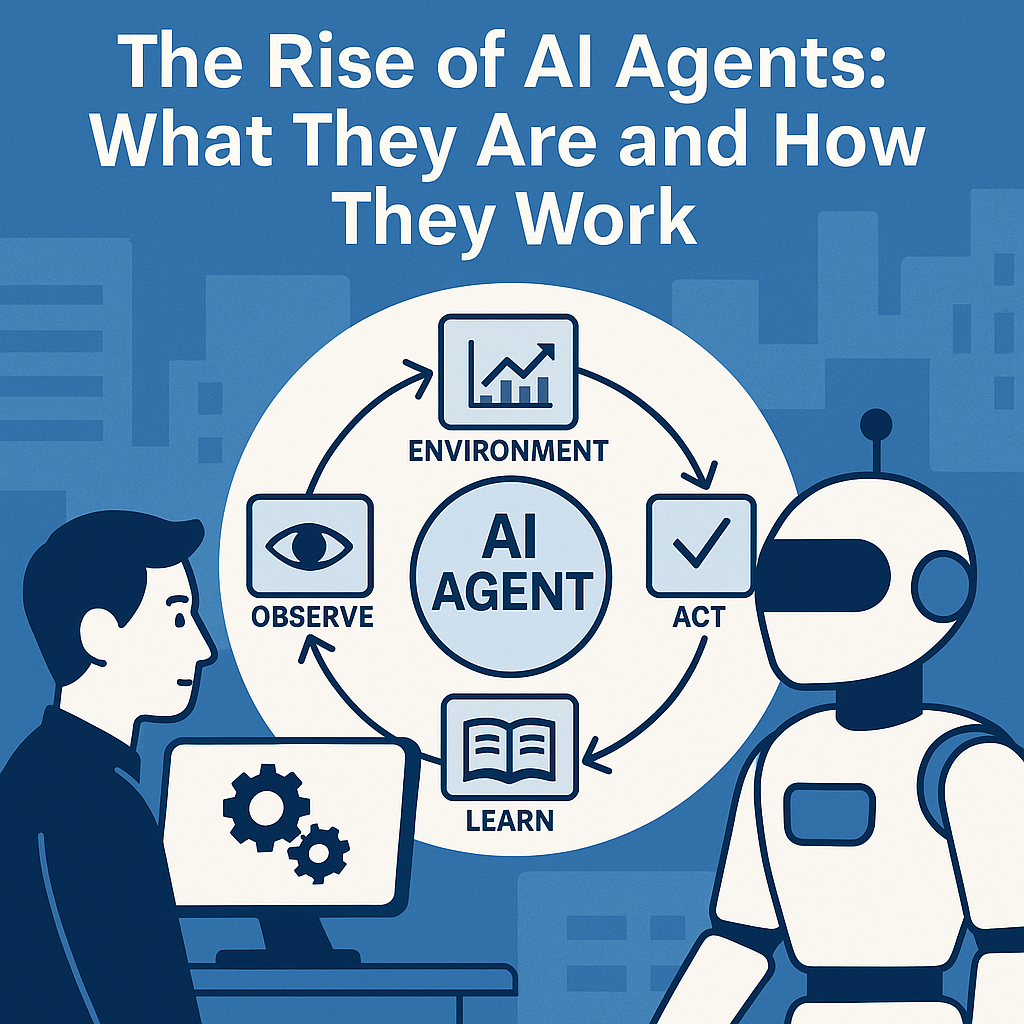
At its simplest, an AI agent is a software system that:
- interacts with its environment (software, data, humans), Amazon Web Services, Inc.+1
- has a goal or task to achieve, set by humans or by design, IBM+1
- can plan, decide and act autonomously (or semi-autonomously) to achieve that goal, CyberArk+1
- learns or adapts from feedback or changing environment, enabling better performance over time. IBM+1
In more technical terms, they are sometimes referred to as agentic AI systems, because they show “agency”, meaning they do more than just respond to prompts, they act. IBM+1
Key characteristics
Here are some of the hallmark features of AI agents:
- Autonomy: They don’t need a constant stream of human instructions. They can execute tasks with minimal supervision. CyberArk+1
- Proactivity: They may not merely wait for commands — they can anticipate needs or initiate actions. CyberArk
- Adaptability: They refine their behaviours based on what they’ve done or encountered. UiPath+1
- Collaboration/Integration: They don’t work in isolation, they collaborate with humans, other agents, enterprise systems, tools. CyberArk+1
A simple analogy
Picture a talented, autonomous junior colleague in your organisation: you give them the quarterly goal (say “reduce customer-churn by 10%”), you give them access to data, tools and workflows, and they go ahead: pulling data, generating insights, coordinating with CRM & support teams, suggesting actions, executing parts of the plan, while you monitor, approve major decisions, and intervene when needed. That’s roughly what a well-designed AI agent can become.
2. Why are AI agents rising now?
Technology enabling factors
- The advent and maturation of large language models (LLMs) and multimodal models give agents the reasoning, planning and communication abilities required. NVIDIA Blog+1
- Enterprise systems gathering huge amounts of data (CRM, ERP, HR systems) + cloud infrastructure (scalable compute, data storage) make it feasible to deploy agents within business workflows. NVIDIA Blog
- The shift from “reactive AI” (just responding to prompts) to “agentic AI” (planning+acting) is gaining momentum. Postman Blog
Business drivers
- Efficiency and productivity: Agents can reduce cycle-times, handle routine tasks, free human time for high-value work. McKinsey & Company+1
- Strategic advantage: Organisations deploying agents early may gain agility, cost-savings, faster decision-making. For instance, the market for AI agents is projected to grow at more than 40-45% CAGR over next few years. BCG+1
- Evolving nature of work: Hybrid teams, remote work, overload of unstructured tasks, agents offer a way to handle the complexity.
Real-world business example
Consider this scenario: a global manufacturing firm’s sales team needs up-to-date insights before each major customer meeting. An AI agent might: extract data from multiple languages and geographies (shipment delays in region A, contract renewals in region B), compile a report, highlight risks or opportunities, recommend action items and even schedule follow-up steps. That’s more than a chatbot: it’s acting as a knowledgeable virtual team-member. (See e.g. an example from Oracle launching AI agents for sales professionals.) Reuters
3. Where can AI agents be used PeopleOps focus
Since you’re writing for a PeopleOps audience (technical + business readers), here are some relevant use-cases:
Recruitment & onboarding
- Agent monitors inbound applications, does initial screening, flags the most promising candidates, schedules interviews, sends reminders.
- Onboarding agent: once someone is hired, the agent triggers a sequence: assign training modules, schedule introductions, check compliance paperwork, follow-up after 30 days with pulse-survey.
- Pain-points addressed: time-consuming admin, inconsistent candidate experience, manual follow-ups, scalability.
Employee experience & support
- Virtual HR agent that employees can query (“When is my next holiday window?”, “Show me policy on remote-working in region X”), but the agent goes further: if someone asks “I want to work from home next week and need approval”, the agent knows their manager workflow, triggers approval, updates calendar, sends notification.
- Pain-points addressed: support load spikes, employee frustration with slow response, lack of personalisation.
Performance/engagement analytics
- Agent tracks employee engagement metrics, feedback, performance reviews, sentiment from communications (with privacy safeguards). It surfaces risks (e.g., attrition risk high in Team X), recommends action (pulse-survey, career check-in).
- Pain-points addressed: reactive HR responses, hidden attrition risks, manual data crunching.
Learning & development
- Agent maps employee skills, suggests upskilling pathways, triggers micro-learning modules when needed, monitors completion, recommends next step.
- Pain-points addressed: generic L&D programmes, low engagement, lack of personalisation.
Compliance & policy automation
- HR agents ensure workflows follow policies (e.g., leave approvals, grievance handling). They can audit compliance, flag exceptions, keep logs.
- Pain-points addressed: regulatory risk, manual audit burden, inconsistent policy enforcement.
4. How do AI agents actually work? (technical overview for PeopleOps and Business)
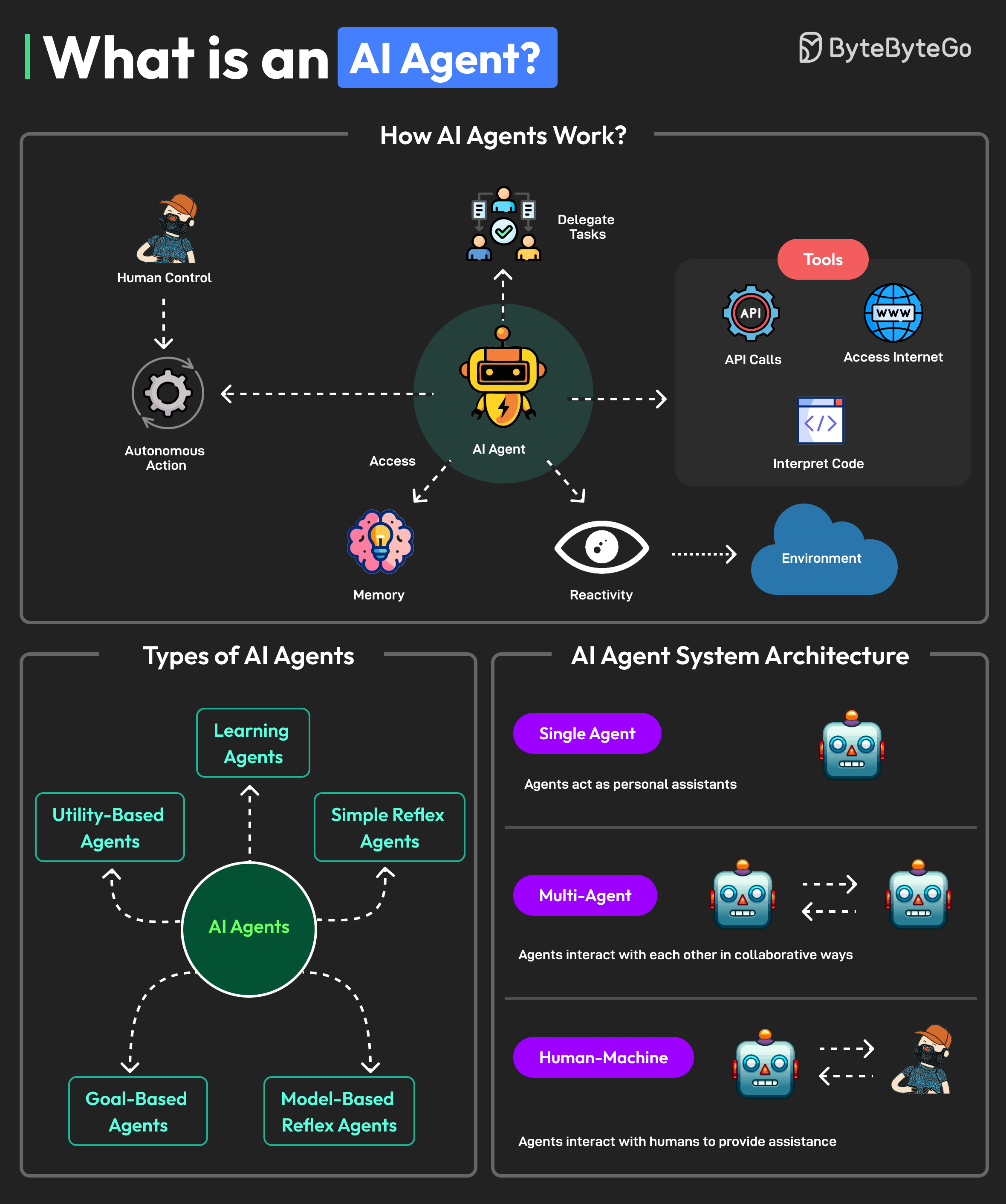
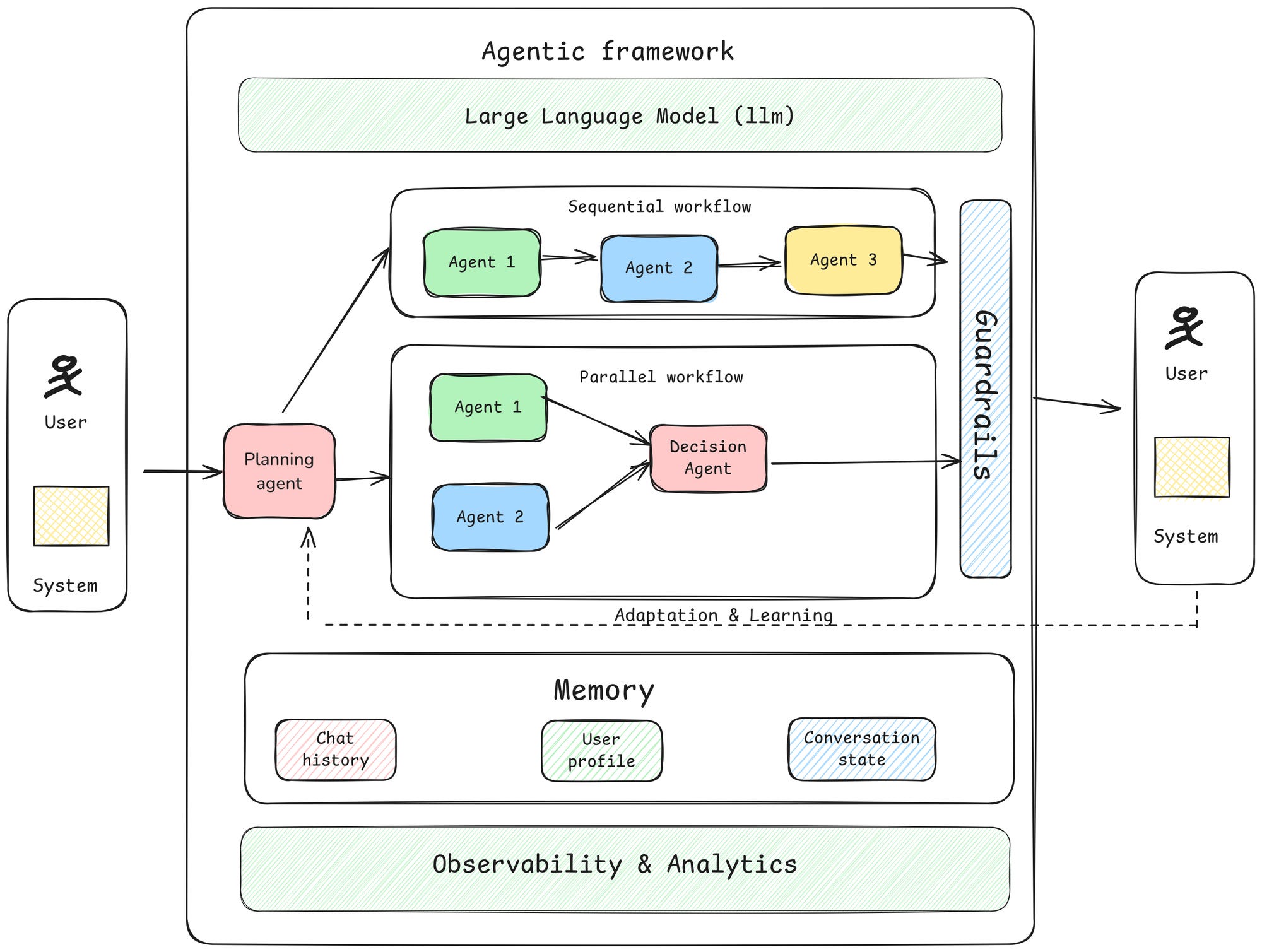
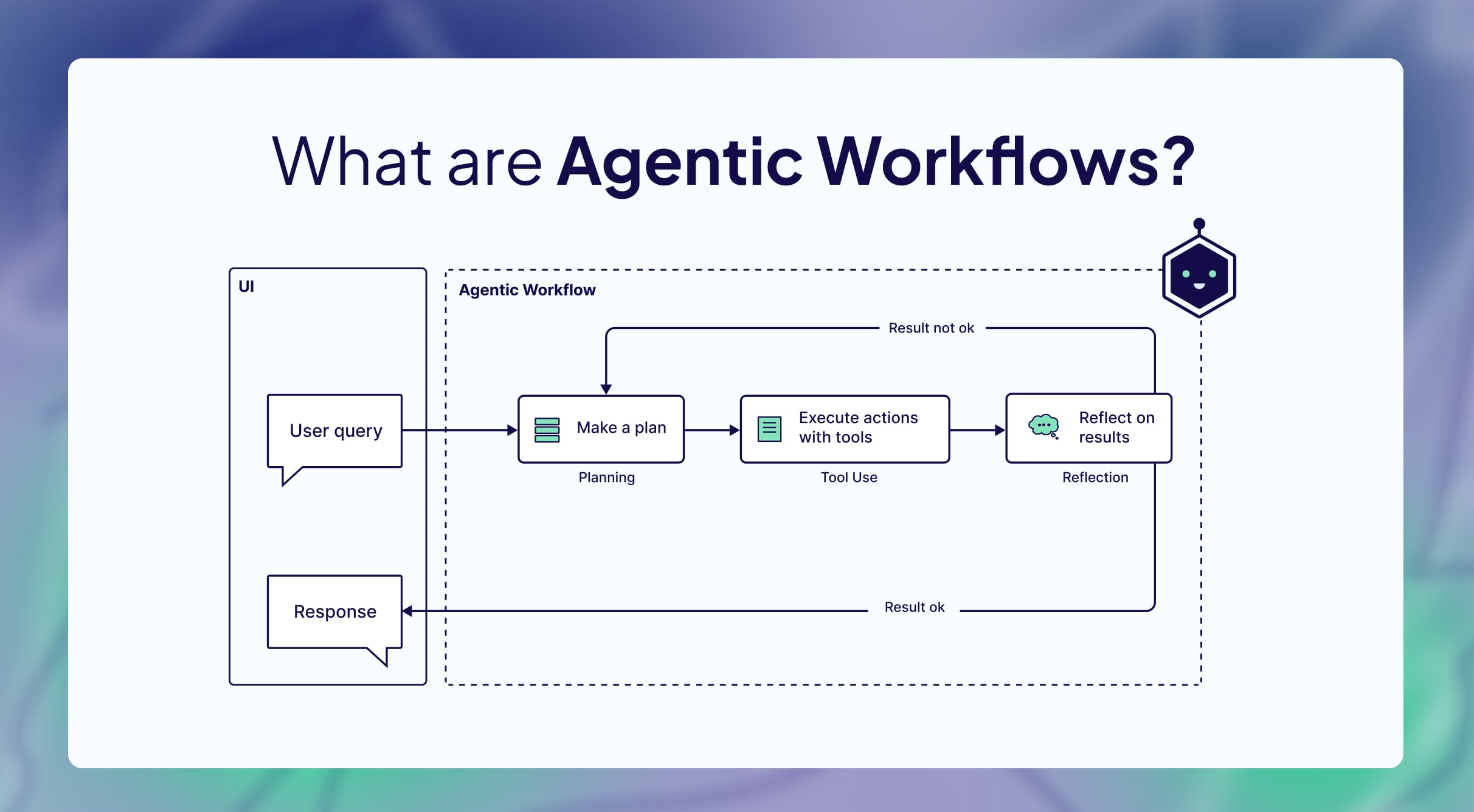
Here’s a simplified breakdown of the architecture + process of a typical AI agent:
Step 1: Goal & Define Tools
- A human (or system) defines the goal (e.g., “Onboard new employee in India within 3 days with 100% paperwork done”). IBM
- The agent is given tools/permissions (e.g., access to HRIS, email system, training portal, calendar).
Step 2: Task Decomposition
- The agent breaks the major goal into subtasks (fill forms, schedule orientation, enroll training modules, send welcome email). IBM+1
Step 3: Planning + Action
- It sequences tasks, issues commands (“create record in HRIS”, “send form to employee”, “assign training”). NVIDIA Blog
- The agent may interact with external systems (API calls, web automation, tool integrations).
Step 4: Monitoring, Feedback & Learning
- The agent evaluates results (“Did the employee accept the training invite?”, “Is the form complete?”). It might iterate if something is missing. IBM+1
- Over time, the agent may “learn” patterns: e.g., new joiners in Region X often need an extra form, so it auto-adds that next time.
Step 5: Human Oversight & Governance
- For higher-risk tasks (e.g., termination, salary changes), human-in-the-loop is essential. The agent can suggest action, but human must approve. IBM+1
Visualising the agent architecture

5. What are the benefits and value-for-PeopleOps?
Efficiency & scalability
Agents handle repetitive tasks (screening, scheduling, compliance follow-up) at scale, freeing HR teams for strategic work (culture, leadership, complex human interactions).
Better employee experience
Faster responses, personalised interactions, proactive support (the agent reaching out when it detects a dip in engagement) → improved satisfaction and retention.
Data-driven HR and talent operations
Agents can integrate across systems, analyse unstructured and structured data, surface insights (e.g., attrition risk, skill gaps) earlier. McKinsey & Company
Strategic advantage
Orgs that adopt agents thoughtfully gain better agility, faster decisions, better workforce alignment, giving PeopleOps a seat at the strategic table. BCG+1
6. Pain-points & challenges (and how PeopleOps should watch out)
Technology & maturity
- Many organisations are still in early stages: for example, fewer than 2% have deployed AI agents at scale, 12% at partial scale. Capgemini
- Infrastructure, data quality, governance frameworks often lag behind the ambition.
Trust, control & governance
- Because agents act autonomously, there’s risk of undesired behaviour, “hallucinations”, improper actions. IBM+1
- Clear governance and human-in-the-loop are critical.
Skills & change management
- PeopleOps teams must upskill to understand agentic workflows, integration, vendor selection, performance metrics.
- Employees may feel threatened (“Will the agent replace me?”) change communication is key.
Ethical & privacy concerns
- Agents often require access to sensitive employee data; privacy, bias, fairness, transparency must be addressed. World Economic Forum
- The notion of accountability: if the agent takes an action incorrectly, who is responsible?
Integration & process redesign
- Simply bolting on agents without redesigning workflows can cause chaos. For example, if new joiner form is automated but manager approval step is missed, onboarding fails.
- Legacy systems may not provide good APIs or data for agents to act upon.
Example of a pain-point scenario
Imagine an organisation rolls out a hiring-screening agent that auto-rejects candidates based on keyword absence. But because the model was trained on biased past data, high-potential candidates from non-traditional backgrounds get rejected. Suddenly, HR teams have a bias-risk and talent-loss issue. This emphasises that agents need oversight, fair data, and testing.
7. What should PeopleOps consider when implementing AI agents?
1. Start with use-cases, not hype
Focus on 1-2 high-value, clearly defined use-cases where autonomy adds validated value (e.g., onboarding automation, employee help-desk agent) rather than attempting across entire HR in one go.
2. Define the goals, metrics and success criteria
What does success look like? Example: “Reduce time-to-onboard by 40%”, “Improve employee NPS by 10 points”, “Reduce HR support ticket backlog by 50%”.
3. Ensure data readiness & system integration
Check that your HRIS, training systems, communication tools, CRM (if needed) have APIs or integration capabilities. Clean up data.
4. Governance and human-in-the-loop
Define where the agent is fully autonomous vs supervised. Which decisions must have human sign-off? Create monitoring dashboards, audit trails. IBM+1
5. Change management & skills
Train HR/PeopleOps teams on how to work with agents (not just to replace. Explore new roles: “agent operator”, “agent-workflow designer”). Communicate with employees about how agents will support them.
6. Ethics, privacy & compliance
Do a privacy impact assessment. Ensure agent actions are transparent, explainable when needed. Mitigate bias and ensure fairness. World Economic Forum+1
7. Pilot → Iterate → Scale
Run a pilot, collect metrics, iterate. Scale only once you have confidence in stability and value. Given the maturity is still low in many orgs, moving carefully is wise. Capgemini
8. Maintenance and continuous improvement
Agents are not “set and forget”. They need monitoring, periodic retraining, feedback loops, updates.
8. What the future looks like
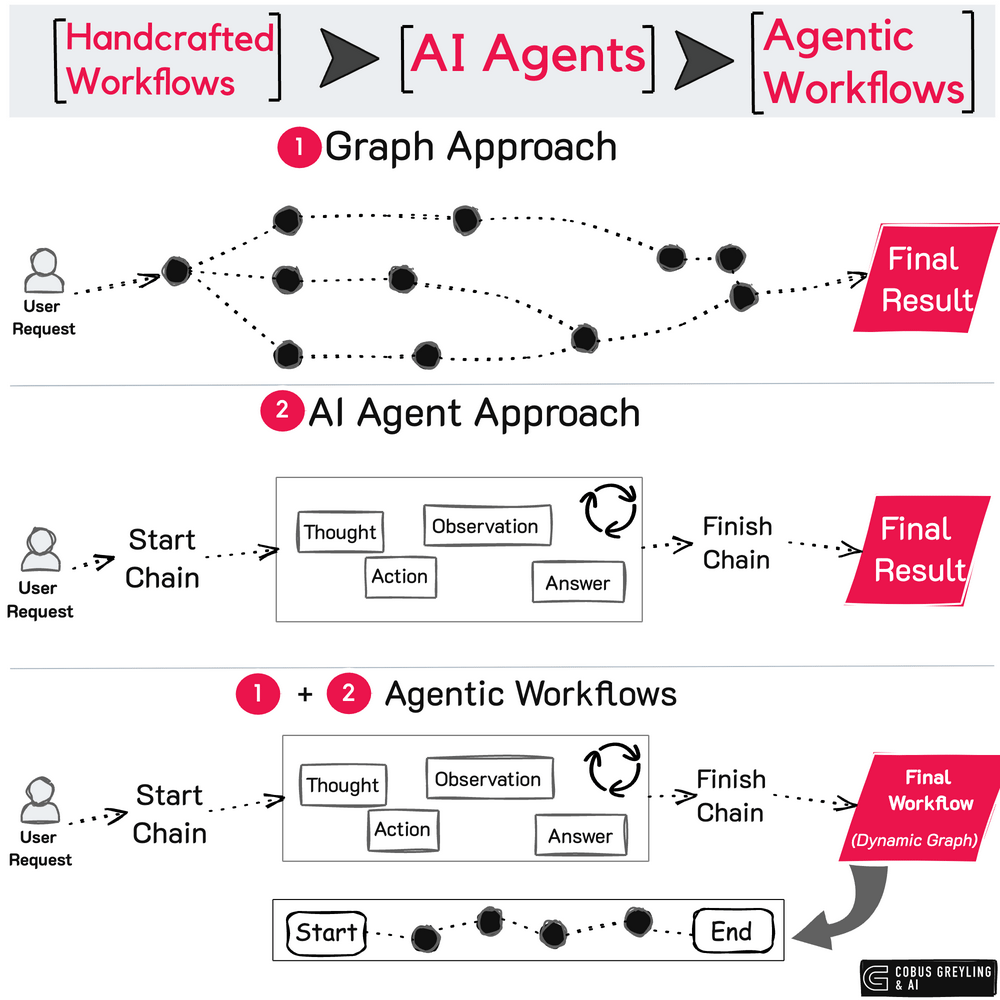
- From simple automation (rules + RPA) to agentic automation: complex tasks, end-to-end workflows, multiple systems, dynamic decision making. UiPath
- Agents will become more ubiquitous in enterprise operations — interacting across CRM, ERP, HRIS, and even external partners. Postman Blog+1
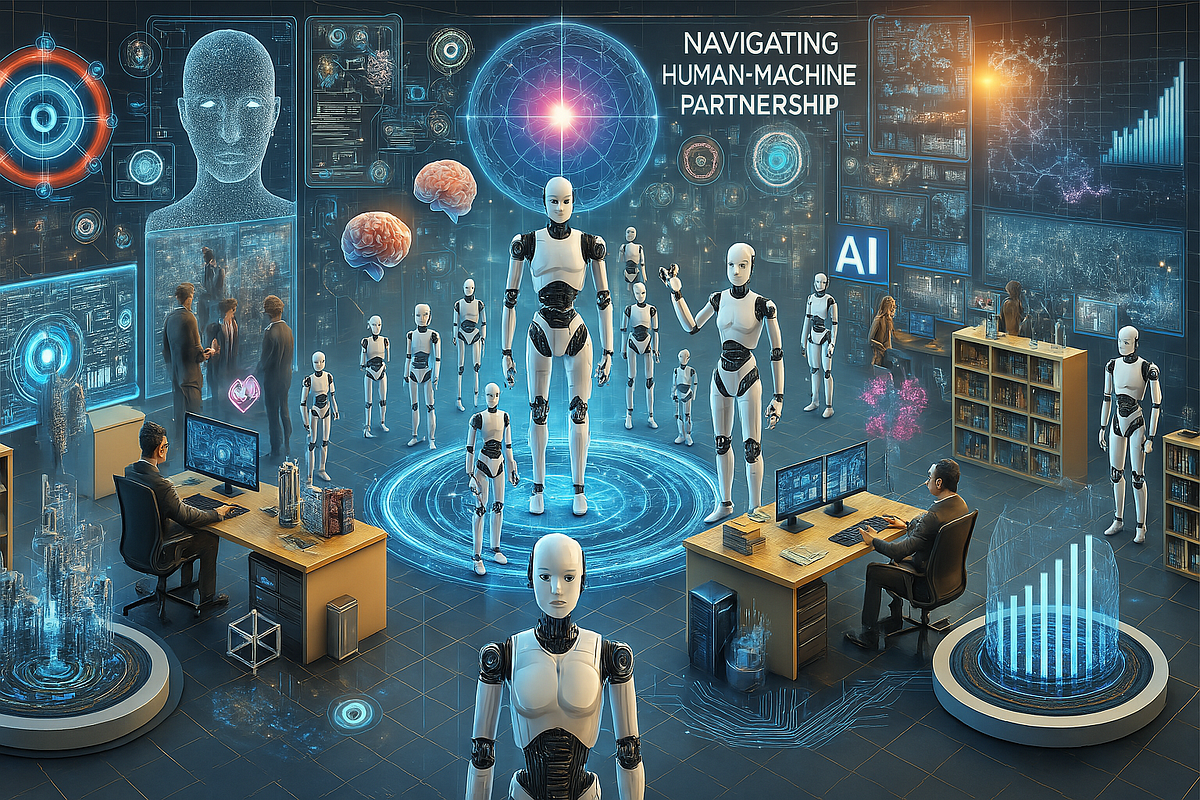
- For PeopleOps specifically: agents will increasingly act as virtual colleagues not replacing humans, but augmenting them. HR teams might collaborate with “agent-teammates” who handle routine work, surface insights, enable strategic focus. BCG
- As the technology matures, expect more sophisticated capabilities: conversation + planning + tool-use + memory + multi-step action. Challenges will include scaling, governance, security, ethics. CyberArk
9. Key takeaways for PeopleOps
- Understand what AI agents are: autonomous, goal-driven systems capable of acting, not just responding.
- Assess your organisational readiness: data, integration, workflow maturity, HR team skills.
- Select high-impact use-cases first: onboarding, L&D, employee support, talent analytics.
- Build strong governance: human-in-the-loop, auditability, ethical frameworks.
- Prepare your people: change management, agent-collaboration mindset.
- Monitor and iterate: measure performance, refine, scale when confident.
- Don’t fear replacement: Agents should enable PeopleOps professionals to focus on the uniquely human tasks, culture, leadership development, strategic workforce planning.
10. Closing thought
The rise of AI agents is a transformative shift, not just in technology, but in how work gets done, how PeopleOps functions, and how organisations evolve. For HR and PeopleOps teams, the arrival of agents isn’t a threat: it’s an opportunity. An opportunity to re-imagine how HR operates, how talent is enabled, and how value is created.
By understanding the mechanics, benefits, and risks of AI agents, PeopleOps can lead this wave — helping their organisation leverage these smarter systems, whilst ensuring the human elements of work remain front and centre.
Leave a Reply