
Introduction
In today’s organisations, PeopleOps is no longer just about payroll & benefits. It’s about enabling technology, data‐driven people decisions, secure culture, and guiding organisational change. But when you propose a new initiative, such as a new HR/people analytics platform, tighter security around employee data, or a process change for hybrid work, you’ll face objections.
Three of the most frequent: security concerns, cost worries, and change resistance.
This blog breaks down each objection, explores pain points, shows a real‐world style scenario, and then outlines how PeopleOps can help you respond and move forward.
1. Objection #1: “Security”, “We’re worried about data breach/compliance / risk”


Why this objection comes up
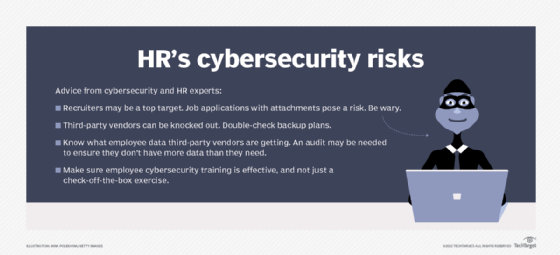
- When you propose anything that touches employee data (performance data, location data, remote access, new HR technology), stakeholders (IT security, legal, compliance) will ask: “How secure is this? What’s the risk?”
- Budgets for cybersecurity are growing, yet more breaches still occur. For example: “Security spend is rising but breaches are more frequent and more expensive than ever.” UBDS Digital
- Organisations have many tools and frameworks, but the gap between “are we secure?” and “are we spending too much and still vulnerable?” remains. UBDS Digital
- PeopleOps initiatives may be seen as “just HR stuff” and not part of the core security conversation.
Example scenario
Imagine your PeopleOps team proposes adopting a new cloud-based people analytics platform that aggregates engagement survey responses, performance metrics, and remote work data.
Security stakeholder: “We’re not comfortable sending engagement and personal data to the cloud. What if there’s a breach? Are we compliant with GDPR/India data laws? What’s the vendor’s security posture?”
This objection is valid and must be dealt with thoughtfully.
How PeopleOps can defuse it
Step 1: Listen & validate
- Acknowledge the concern: “You’re right, employee data is sensitive and a breach would be costly in terms of reputation and compliance.”
- Use “active listening” frameworks: repeat back what you hear, ask clarifying questions. Qohash+1
Step 2: Translate into risk reduction / business benefit - Map out: What is the risk today if we don’t adopt this? E.g., outdated systems, lack of visibility, compliance gaps.
- Show how the new system improves security posture, e.g., through encryption, role-based access, audit logs, automated compliance reporting.
Step 3: Use social proof and benchmarking - Provide examples / case studies of organisations in comparable industries that adopted similar solutions and how they managed risk.
- Show metrics: “The average cost of a data breach for enterprises now exceeds £4 million” (for example) UBDS Digital
Step 4: Create an implementation roadmap with security milestones - Suggest a phased rollout: start with non-sensitive data, test the vendor’s security, run penetration testing.
- PeopleOps can coordinate with IT security to build the governance around the initiative (vendor due diligence, SLAs, data classification).
Step 5: Make the PeopleOps role visible as a partner to security - PeopleOps becomes the bridge: we understand people and culture, and we partner with IT/security and legal to ensure standards are met.
- This builds trust and positions PeopleOps as a strategic enabler, not a “risk”.
Key takeaway
Security objections are not blockers, they are invitations to partner. By framing your initiative in terms of risk mitigation, compliance alignment, and business value, PeopleOps can help the organisation say “yes” with confidence.
2. Objection #2: “Cost”, “It’s too expensive / Not budgeted / ROI unclear”



Why this objection comes up
- Cost objections are classic in any business case. In fact: “Price objections are one of the most common sales objections you’ll face.” close.com+1
- Even when value is present, stakeholders may say “We don’t have budget now” or “There is something else more urgent”. In safety management they say: “It’s not in our budget” or “We need to focus elsewhere”. www.assp.org
- For PeopleOps initiatives, the impact may be harder to quantify (e.g., improved engagement, culture shift) vs purely revenue‐generating investments.
Example scenario
Your team proposes a new onboarding platform with AI-driven workflows, automated compliance checks, and rich analytics. The cost is significant and the HR lead asks: “What’s our ROI? Why now? Can we just keep doing it the old way a bit longer?”
Finance or CFO: “We don’t have budget for a large new system this year.”
How PeopleOps can defuse it
Step 1: Clarify the objection
- Ask: “Is the issue the sticker price, timing, or value?” This helps understand the real root. close.com
Step 2: Re-focus on value and cost avoidance - Translate the cost into avoided cost: e.g., how much time is wasted in manual processes, how many errors, how many compliance fines or risks exist today?
- Use concrete numbers: “If onboarding takes 10 days today, with manual steps, it costs X in manager time, delay in productivity. With platform we reduce it to 5 days.”
Step 3: Create a phased or modular proposal - Offer a lower-cost pilot or MVP version now, with option to scale. This reduces upfront cost risk and shows quick wins.
- This approach also addresses budget timing issues. close.com
Step 4: Align with business goals - Link the PeopleOps initiative to strategic imperatives: e.g., improved time-to-productivity supports growth, reduced turnover supports cost savings, enhanced compliance avoids penalties.
- Tie the investment to KPIs meaningful to business (not just HR): e.g., “reducing voluntary turnover by 5% reduces recruitment cost by X”.
Step 5: Propose governance and tracking - Show how you will measure success: what metrics will you track, how soon you’ll see results, how you’ll adjust.
- PeopleOps should commit to delivering and reporting on value.
Key takeaway
Cost objections are not “no”, they’re “show me value and reduce risk”. By reframing the proposition, breaking the investment down, and aligning with business outcomes, PeopleOps can convert cost objections into investment decisions.
3. Objection #3: “Change”, “Why change what’s working / We’re comfortable / It’s too much effort”


Why this objection comes up
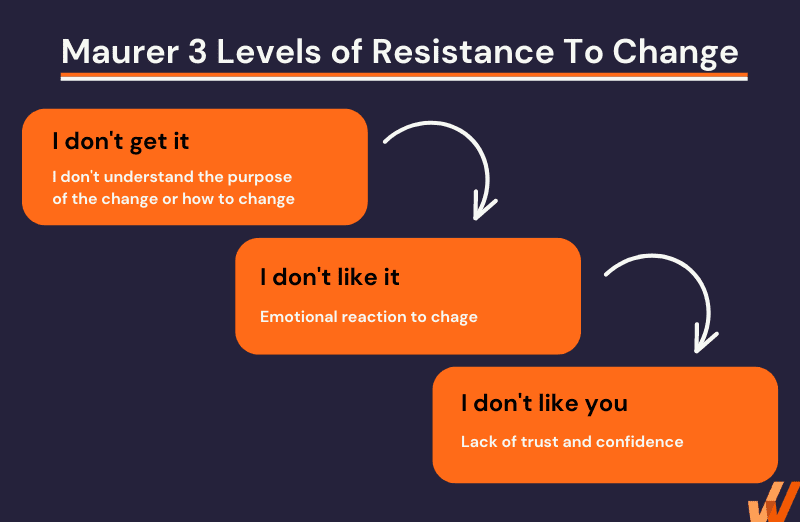
- Change is inherently disruptive. People prefer routines. Research shows “Resistance to change is a natural human reaction … often a response to uncertainty, perceived threat or lack of awareness.” Prosci+1
- In change management literature, common objections include: “It’s too much work”, “I’ll lose my role”, “We don’t need to fix this if it’s not broken”. Crestcom International
- PeopleOps proposals often trigger change in processes, tools, culture, or ways of working: remote/hybrid models, analytics for performance, new HR tech platforms, etc. These spark resistance.
Example scenario
You propose a revamped “Career Path & Skills Framework” (with new technology, new review process, new roles). Department heads say: “We already have a performance review process that works okay. Why ask people to do more? This will take too much time. People will resist.”
Employees: “I’m comfortable with my role. I’m worried this will change my job or require learning new tools.”
How PeopleOps can defuse it
Step 1: Acknowledge the discomfort
- Validate: “Change can feel like extra work and a threat to comfort zones.”
- Use empathy to build trust. Research says listening to concerns early helps reduce resistance. Prosci
Step 2: Build clarity & connect to purpose - Explain why change is needed: what is the current pain, what is the future state, what does ‘working well’ look like vs what we could achieve?
- Use the “Change Equation” (e.g., C = A × B × D > X), change will only happen if dissatisfaction with the status quo (A), vision for the future (B), and first steps (D) together exceed resistance (X). Wikipedia+1
Step 3: Engage stakeholders early & often - Identify change champions among leaders and peers. Have visible sponsorship. Research shows lack of sponsorship is a common barrier. Prosci+1
- Include affected users in design, gather feedback, give them voice.
Step 4: Manage the pace & support readiness - Don’t overwhelm with multiple big changes at once (change fatigue risk). Wikipedia
- Provide training, resources, communication. Make sure people know what is happening, when, how it affects them.
Step 5: Reinforce and reinforce - After launch, keep following up: track adoption, answer questions, celebrate wins, adjust. Research emphasises that communication cannot drop after announcement. Harvard DCE
Step 6: Position PeopleOps as the partner - PeopleOps supports employees through the change: training, communication, feedback loops, measuring adoption. Not just the “owner” of the change but the guide.
- This builds trust and helps ease the transition.
Key takeaway
Resistance to change isn’t a barrier; it’s a signal of sub-surface concerns. With clear purpose, engagement, support and visible sponsorship, PeopleOps can turn resistance into participation and adoption.
How PeopleOps Can Act as the Strategic Bridge
Across all three objection areas, security, cost, and change, PeopleOps plays a unique role:
- Connector: Between HR/people, IT/security, finance, business leadership.
- Translator: Converts people-centric initiatives into security/compliance language, cost-benefit language, change-adoption language.
- Champion of culture: Advocates for employee experience, adoption, training, feedback loops.
- Evidence-driven facilitator: Uses data, metrics, business cases to support initiatives.
- Governance & partnership lead: Ensures that vendors, processes, tools meet security standards, align with budget cycles, and support change readiness.
Final Thoughts
When you next pitch a PeopleOps initiative, be it a new HR tool, a skills framework, a remote-work model, or a data analytics platform, expect objections. But don’t dread them.
Security, Cost and Change are not the enemy; they are opportunities.
- Security objections mean you get to show risk mitigation and compliance alignment.
- Cost objections mean you get to demonstrate ROI, value, and business alignment.
- Change objections mean you get to build culture, engage people, and drive adoption.
By preparing responses aligned with business language, collaborating across functions, and facilitating a smooth adoption journey, PeopleOps can move from being “just HR” to being a strategic enabler for transformation.
Leave a Reply