
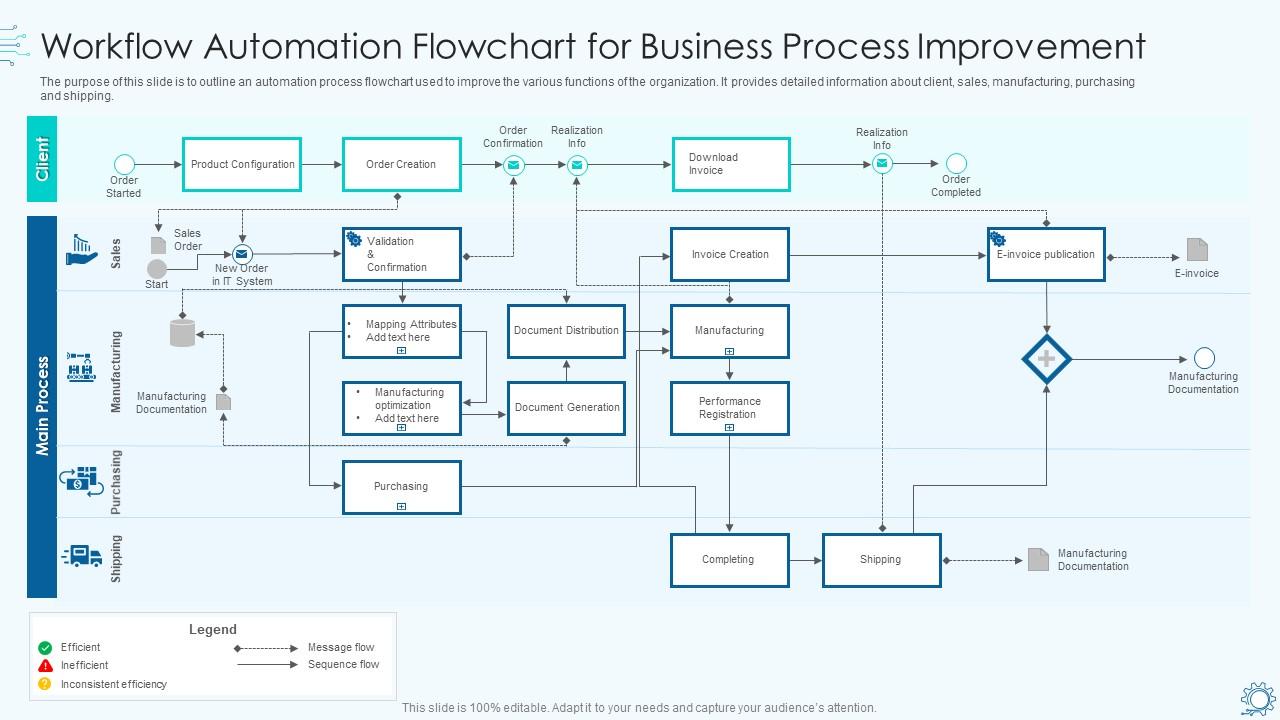


In today’s fast-moving business world, organisations are increasingly investing in automation, whether it’s automating repetitive HR tasks, introducing robotic process automation (RPA) in finance, or implementing AI-driven process workflows. But as a PeopleOps or HR/Operations leader, one of the key questions you’ll face is: How do we measure the return on investment (ROI) from these automation projects?
In this article, we will:
- Explore what ROI means in the context of automation.
- Identify common pain-points and pitfalls when measuring it.
- Outline key metrics and methods for measuring ROI effectively.
- Show how a PeopleOps function can help steer and support this measurement.
- Provide a real-world scenario to bring the concept to life.
1. What does “ROI” mean for automation projects?
ROI traditionally stands for Return on Investment, a financial metric comparing gains (benefits) to investment (costs). In a simple form:
ROI = (Benefits − Costs) ÷ Costs × 100 % BrowserStack+2Qviro+2
When we apply ROI to automation projects (which might include tasks such as process automation, RPA, workflow automation, test automation etc.), the “benefits” side can broaden to include:
- Cost savings (reduced labour, fewer errors) Qviro+3Deloitte+3blueprintsys.com+3
- Efficiency gains (faster processing, higher throughput) Capacity+1
- Quality improvements (fewer defects, higher accuracy) blueprintsys.com+2BrowserStack+2
- Strategic/qualitative impacts (employee time freed for higher-value work, better customer experience) Deloitte
For a PeopleOps audience, this means: while the investment might be in tools, training, change management, and process redesign, the return might involve freeing HR team time, reducing manual administrative burden, improving compliance, speeding up hiring/ onboarding, and ultimately contributing to better business outcomes.
Why this matters: Without measuring ROI, automation efforts risk being “tech for tech’s sake” rather than value-driven. Executives supporting automation need to see tangible returns. The consulting firm Deloitte emphasises that while the ROI formula is simple, recognising what constitutes the “gain” is far more nuanced. Deloitte
2. Pain points and challenges in measuring automation ROI
Here are common issues that PeopleOps and operations teams encounter when quantifying automation ROI:
a) Hidden costs and underestimated investment
Many automation initiatives focus only on the tool cost or vendor license, but neglect:
- Training & upskilling staff
- Process redesign and change management
- Ongoing maintenance and bot-break-fix cycles blueprintsys.com+1
- Infrastructure, support, governance
b) Benefits that are hard to quantify
- How do you place a number on “staff time now able to focus on strategic work”?
- Customer experience improvements, quality defects avoided, employee satisfaction, these often are qualitative or delayed.
- Sometimes automation improves capability rather than just cost savings (e.g., 24/7 availability) which complicates ROI. blueprintsys.com+1
c) Timing and pay-back ambiguity
- Some benefits accrue immediately; others over years. ROI calculation may ignore the time dimension (payback period, discounted value) which can mislead. Develop
- Projects with long implementation may see benefits only after a while.
d) Selecting the wrong metrics
- Focusing on easy-to-measure numbers (number of bots, hours saved) but neglecting value created (business outcomes, error reduction)
- Failure to track baseline (as-is manual cost) before automation – you can’t measure improvement without a baseline.
e) Lack of continuous tracking
- ROI isn’t a one-off metric: it should be tracked over the lifecycle of the automation. Some tools (e.g., automation ROI widgets) support tracking trends in cycle time, defect cost, regression cost. ADM Help
f) Alignment with business strategy
- Automation driven just by technology may not align with key business objectives. If HR automation doesn’t tie to, say, time-to-hire improvement or cost per hire reduction, the ROI figure may be less compelling.
3. Key metrics and methods for measuring automation ROI
A structured approach helps. You can divide metrics into quantitative/financial and qualitative/strategic.
A) Quantitative Metrics
Here are some of the most useful metrics:
| Metric | What it measures | Why it matters |
|---|---|---|
| Cost savings (manual vs automated) | Compare labour cost (FTEs) for manual tasks vs cost of automation (licence, implementation, maintenance) Develop+2SDC Automation+2 | Direct way to show pay-back. |
| Cycle time reduction | How much faster a process runs or turnaround times drop Capacity | Faster processes = higher throughput, potential capacity. |
| Error/defect reduction | Fewer mistakes, rework, customer issues blueprintsys.com+1 | Quality improvement often has cost & reputational value. |
| Utilisation / throughput | How many processes automated vs manual; how often bots run (including non-business hours) blueprintsys.com | Maximises value of automation asset. |
| Payback period | How long until investment is recovered (investment ÷ annual savings) Qviro | Helps build business case. |
| ROI percentage | (Benefits – Costs)/Costs × 100% BrowserStack | Standard metric to compare across projects. |
B) Qualitative / Strategic Metrics
Automation benefits also include less quantifiable but important value:
- Employee engagement: automation frees people from repetitive tasks so they can focus on higher value work.
- Customer satisfaction: faster response times, fewer errors can lead to happier customers.
- Scalability and agility: ability to process higher volumes without proportionately increasing cost.
- Compliance / risk reduction: automation improves auditability, consistency.
- Innovation capacity: staff time freed from manual tasks can be re-allocated. Deloitte
While these may not map directly to a dollar amount, you should capture them in your business case and track supporting indicators (e.g., % of HR time spent on strategic tasks, reduction in process deviations).
C) Method: Step-by-step
Here’s a recommended workflow for PeopleOps or operations teams measuring automation ROI:
- Define scope and objectives: what process are you automating and why (cost reduction? time to hire? compliance?).
- Establish baseline metrics: length of manual process, number of FTE hours, error rate, cost per error, customer complaints etc.
- Estimate investment: all upfront costs (tools, licences, training, change management) + ongoing costs (maintenance, bot support).
- Estimate benefits: quantify as many as possible (labour hours saved × cost per hour; reduction in errors × cost per error; increased throughput × margin) and identify qualitative benefits.
- Calculate ROI: use formula (benefits – costs)/costs × 100%. Also compute payback period.
- Track the metrics over time: after go-live, monitor actual savings vs estimates, revisit assumptions. Use dashboards/widgets if available. ADM Help
- Review and refine: evaluate what worked, what didn’t, adjust automation pipeline for future opportunities and risk.
D) Example formula in action
Suppose your HR team currently spends 400 hours/month on manual onboarding tasks. Fully-loaded cost per hour (including salary + overhead) is ₹1,000. So manual cost is ~ ₹400,000/month.
You implement workflow automation costing ₹2,000,000 (one-time) + ₹100,000/month in maintenance. You estimate automation will reduce manual hours by 75 % → new monthly hours = 100 → cost ≈ ₹100,000/month → monthly savings ~ ₹300,000.
Annual savings = ₹300,000 × 12 = ₹3,600,000. Deduct annual maintenance (₹1,200,000) gives net annual benefit ~ ₹2,400,000.
Payback period = ₹2,000,000 ÷ ₹2,400,000 ≈ 0.83 years (≈10 months).
ROI = (Net benefit ₹2.4m / cost ₹2m) × 100% = 120%.
Then you’d track actuals and compare.
E) Prioritising automation projects
From a PeopleOps perspective, to maximise ROI, prioritise low-complexity, high-value tasks. Nividous Intelligent Automation Company For example: tasks that are repetitive, rules-based, have clearly measurable outcomes (e.g., time to process, error rate) are prime candidates.
4. How PeopleOps can help drive and sustain ROI from automation
As a PeopleOps function (or HR/Operations partnering with digital/tech), your role is vital not just in enabling automation but in ensuring value is realised and sustained.
a) Partnering with stakeholders
- Work with business units to identify which HR or people-ops processes are best suited for automation (e.g., candidate screening, onboarding, payroll reconciliation).
- Collaborate with finance to define cost baselines, savings assumptions, help frame the business case.
b) Change management and workforce impact
- Communicate clearly about what automation means for people: what tasks will be freed up, what will change.
- Upskill HR/PeopleOps staff to use freed time for strategic activities (employee experience, talent development etc.).
- Monitor employee engagement and sentiment post-automation, unexpected morale issues can erode value.
c) Defining metrics and monitoring
- Establish clear KPIs ahead of implementation (e.g., hours saved, error reduction, time to hire improvement).
- Work with analytics/IT to build dashboards that track automation metrics (usage, uptime, errors, manual intervention) and feed into ROI tracking.
- Use qualitative metrics too: e.g., % of HR time spent on strategic vs administrative tasks; employee satisfaction with HR services.
d) Continuous improvement
- Post-implementation review: Are the automation tools delivering expected savings? If not, why? Are bots breaking frequently? Are manual interventions still high? (See “Break-Fix Cycles” metric). blueprintsys.com
- Iterate and scale: Once ROI is proven in one process, apply learnings to other processes, build a pipeline of automation opportunities.
e) Governance and risk model
- Establish a governance framework for automation (ownership, bot health, exception handling). Poor governance can erode ROI (bots down = no savings). blueprintsys.com
- Ensure alignment with HR/PeopleOps strategy, automation should support business outcomes (engagement, retention, productivity) not just efficiency for its own sake.
5. Real-world scenario: HR Onboarding Automation
Let’s walk through an example to illustrate how a PeopleOps team might measure ROI in practice.
Scenario
A mid-sized tech company’s HR/PeopleOps team performs manual onboarding for every new hire: account creation, access provisioning, document collection, welcome email setup, introduction scheduling. This takes ~10 hours (spread across HR, IT, and line manager) per hire. The cost per hour (fully loaded) is ₹900. Last year they onboarded 600 hires.
Baseline cost: 600 × 10 hours × ₹900 = ₹5,400,000 (~₹5.4 million).
They implement an automation workflow that automates ~70 % of tasks (account provisioning, document collection, email setup). Implementation cost (tool + services + training) = ₹3,000,000. Ongoing maintenance = ₹200,000/year. Post-automation: onboarding time reduced to ~3 hours per hire (HR and IT tasks), cost ~ 3 × ₹900 = ₹2,700 per hire. Annual cost = 600 × ₹2,700 = ₹1,620,000. Annual savings = ₹5,400,000 − ₹1,620,000 = ₹3,780,000. Deduct maintenance cost (₹200,000) → net annual benefit ≈ ₹3,580,000.
Payback period = ₹3,000,000 ÷ ₹3,580,000 ≈ 0.84 years (~10 months).
ROI ≈ (3.58m / 3.00m) × 100% ≈ 119%.
Additional benefits captured
- HR and IT now have ~7 hours × 600 = 4,200 hours freed → those hours redeployed to strategic work (employee experience, engagement programmes).
- New hires get faster access, better experience → improved time-to-productivity (harder to quantify but can track).
- Fewer manual errors in access provisioning → reduced risk (e.g., compliance, security incidents).
- Scalability: if next year hires increase to 900, cost per hire remains ~₹2,700 instead of rising linearly.
Monitoring
- Track monthly number of onboardings, hours spent, cost per onboarding.
- Track error rate (access issues, IT tickets raised post-onboarding) before vs after.
- HR team utilisation: % of time spent on strategic tasks.
- Qualitative survey of new hire experience onboarding.
Role of PeopleOps
- In setting baseline and outcomes, HR/PeopleOps defined what “good” looks like.
- Post-automation, PeopleOps continues to monitor metrics and reviews results alongside IT & finance.
- Next: PeopleOps identifies next process (e.g., offboarding, recurring compliance training) using learnings from this automation.
6. Key take-aways for PeopleOps leaders
- Start with the business question: What process are we automating and why (cost, quality, time, experience)?
- Quantify cost and benefits: Get clear numbers for current manual process and projected automated process.
- Include both quantitative and qualitative value: Efficiency gains matter, but so do employee experience, scalability, quality.
- Define metrics and track continuously: Make sure you build dashboard/tracking from beginning, not retroactively.
- Be realistic about investment: Include ongoing maintenance, governance, change management, training.
- Prioritise low-complexity/high-value opportunities: Your first wins help build the case and capability.
- PeopleOps is key stakeholder: You bring the process- and people-lens to automation, ensuring it benefits both the business and the workforce.
- Use ROI not just as justification but as learning: After implementation, review what worked/what didn’t and apply learnings to next automation wave.
Conclusion
Measuring ROI from automation projects is not just about plugging numbers into a formula. It involves careful planning, realistic assumptions, thorough tracking, and alignment of people, process and technology. For PeopleOps teams, it’s an opportunity to drive meaningful change, freeing up HR/people teams to focus on higher-value human-centric work, improving experience for employees and candidates, and demonstrating measurable business value.
By following a structured approach, baseline, invest, measure, refine, you will not only build a compelling business case for automation but also deliver continuous value that scales over time.
Leave a Reply