
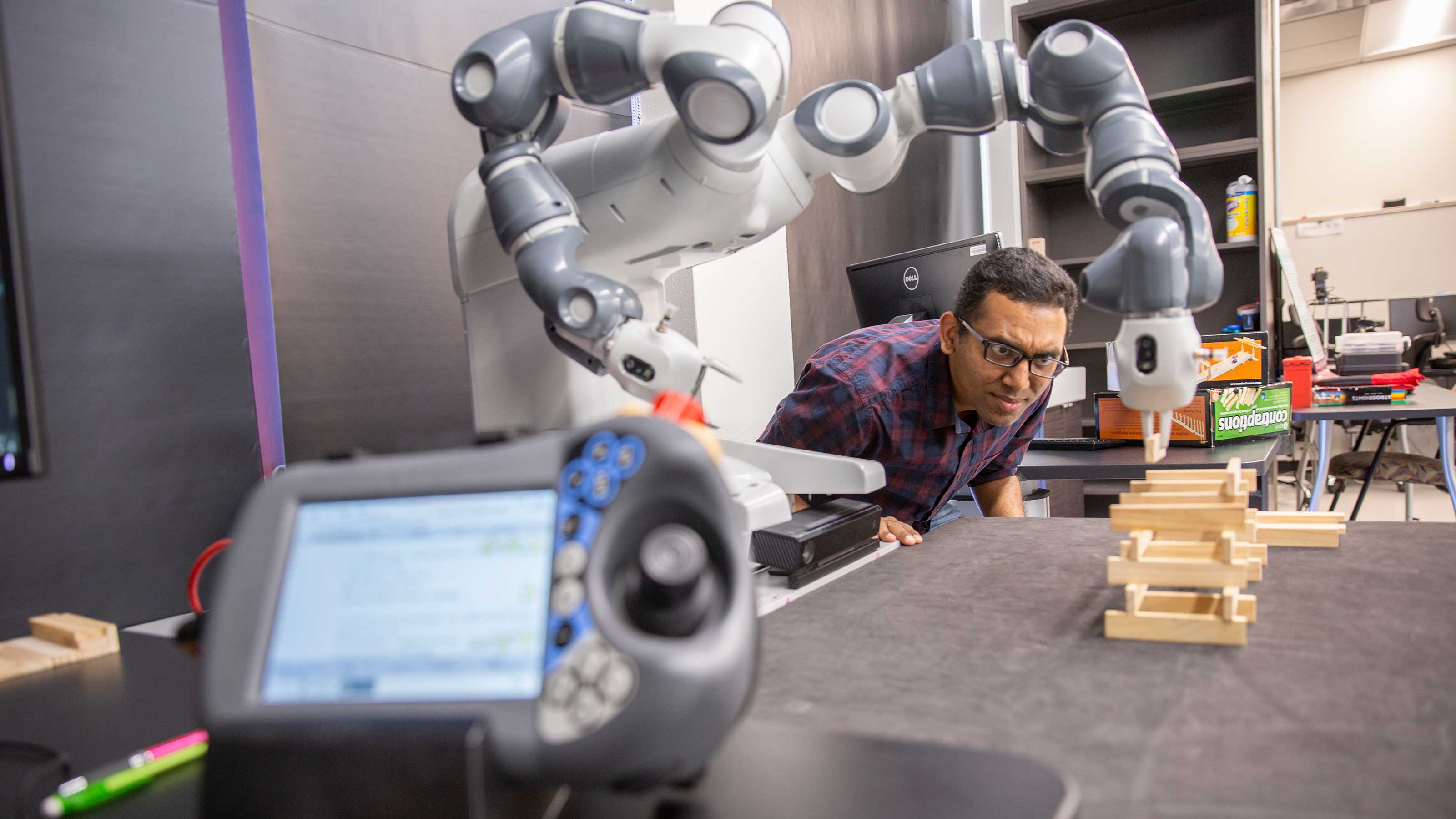


In the world of People Operations, where the intersection of technology, people, and process matters greatly, automation often feels like both an opportunity and a threat. Many organisations worry: Will the rise of automation mean job losses? The answer, as we’ll explore in this article, is more nuanced: automation is redefining roles, not replacing them. When done thoughtfully, automation empowers people, elevates strategic work, and helps organisations scale with agility.
1. The automation landscape: facts and myths
Reality check
- According to recent research by SHRM, about 15.1% of U.S. employment has at least 50% of its tasks automated. However, only 6% of jobs are both highly automated (50%+ tasks) and free of non-technical barriers (like human interaction, regulation) that would allow full displacement. SHRM
- The message is clear: it’s not about jobs being entirely wiped out, it’s about tasks changing. Data Society
- In HR specifically, automation is recognised as a means to relieve repetitive administrative work, enabling HR professionals to turn their attention toward higher-value domains such as culture, engagement, strategy. nlbenefits.com+2www1.villanova.edu+2
Debunking the biggest myth
- Myth: “Automation will make people redundant.”
- Reality: Automation replaces patterns of work (repetitive, rules-based tasks) rather than entire roles. For example, as noted by Data Society, “AI doesn’t take jobs; it changes them.” Data Society
- In simple terms: if you do the same thing every day and the task can be defined as a set of rules, it’s ripe for automation. But if you do work that demands judgement, empathy, creativity, or strategic thinking, that’s far harder to automate.
2. Why PeopleOps / HR must lead the transformation
As those in People Ops know, the function is shifting from purely administrative to strategic. The traditional HR model is evolving into something more holistic: a “People Operations” mindset (see Google, IBM and others). Wikipedia+1
Automation gives People Ops a major lever to:
- Elevate strategic work: With routine tasks automated (e.g., data entry, basic reporting, scheduling), PeopleOps professionals can focus on areas like talent strategy, employee experience, diversity & inclusion, change management.
- Improve decision-making with data: Automation paired with analytics enables insights (e.g., predicting attrition, assessing skills gaps, modelling workforce scenarios).
- Enhance speed and consistency: Standardised workflows, fewer manual errors, faster service delivery, which improves the “people service” experience across the organisation.
From a research article on Strategic HRM, the authors note that automation is redefining how HR operates: “Artificial Intelligence (AI) and workforce automation are rapidly integrating, fundamentally redefining strategic orientation of Human Resource Management.” ResearchGate
Therefore, the “role” of People Ops doesn’t go away, it becomes more strategic, insight-driven, and people-centric.
3. Real-world scenario: how roles change in practice
Let’s walk through a tangible example to illustrate the shift.
Scenario: A mid-sized software company with a global workforce uses an automation tool to handle parts of its onboarding, offboarding, and compliance processes.
- Before automation: The PeopleOps team spent hours manually uploading new hire data, checking forms, scheduling onboarding sessions, coordinating with IT and facilities, and tracking compliance sign-offs.
- After automation:
- An RPA/bot handles data-entry and document routing (for example via a Human Resource Information System (HRIS) integration).
- Automation triggers onboarding workflows: email to new hire, resource links, first-week checklists.
- PeopleOps shifts towards designing the onboarding experience itself, crafting welcome journeys, mentorship-pairing, measuring engagement metrics, and continuously improving the experience.
The result: the company’s onboarding completion rate rises, new hires feel more supported, and the PeopleOps team spends less time on repetitive tasks and more time on meaningful human-centred work.
In this sense, the role changed rather than disappeared.
Another domain: the role of the HR Business Partner (HRBP). According to Mercer, automation and generative AI are already transforming key HR roles: HRBPs, Learning & Development specialists, and Total Rewards leaders. Mercer These professionals will need to become more comfortable working with technology, data, and strategic imperatives not simply operational tasks.
4. What’s driving the shift (and the pain points)
Drivers
- Cost and efficiency pressures: Organisations want faster, leaner HR operations while maintaining high-quality people experiences.
- Digital maturity and tools: Platforms for automation, artificial intelligence (AI), chatbots, analytics, and HRIS integrations are becoming more accessible.
- Changing workforce expectations: Employees now expect personalised experiences, self-service tools, rapid feedback, and digital-first interactions.
- Skills and talent supply-chain needs: With roles evolving, companies need to adapt their workforce skills and capabilities.
Pain points
- Change resistance: People worry that automation means “jobs lost,” which can create anxiety, mistrust, or pushback.
- Skill gaps: The shift requires PeopleOps practitioners to develop new competencies: data-analytics, tech-savviness, strategic partnering. Research indicates many HR roles will be reshaped by automation. AIHR+1
- Ethical / trust issues: Automation and AI introduce concerns around bias, transparency, algorithmic decision-making. The research paper on HRM notes “algorithmic bias, lacking transparency, ambiguous ethics and limited digital literacy within HR teams remain considerable.” ResearchGate
- Process redesign burden: When you automate, you often need to re-examine the process end-to-end (not just “automate the current state”). This means work on governance, change management, training.
5. How PeopleOps can make automation work, three strategic steps
Here’s a practical roadmap for PeopleOps teams to harness automation in a way that redefines and elevates roles rather than simply replacing them.
Step 1: Identify what to automate
- Look for repetitive, rules-based, high-volume tasks (for example: data-entry, basic reporting, scheduling, form routing). These are prime candidates for automation.
- At the same time, do not automate tasks that require human empathy, judgement, creativity, or complex stakeholder management.
- Use frameworks like the “assistive/collaborative” vs “autonomous” model: some tasks are best left in full human control, others assisted by AI, some possibly automated. arXiv
Step 2: Redesign the role, not just the task
- Once tasks are automated, consider: what does the role now look like? What new value does the person bring?
- For example: rather than scheduling interviews, the recruiter now focuses on candidate-experience design, employer-branding, data-driven talent pipeline strategy.
- Upskill teams: focus on transferable skills like communication, business-acumen, strategic thinking, data literacy. As research found: “what transferable skills can you use to move into a new role less at risk of automation?” AIHR
Step 3: Embed governance, culture, human-centred design
- Ensure transparency and trust: when a process is automated, explain to stakeholders what changes and why.
- Monitor outcomes: automation is not “set and forget”. You still need to measure effectiveness, fairness, employee feedback.
- Create a culture of continuous learning: automation will evolve; roles will shift again. Encourage adaptability.
- Involve PeopleOps early in automation strategy discussions: instead of being downstream recipients of “tools”, the PeopleOps team should co-design how the work will change, how people will engage, how roles will evolve.
6. Key benefits for organisations & teams
When automation is implemented thoughtfully with a PeopleOps lens, the benefits include:
- Improved efficiency and speed: Automation of routine tasks frees up time and reduces errors.
- Better employee experience: With repetitive overhead removed, PeopleOps teams can focus on design, engagement, well-being.
- Stronger strategic alignment: PeopleOps becomes a partner in business strategy rather than just process management.
- Talent growth and retention: Roles become more meaningful; employees feel they do more value-adding work.
- Scalability: As organisations grow or change, automated capabilities ensure consistency and allow human teams to scale their impact.
7. A cautionary note: the flip side
While the potential is large, organisations must beware of pitfalls:
- Automating without redesigning roles can lead to disempowered employees, unclear responsibilities, and a drop in morale.
- Over-reliance on automation without human checks can lead to algorithmic bias, lack of transparency, or unfair decisions (especially in PeopleOps/HR). ResearchGate
- Neglecting upskilling means teams may feel threatened or obsolete and that undermines the whole transformation.
- Failing to integrate change-management means the automation initiative might be resisted or under-used.
8. Final thoughts, The future of work in PeopleOps
For PeopleOps professionals and organisations, the message is clear:
Automation is not the enemy of human roles, it’s the ally of redefined, elevated, more strategic human work.
In the era of blended work, where humans work with machines rather than being replaced by them, the function of PeopleOps becomes ever more critical. The automation of routine tasks is simply the foundation. What rises on top of that foundation is human insight, strategy, connection, culture, and growth.
If you’re working in PeopleOps today, ask yourself:
- Which parts of my role are being automated (or could be)?
- How can I redesign my role (and my team’s roles) to focus on higher-value work?
- What new skills do I, and my team, need to thrive in this new environment?
- How can we proactively shape the automation journey so that people feel empowered rather than threatened?
By doing so, you’re not just surviving the automation wave, you’re leading it.
Leave a Reply