

In this article we’ll explore how the workplace of tomorrow is being shaped by the convergence of humans, artificial intelligence (AI) and automation. For teams in People & Operations (PeopleOps), this is more than a buzz-phrase, it’s a strategic lever for culture, productivity, and competitive advantage. We will cover:
- What this shift means
- The pain points organisations face
- How PeopleOps can help bridge the change
- Real-world scenarios
- Practical steps for adoption
1. What does “Humans + AI + Automation” mean?
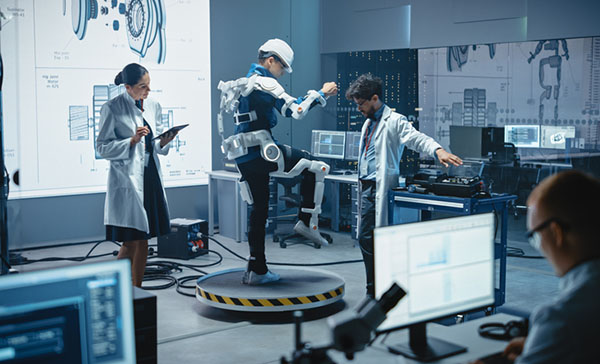
The workplace is no longer just humans working at desks, nor machines simply replacing repetitive tasks. Instead, we’re moving to a blended model where:
- Humans bring creativity, empathy, judgement and strategic thinking.
- AI systems bring data-driven insights, pattern recognition, scalability, speed.
- Automation handles repeatable, high-volume, predictable tasks.
According to McKinsey & Company, AI has progressed so rapidly that it can summarise, reason and engage in dialogue, lowering skill barriers in many fields. McKinsey & Company
And in a study by Microsoft people recognise that employees will use AI as instinctively as computers today. Microsoft
The term “blended work” has been used to describe the emerging paradigm of humans and AI being inseparable in many workflows. arXiv
2. Why it matters: key drivers and pain-points
Key drivers
- Efficiency & productivity: AI and automation free humans from mundane tasks (e.g., scheduling meetings, writing routine emails) so they can focus on higher-value work. UNLEASH+1
- Better decision-making: AI can analyse large datasets, identify trends and help with predictions so organisations make more informed decisions. UNLEASH+1
- Workforce dynamics: Skills are changing fast, organisations need agility, employees want purpose and flexibility. Microsoft+1
- Competitive edge: Organisations that adopt AI and automation strategically tend to win in innovation and talent attraction.
Pain-points and challenges
- Role ambiguity & job displacement fears: When automation starts, employees may worry whether they will be relevant. For example, some jobs are more “exposed” to automation than others. Nexford University+1
- Skills gap: Many organisations lack the internal capability to integrate AI effectively, and many employees don’t have the right mix of skills (technical + human). EY+1
- Change management & culture: Introducing AI/automation requires managing mindset, trust, governance, ethics. Gartner+1
- Human-machine collaboration design: It’s not enough to deploy tools, it’s how humans and machines work together that matters (who leads, who assists, where hand-offs happen).
- Ethics, fairness & transparency: AI decisions must be reliable, fair and transparent. Otherwise, they risk employee backlash or regulatory issues. Gartner
3. Real-world scenarios: Humans + AI + Automation in action
Scenario A: Customer Service in a Tech Company
– Problem: Customer service teams are overwhelmed by repetitive tickets (password resets, account queries) → slow responses, burnout.
– AI/Automation solution: Deploy chatbots and AI-assistants to handle tier-1 queries; automate ticket classification and routing.
– Human role: Human agents handle complex issues requiring empathy, judgement and escalation; they also work on improving customer experience.
– Outcome: Faster responses, higher customer satisfaction, agents have more meaningful work.
– PeopleOps implication: Need to reskill service agents to focus on higher-value tasks; build collaboration between bot + human; manage change so agents don’t feel “replaced”.
Scenario B: HR & Talent Acquisition in a Manufacturing Company
– Problem: HR spends huge time screening resumes, scheduling interviews; meanwhile, the workforce is changing and needs new skills.
– AI/Automation solution: Use AI tools for resume scanning, preliminary assessments; automation for scheduling and sending introductory materials.
– Human role: Recruiters focus on candidate experience, cultural fit, strategic workforce planning; also partner with frontline managers on upskilling.
– PeopleOps implication: Introduce AI tools while training HR team on how to use them; define new workflows; ensure fairness and reduce bias in AI screening.
Scenario C: Hybrid/Blended Work Environment
– Problem: Teams are split across home/office; collaboration suffers; time is wasted; employee well-being at risk.
– AI/Automation solution: Use AI assistants for meeting summaries, scheduling, follow-ups; automation to track productivity signals (not for surveillance but for support).
– Human role: Team leads focus on connection, empathy, culture, innovation tasks; employees focus on deep work and creative output.
– PeopleOps implication: Design blended workflows (humans+machines); ensure tools enhance rather than hamper human connection; set policies for wellbeing, boundaries.
4. How PeopleOps can lead the transformation
As PeopleOps professionals, you play a key role in shaping this future workplace. Here’s how:
4.1 Strategy & vision
- Define a people-plus-technology vision: Emphasise that automations and AI are tools to amplify human contribution, not replace humans.
- Link to organisational goals: Show how blended work supports business outcomes (innovation speed, customer service, productivity) and people outcomes (engagement, growth, meaning).
- Map out the future-work-roadmap: Identify high-impact areas for automation, AI adoption and human value creation.
4.2 Skills and workforce planning
- Identify new roles and skills: For example, roles like “Human-AI collaboration specialist”, “Prompt engineer”, “Automation ethicist” are emerging. The Interview Guys+1
- Invest in upskilling/reskilling: According to research, ~77% of employers see reskilling as essential through 2030. EY
- Blend technical and human skills: It’s not just about coding or AI; also about empathy, critical thinking, creative problem solving.
- Build learning culture: Encourage continuous learning, experimentation with AI tools, agile mindset.
4.3 Process redesign & workflow engineering
- Review workflows: Which tasks are repetitive and ripe for automation? Which tasks require human judgement?
- Design hand-offs: Map how human + AI + automation interact, who does what, when, how.
- Pilot and iterate: Start small, learn, adapt.
- Monitor outcomes: Productivity, quality, employee satisfaction, skill development.
4.4 Culture, change management & ethics
- Communicate transparently: Explain how AI/automation will be used, what it means for people, and how roles may shift.
- Build trust: Engage employees in the process; involve them in tool selection, pilot design and feedback.
- Address fairness and bias: Ensure AI systems are audited, criteria are transparent, decisions can be explained. Gartner+1
- Foster a human-centric culture: Even with machines, human connection, purpose, belonging matter more than ever.
- Well-being and boundary-setting: Automation can blur boundaries; PeopleOps must safeguard mental health, prevent burnout. UNLEASH
4.5 Metrics & governance
- Define key metrics: e.g., % of tasks automated, employee time freed for strategic work, engagement scores, error reduction, new skills acquired.
- Governance frameworks: Who owns the AI/automation strategy? What is the policy for use, data governance, ethics?
- Role clarity: Ensure humans know how to collaborate with AI and automation. For instance, managers will increasingly “manage” AI agents. Microsoft
5. A model for adoption: 5-stage journey
Here’s a simple “PeopleOps roadmap” you can use.
- Assessment
- Audit current workflows: identify repetitive tasks, bottlenecks, manual work.
- Survey workforce: gauge skills, sentiment, readiness for AI/automation.
- Define strategic priorities aligned with business goals.
- Pilot & Experiment
- Choose a small area: e.g., HR screening, customer service scheduling.
- Deploy AI/automation tool.
- Involve people: co-design workflows.
- Measure results: time saved, satisfaction, errors.
- Scale & Integrate
- Roll out across functions.
- Integrate with human workflows: define hand-offs, roles.
- Upskill workforce: targeted training, certification.
- Adjust processes, governance.
- Culture & Change-Enablement
- Communicate vision and progress widely.
- Share success stories of human+AI collaboration.
- Recognise and reward new behaviours.
- Maintain human-first mindset.
- Continuous Improvement
- Monitor metrics, gather feedback.
- Adjust tools and workflows.
- Stay ahead in skilling new needs (emerging roles, collaboration).
- Reassess ethics, fairness, well-being.
6. Why PeopleOps is crucial in this transformation
- PeopleOps sits at the intersection of people, process, technology and culture, which makes this role central when blending humans + AI + automation.
- Without thoughtful PeopleOps involvement, automation can lead to disengagement, fear, skill obsolescence and poor returns.
- By proactively designing the future workplace, PeopleOps helps ensure that the organisation doesn’t just deploy new tools, but evolves its workforce, culture and human-machine collaboration for sustainable success.
7. Concluding thoughts
The future workplace is not “humans vs machines”, it is humans + AI + automation working together.
For organisations and for PeopleOps teams, this requires a shift:
- From seeing automation as a cost-cutting tool, to seeing it as an enabler of human potential.
- From hiring for fixed roles, to building fluid human-machine workflows and new hybrid skills.
- From managing technology roll-out in isolation, to embedding culture, governance, wellbeing and purpose into the transformation.
When done right, this blended future offers huge benefits: greater productivity, more fulfilling work for employees, faster innovation, and better business outcomes. But it needs intentional design, transparency, skill development and human-centric culture.
At its core: elevate what humans are uniquely great at, and let AI and automation handle the rest
Leave a Reply