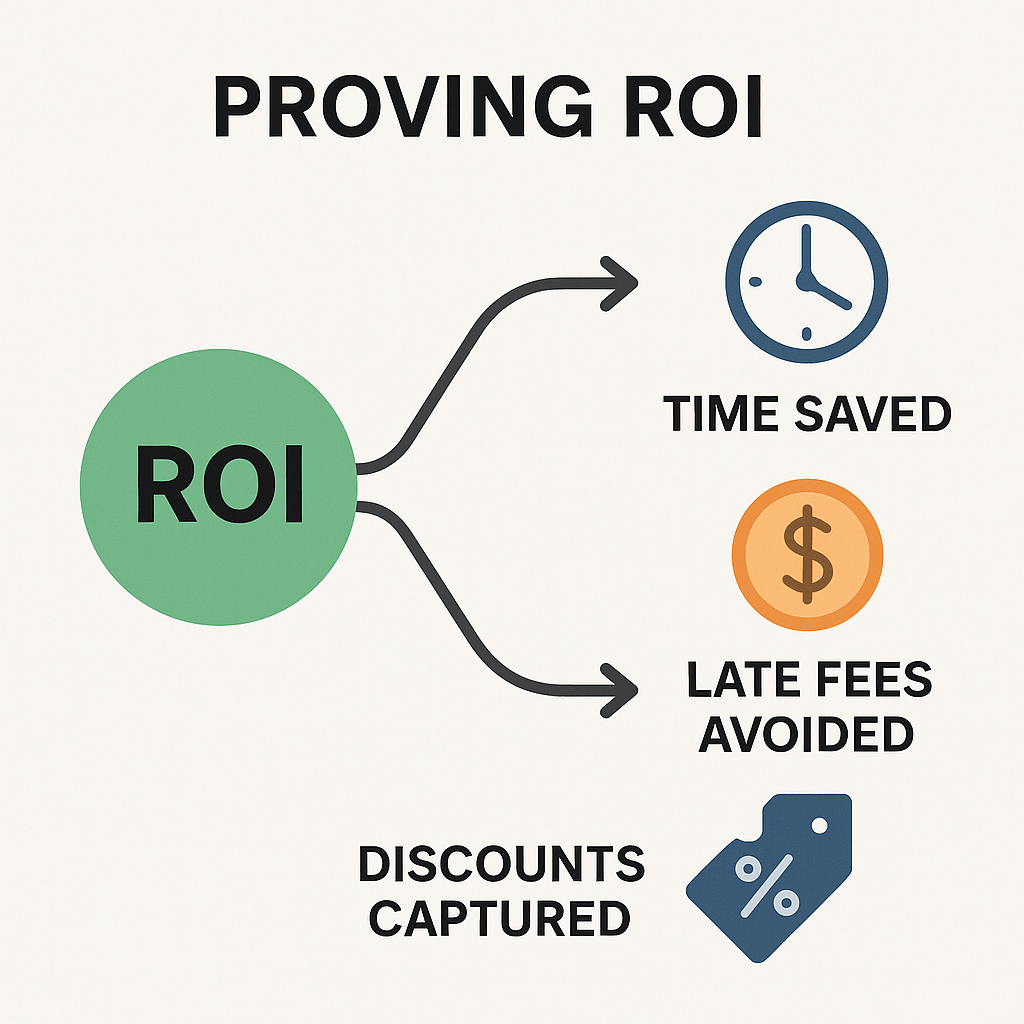
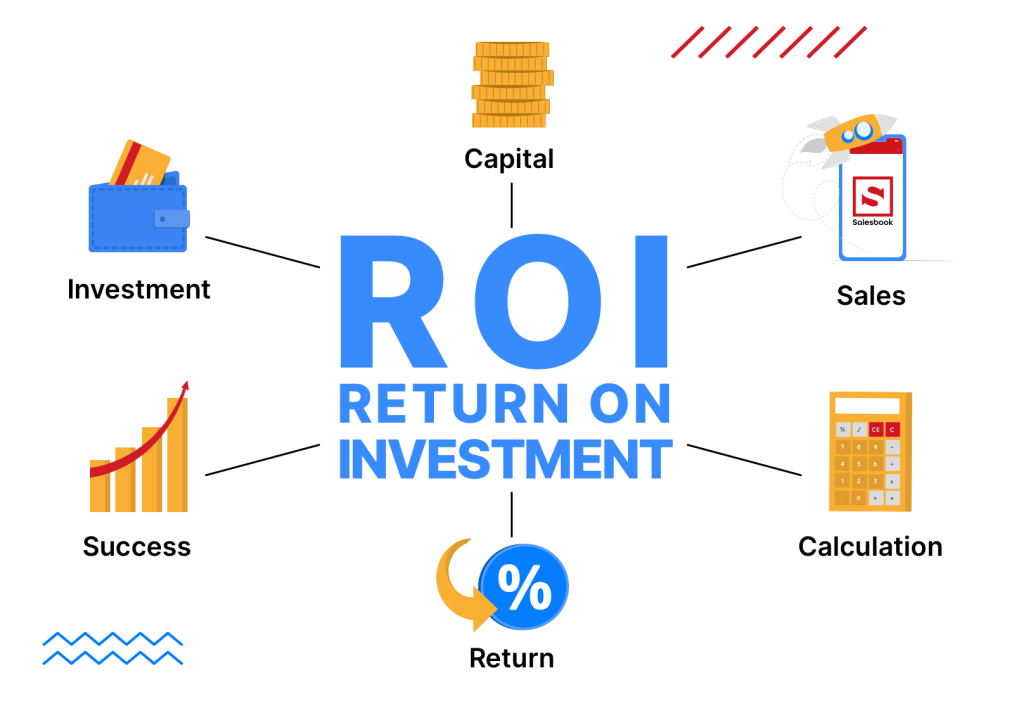

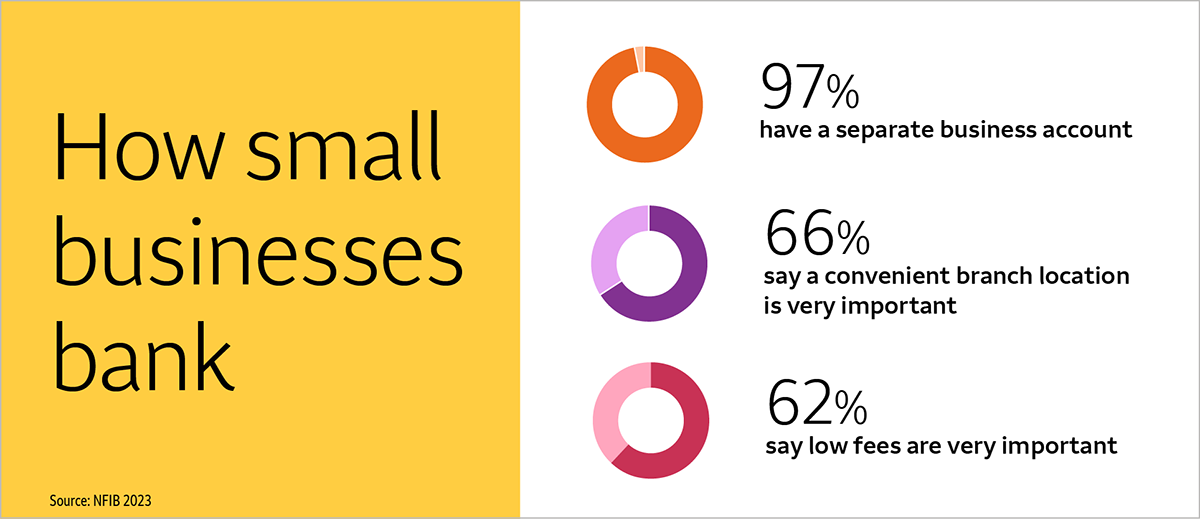
In today’s fast-moving business and PeopleOps world, the pressure is on for people and operations leaders not just to do things, but to show value. It’s not enough to have efficient processes, engaged employees or the right tools; you must demonstrate the return on investment (ROI) of your initiatives. This blog explores how to prove ROI by focusing on three tangible levers: time saved, late fees avoided, and discounts captured. We’ll look at the challenges, pain points, and how a PeopleOps-oriented approach can turn intangible benefits into hard business cases.
Why ROI matters for PeopleOps


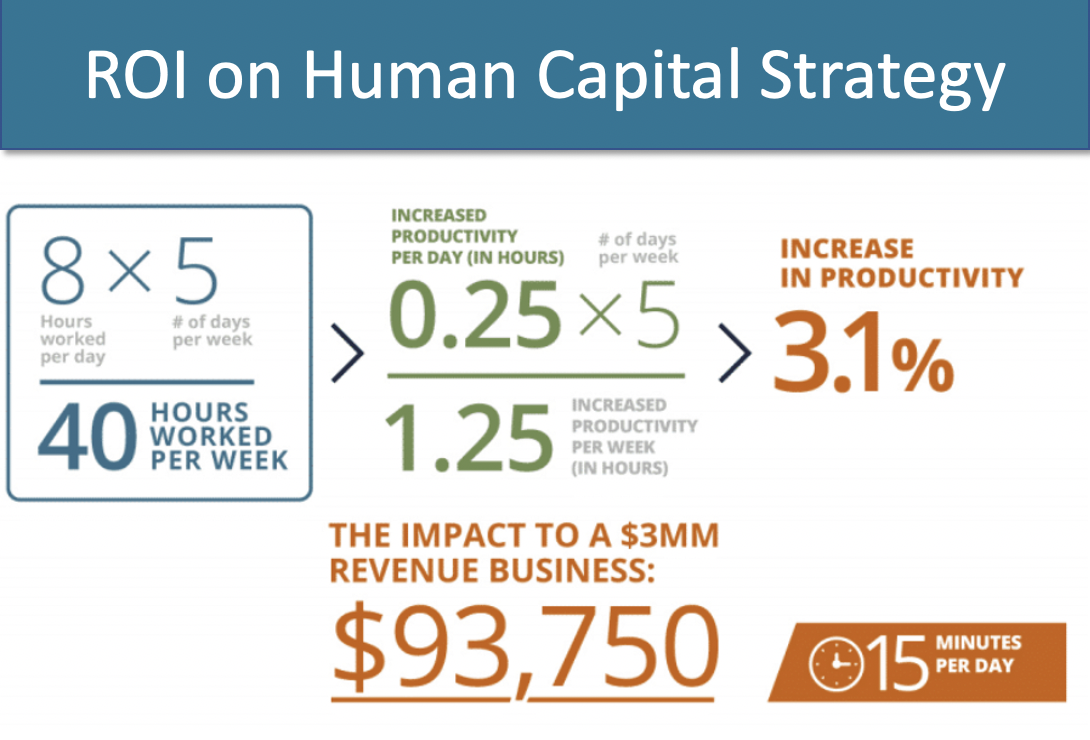
The function of OpenAI-style “People Operations” (PeopleOps) goes far beyond traditional HR. It encompasses culture design, process optimisation, analytics and aligning human capital with business outcomes. Wikipedia
However, one of the biggest challenges is bridging the language gap between PeopleOps (which often talks about engagement, culture, productivity) and Finance / business leaders (who demand business metrics, cost savings, revenue impact). As one industry article puts it:
“When HR and financial people use different frameworks and language … HR must translate human capital outcomes into metrics that finance understands.” ADP
So proving ROI isn’t optional; it’s essential. It shifts your work from being seen as “nice to have” to “core business driver”.
The problem & common pitfalls
- Focusing only on soft outcomes (e.g., employee happiness) without converting them into measurable business value. SHRM+1
- Not defining a baseline (what would happen if we did nothing) so you can’t show incremental benefit. ADP
- Lacking clear tracking of metrics such as saved time, avoided cost, captured opportunity.
- Siloed data: PeopleOps often has great data, but may not integrate with finance / business systems, which limits value.
Three high-impact levers to prove ROI
1. Time Saved
Time saved is appealing because it is both intuitive and measurable. When you reduce wasted hours, streamline workflows or automate manual tasks, you unlock capacity and cost savings.
Pain points
- Manual HR / operations tasks (e.g., onboarding paperwork, approvals, expense processing) take up too much time.
- People managers and employees spend significant non-value time on admin rather than strategic work.
- Slow processes lead to delays in revenue-generating activities or create bottlenecks.
How to measure & turn into ROI
- Identify the task, current time spent = T1, cost (salary + overhead) for that time.
- After optimisation, time spent = T2 (T2 < T1).
- Time saved = (T1 − T2) × salary cost per hour.
- Multiply by frequency (e.g., weekly/monthly/yearly) to get annual saved cost.
- Spark conversation: With 1,000 employees, even saving 30 minutes per employee per month = ~500 hours/year. At an average loaded cost of ₹1,000/hour = ~₹500,000/year.
- Use formula: ROI = (Net Benefit – Cost) / Cost × 100%. AIHR+1
Real-world scenario
Suppose your company used to have manual expense reimbursement taking 4 hours per claim and 500 claims/year. You invest in an automated solution and reduce it to 1 hour/claim. Hours saved = (4–1) × 500 = 1,500 hours. If loaded hourly cost is ₹600, annual savings = ₹900,000. If the automation tool cost ₹300,000/year including maintenance, net benefit = ₹600,000. That becomes a strong business case for PeopleOps.
PeopleOps role
- Map processes and identify time drains.
- Implement automation, self-service tools, better workflow.
- Report before/after metrics.
- Align time-saved with business outcomes (e.g., faster go-to-market, improved customer responsiveness).
2. Late Fees Avoided
Avoided costs are an under-leveraged ROI driver in PeopleOps/Operations. Late fees may arise in vendor contracts, compliance filings, payroll, benefits administration or project deliverables.
Pain points
- Missed deadlines for vendor invoices ➜ late payment fees, lost discounts.
- Missed compliance or tax deadlines ➜ fines, legal risk.
- HR/ops processes that support business rhythm aren’t integrated, leading to last-minute rushes and fees.
How to measure & turn into ROI
- Identify common cost of late fees: e.g., vendor penalty fee ₹10,000 if invoice paid after 30 days.
- Establish frequency: say 12 instances/year historically → ₹120,000 cost.
- Introduce process improvements (automated reminders, workflow, owner accountability).
- If you reduce by 10 instances/year → savings ₹100,000.
- Relate savings to PeopleOps investment.
Real-world scenario
A mid-size firm spent an average of ₹150,000/year in late fees across payroll benefits vendors (missed submission deadlines). With a PeopleOps system that includes automated deadlines and alerts, the number of late-fee incidents dropped from 15 to 2. Yearly savings ~₹130,000. With a PeopleOps platform costing ₹200,000/year, net benefit ~₹(70,000) in year one, but break-even by year two and positive beyond.
PeopleOps role
- Audit “error/late fee” sources.
- Build accountability workflows and automation.
- Monitor metrics: number of late-fee incidents, cost per incident, trend.
- Include avoided fees in ROI dashboards.
3. Discounts Captured
The third lever is about capturing value proactively, discounts, rebates, early-payment discounts, volume pricing, and vendor incentives. PeopleOps may not own procurement, but many PeopleOps processes touch vendor relations (benefits providers, payroll vendors, training providers).
Pain points
- Vendors offer early-payment discounts that go unused because HR/ops pay late.
- Benefits providers or training vendors give bulk or early-plan discounts that require coordination.
- Decentralised spending means missed opportunities for negotiated discounts.
How to measure & turn into ROI
- Benchmark: vendor offers 2% discount if invoice paid within 10 days; invoice volume ₹10 million/year → potential discount = ₹200,000.
- Track actual discount captured before vs after process improvement.
- Suppose captured discount rises from 25% of potential (₹50,000) to 90% (₹180,000) → incremental capture = ₹130,000.
- Associate process cost (people + system) and compute ROI accordingly.
Real-world scenario
An organisation centralised its training bookings under PeopleOps, negotiated with vendor for 5% discount for annual commitment of ₹2 million and upfront 30-day payment. Previously bookings were decentralised, few benefits captured. After centralisation, discount captured = ₹100,000/year. PeopleOps investment (centralised system) cost = ₹40,000/year → ROI is favourable.
PeopleOps role
- Partner with procurement & finance to identify discount/leverage opportunities.
- Digitise vendor-invoice workflows to enable early payment.
- Monitor and report discounts captured vs potential.
- Position PeopleOps as strategic value-lever, not cost centre.
Building the Business Case


Here’s a structured way PeopleOps teams can build their ROI business case:
- Define the problem
- What is the process inefficiency, late-fee risk, or missed discount?
- What is the scope (number of employees, vendors, invoices, etc.)?
- What is the baseline cost (time hours, number of incidents, missed value)?
- Quantify the “cost of doing nothing”
- E.g., 1000 hours/year wasted × ₹600/hour = ₹600,000.
- Late-fee incidents 20/year × ₹10,000 = ₹200,000.
- Discount opportunities missed = ₹150,000/year.
- Define the investment
- Tool cost, implementation cost, process redesign, training.
- E.g., PeopleOps implementation cost = ₹300,000 one-time + ₹100,000 annual support.
- Estimate benefits
- Time saved, incidents avoided, discounts captured.
- Example: Time saved ₹500,000/year; late-fees avoided ₹180,000; discounts captured ₹130,000. Total annual benefit = ₹810,000.
- Calculate ROI and pay-back period
- ROI = (benefit – cost) ÷ cost × 100%.
- Pay-back period = investment ÷ annual benefit.
- Using numbers: (810k – 100k) ÷ 100k = 710% ROI; pay-back ~0.13 years.
- Visualise & communicate
- Use dashboards, charts, trend lines. Finance loves numbers, visuals and comparatives. ADP
- Spell out intangible benefits too (improved experience, reduced risk) but lead with hard metrics.
- Monitor and iterate
- Track actual vs projected. Update your model quarterly.
- Use cohort analysis (which business units or vendor types): as the research suggests, ROI is rarely uniform across all groups. Selerix+1
PeopleOps: Strategic positioning
As a PeopleOps function, your target should be shifting from “operations support” to “value driver”. Here are some strategic tips:
- Integrate with finance and procurement earlier — you’ll need their data (costs, vendor contracts, invoice flows).
- Work cross-functionally — the best savings often come at the intersection of HR, finance, procurement and IT.
- Speak the financial language — talk in terms of cost savings, pay-back, avoided risks, captured value rather than only “better employee experience”.
- Use real-world scenarios from your company — “In our onboarding process we shaved 50% time and improved speed-to-productivity by 3 days. That’s equivalent to X full-time-equivalents (FTEs) saved.”
- Build dashboards that combine PeopleOps metrics (time, incidents, discounts) with business metrics (cost avoided, value captured) and tie into company KPIs.
- Prepare for scrutiny — boards and CFOs will ask tough questions. Be ready with baseline data, assumptions, risk factors. Lantern
Example Case Study (Hypothetical)
Company XYZ is a mid-sized technology firm with 1,200 employees. Their PeopleOps team notices:
- Onboarding forms and equipment provisioning took an average of 10 hours per employee (including delays).
- The vendor network for training/benefits had scattered invoice payment, resulting in ~₹300,000/year in late-fees and missed early-payment discounts.
PeopleOps initiative: Implement a centralised onboarding portal + automated vendor invoice workflow + vendor negotiation for early-payment discounts.
Baseline:
- 1,200 hires/year × 10 hours = 12,000 hours; cost at ₹500/hour = ₹6 million.
- Late-fees & missed discounts = ₹300,000/year.
- Total baseline cost = ₹6.3 million.
Investment:
- Onboarding portal + invoice workflow system = ₹1 million one-time plus ₹300,000 annual maintenance/training.
Projected benefits (year 1):
- Onboarding time reduced to 5 hours → savings 5,000 hours × ₹500 = ₹2.5 million.
- Late-fee & discount capture improved → savings ₹220,000.
- Total benefit year 1 = ₹2.72 million.
- Net cost year 1 = ₹1.3 million → net gain ~₹1.42 million. ROI ~109%.
Years 2+ (maintenance only):
- Benefit ~₹2.72 million – cost ₹300k = ₹2.42 million annual net. Pay-back period <1 year.
Impact communicated: PeopleOps reduced cost of onboarding and vendor mishandling by ~22% in first year, freed up ~5,000 hours for value work, captured earlier discounts & avoided penalties, strong business case.
Key Take-Aways
- Time saved, late fees avoided and discounts captured are three concrete levers PeopleOps can use to prove ROI.
- Don’t just operate: build the business case that shows how investing in PeopleOps pays off.
- Use baseline, investment cost, benefit calculation, ROI formula and dashboards to communicate.
- Align your metrics with business and finance language.
- Track, iterate & refine, ROI is a moving target, not a one-time calculation.
Leave a Reply