

In today’s fast-moving digital world, organisations across business and technology functions are under intense pressure to do more with less, deliver faster, and adapt to change. For teams in PeopleOps (HR, talent operations, business ops) this means streamlining processes, reducing errors, improving employee experience—and enabling strategic rather than purely operational value.
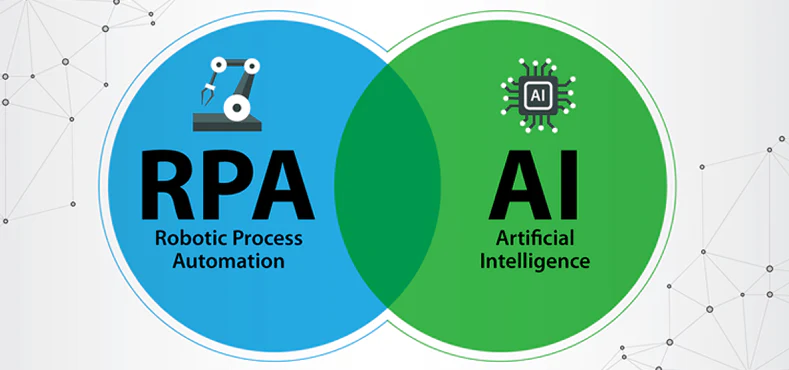
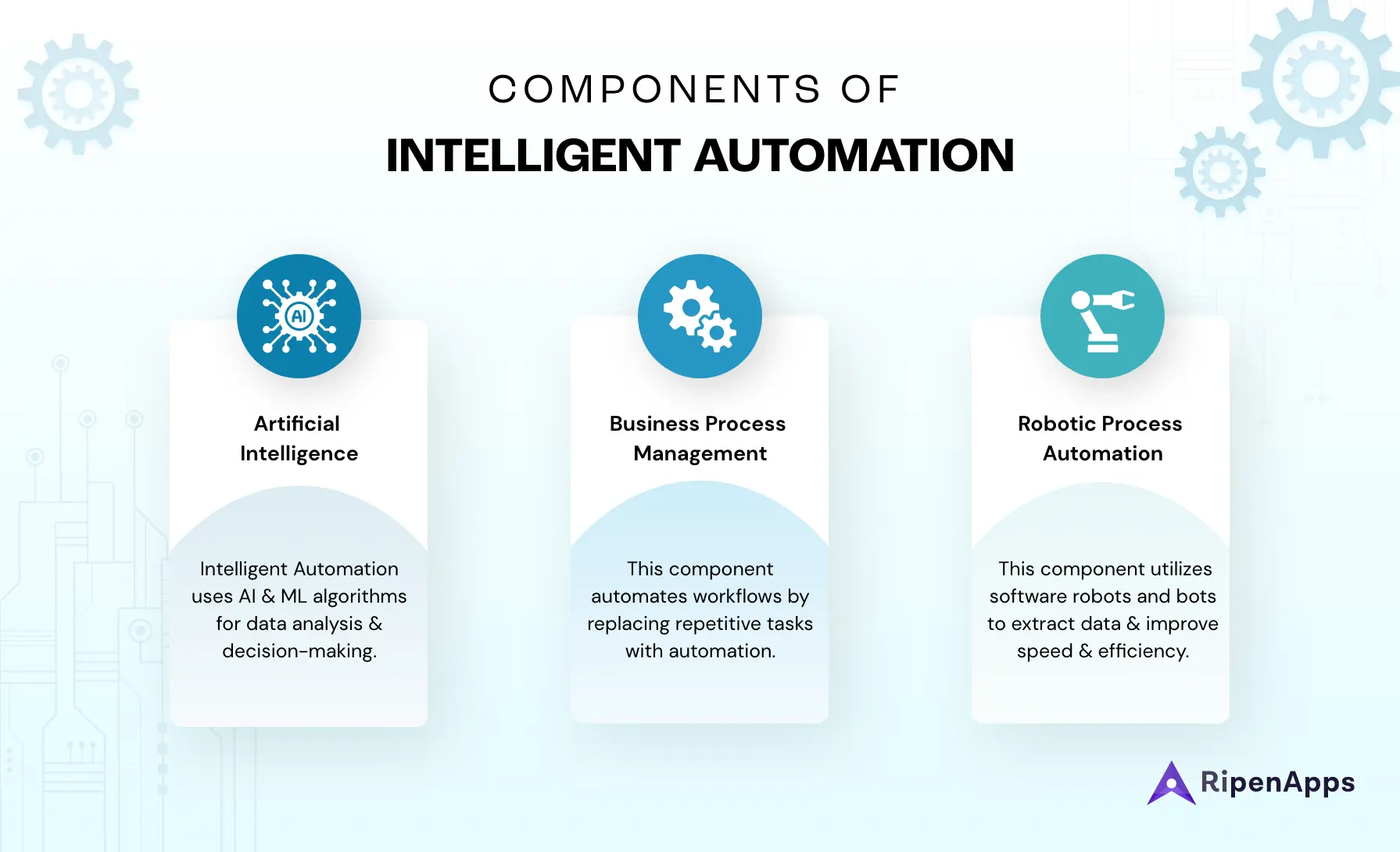
One of the standout opportunities here is the convergence of Robotic Process Automation (RPA) and Artificial Intelligence (AI), often referred to as intelligent automation. When done right, this combination can transform how work gets done. In this article we’ll explore:
- What RPA and AI bring individually
- Why combining them makes sense
- The pain-points and challenges organisations face
- Key best practices to succeed with this integration
- How PeopleOps teams can lead and support this change
What RPA and AI each bring to the table
What is RPA?
RPA involves software “robots” or bots that mimic human actions in a digital environment, logging into applications, moving data, filling forms, triggering workflows. It’s especially effective for structured, high-volume, repetitive tasks. Investopedia+2Hyland+2
Benefits:
- Fewer manual errors
- Faster turnaround
- Cost savings in routine work
- Freeing human capacity for higher-value work
What is AI (in this context)?
AI refers to algorithms and systems that can learn, interpret unstructured data, recognise patterns, make decisions, adapt over time. Within automation contexts, it might include Machine Learning (ML), Natural Language Processing (NLP), Intelligent Document Processing (IDP) and more. dipoleDIAMOND+1
Benefits:
- Handling unstructured data (emails, scanned documents, images)
- Predictive/real-time decision making
- Continuous improvement and adaptability
Why combining them makes sense
When you integrate AI with RPA, you upgrade from “automating known rules” to “automating intelligent, adaptive processes”. Some of the advantages:
- RPA handles the heavy lifting of workflows, while AI handles complexity and judgement. Comidor Low-code Automation Platform
- You can extend automation into areas previously considered too messy (unstructured data, exceptions, decisions). Celonis+1
- The strategic shift: automation becomes not just cost-reduction, but innovation, scale, agility. SS&C Blue Prism+1
- Rise of “hyperautomation” – combining RPA, AI, process mining, analytics to automate end-to-end. blueprintsys.com
Pain-points & challenges organisations face
Even though the technology sounds compelling, many organisations struggle. Here are common problems:
- Scope too narrow: Businesses may apply RPA to trivial tasks, missing the strategic value of integrating AI.
- Data and process complexity: Legacy systems, disparate data sources, lots of exceptions make it hard to apply rule-based bots alone.
- Change management gap: PeopleOps often underestimate the impact on roles, skills and culture when automations expand. For example, employees may fear job loss. Hyland+1
- Lack of alignment with business strategy: Automation efforts may be siloed in IT or operations, rather than tied to overall objectives. Thoughtful
- Scalability and maintenance: Building a few bots is one thing, managing dozens or hundreds across divisions is quite another.
- Governance, risk & compliance: As AI enters, issues around data privacy, auditability, bias, explainability come up. Openxcell+1
Best Practices for Combining AI + RPA: A Roadmap for PeopleOps & Tech Teams
Here are key best practices, to turn vision into reality.
1. Align automation with business strategy
Start with why. What business/PeopleOps outcomes do you want? Faster onboarding, fewer errors in payroll, better employee experience, etc. Then ensure your AI+RPA initiative aligns and has measurable KPIs. Thoughtful+1
Practical tip: Host a joint workshop with PeopleOps + IT + finance to map pain-points and pick processes where AI+RPA can deliver most value.
2. Select the right use-cases: high-impact, high-feasibility
Prioritise use-cases where:
- There is high volume and repetition
- There is already some rules-based automation (RPA) but with many exceptions/unstructured input
- Lots of manual work, errors or delays
- The data is accessible and structured/unstructured input is manageable
For example: invoice processing with many scanned receipts (structured + unstructured) where AI + RPA can reduce time and error. Real-world: one case study showed >80% reduction in processing time for expense tasks by combining OCR/IDP + generative AI + bot. arXiv
Practical tip: Use a “process heat-map” – plot volume, manual effort, errors, business risk and pick the top 2-3 for pilot.
3. Build strong data & technology foundations
AI only works well if it has good data, and integration points are solid.
- Ensure clean, accessible data sources
- Integrate systems so bots can access the data the AI needs
- Set up upstream (capture, upload) and downstream (action, update) flows
- Consider the technology stack: are the RPA and AI tools compatible? Is there an orchestration layer? IT Convergence
Practical tip: In the pilot phase, build a sandbox with end-to-end flow, test with real data.
4. Choose the right architecture and platform
Given the shift to hyperautomation, choose platforms that support bots + AI + analytics together (or integrate well). Some key decisions:
- On-premises vs cloud vs hybrid (cloud often gives more scalability)
- Low-code/no-code tools to enable rapid deployment and business involvement
- Orchestration and monitoring layers to manage bots + AI flows, exceptions, humans-in-loop
- Governance features built-in for logging, auditing, exception handling.
Practical tip: Evaluate not just one bot but the “automation ecosystem” – can you scale to 50+ use-cases?
5. Manage change, skills & culture
For PeopleOps this is vital. Automation isn’t just a tech roll-out—it affects people.
- Communicate clearly: “Our goal is to free you from tedious work, to let you focus on higher-value tasks.”
- Upskill your teams: automation literacy, data/AI understanding, change-readiness.
- Define new roles: bot-analyst, exception-handler, process-owner, etc.
- Monitor impact on employee experience, if bots cause increased exception work for humans, that’s a red flag.
Practical tip: Set-up a mini-centre of excellence (CoE) for automation with business + tech + PeopleOps representation.
6. Start small, iterate fast, measure value
Rather than big-bang, follow agile pilot → learn → scale.
- Launch one pilot: measure baseline, results, ROI. Many organisations see measurable ROI within months. MicroGenesis TechSoft
- Track the right metrics: cycle time, error rate, cost per transaction, employee satisfaction.
- Iterate: Use findings from pilot to refine process, then scale to more complex or adjacent processes.
Practical tip: Use a dashboard for your automation KPIs and review monthly; set governance to retire or revise bots as business changes.
7. Embed human-in-loop and exception handling
Even the best bots + AI won’t handle 100% of cases, exceptions will happen, and you must design for the human-in-loop rather than ignore it.
- Build workflows where bots escalate to humans when AI confidence is low
- Use human feedback to continuously train and improve the AI models
- Maintain accountability and audit trails for human decisions
Practical tip: Define “confidence thresholds” for AI decisions early, and monitor exception volumes to refine thresholds.
8. Govern for risk, compliance & ethical AI
As AI becomes involved in decisions (even if minor) you must govern its use.
- Document data lineage, decision logic, biases, audit logs
- Ensure compliance with data regulations (GDPR, local equivalents)
- Monitor for drift in AI performance and unintended consequences
- Set clear ownership of bots and models: who’s responsible when things go wrong?
Practical tip: Have an AI + automation governance charter from outset, involving legal, compliance, PeopleOps, tech.
9. Design for scalability and resilience
When you’ve proven value, you’ll scale. To avoid reinventing each use-case, design with scale in mind:
- Use reusable components (bots, modules, services)
- Standardise naming, logging, error-handling mechanisms
- Use orchestration to manage large bot fleets and monitor health, performance
- Plan for updates, changes in source systems, changing business rules
Practical tip: At pilot time, define a “scale playbook” that outlines how you’ll go from 1 to 50 bots, what resources you’ll need, what governance.
10. Measure business outcomes & shift focus from cost to value
It’s tempting to view automation purely as cost-cut. But the biggest wins come when automation enables growth, innovation, employee experience. For instance: faster customer onboarding, better accuracy in payroll, improved employee experience, less burnout. Combine cost-savings with value creation. MicroGenesis TechSoft
Practical tip: Develop a benefits-realisation plan: what will you reinvest when bots free up capacity? Which new initiatives will you fund?
Example scenarios where AI+RPA work in PeopleOps / BusinessOps
Here are a couple of real-world style scenarios to illustrate how PeopleOps can harness these practices:
Scenario A: Employee Onboarding
Pain-point: Many manual steps, documents to verify, systems to provision access, training to schedule, data to enter. High error rate, delays, poor new-hire experience.
Solution:
- RPA bot triggers once a new-hire is hired → creates accounts, sets up access, sends welcome emails and training invites.
- AI component reads uploaded documents (ID, qualifications) via OCR + NLP, flags missing/invalid items or checks policy-compliance.
- If AI confidence is low, human recruiter reviews the case (human-in-loop).
Value: New-hire onboarding time drops significantly, fewer errors, better experience for employee, PeopleOps freed up to focus on culture/integration rather than admin.
Scenario B: Payroll Exception Handling & Employee Queries
Pain-point: Payroll processing has routine high-volume tasks but many exceptions (contract changes, benefit updates, deductions). Employee HR queries pile up.
Solution:
- RPA handles routine payroll entries, updates.
- AI monitors unstructured employee queries (chat/email), classifies and responds to standard requests (e.g., “Why is my deduction higher?”) via NLP.
- For complex cases, AI suggests action, bot executes it, human reviews final step.
Value: Faster response to employee questions, fewer manual interventions for PeopleOps team, higher employee satisfaction.
How PeopleOps can play the leading role
As a PeopleOps team or leader, you are well-placed to drive successful AI+RPA projects, here’s how:
- Champion the change: Advocate for automation not just in IT/ops but in the context of workforce experience, talent operations, culture.
- Bridge business + tech: Translate business pain-points into automation use-cases, help set priorities, ensure the voice of people is heard.
- Ensure alignment with workforce strategy: As automation rolls out, consider impacts on skills, roles, career paths, culture. Design job re-design plans.
- Focus on employee experience: Automation should improve, not degrade, the employee journey. Measure human-centric metrics (satisfaction, retention, productivity).
- Create training & reskilling programs: As bots and AI take over repetitive work, PeopleOps must help employees move to value-added roles (analysis, design, exception handling).
- Govern ethically: Safeguard fairness and transparency in AI-assisted decisions (e.g., if automation is used in talent-management processes).
- Monitor and iterate: As automation scales, PeopleOps should own part of the governance, measuring impact on workforce, collaborating across functions to optimise.
Key Takeaways
- The combination of AI + RPA, often called intelligent automation or hyper automation, represents a powerful shift: from automating tasks to automating decisions and workflows.
- Success depends not just on technology but process, people, data, governance, and alignment with strategy.
- PeopleOps has a critical role: helping choose the right use-cases, managing the human side of change, ensuring workforce strategy aligns with automation strategy.
- Start small with a pilot, measure impact, iterate, build foundations for scale.
- Focus on outcomes beyond cost, better experience, more agility, higher value work.
Leave a Reply