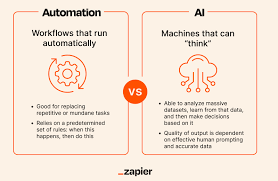

In today’s business and PeopleOps environment, we often hear the terms automation, artificial intelligence (AI), and agents used almost interchangeably. But for HR, PeopleOps and business leaders, it’s important to understand how each differs so you can pick the right strategy, communicate clearly with stakeholders, and set appropriate expectations for implementation, risk, and value.
In this blog we’ll walk through:
- What each term means: automation, AI, and agents
- Key differences, with real-world business/PeopleOps use-cases
- Pain points and pitfalls when mixing them up
- How PeopleOps can help organisations choose and implement solutions appropriately
- Summary and checklist for practical decision-making
1. What do we mean by Automation, AI, and Agents?
Automation
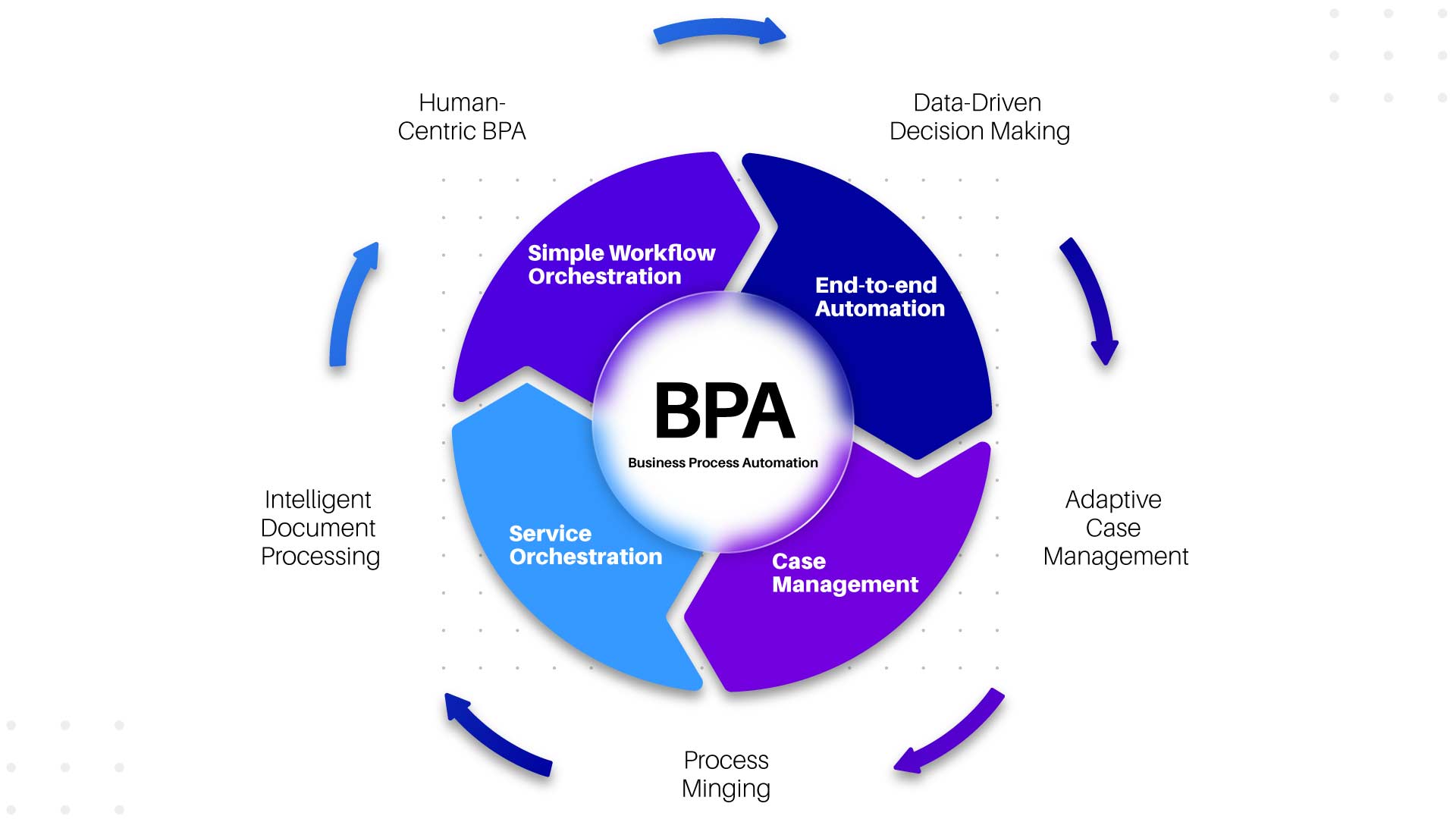
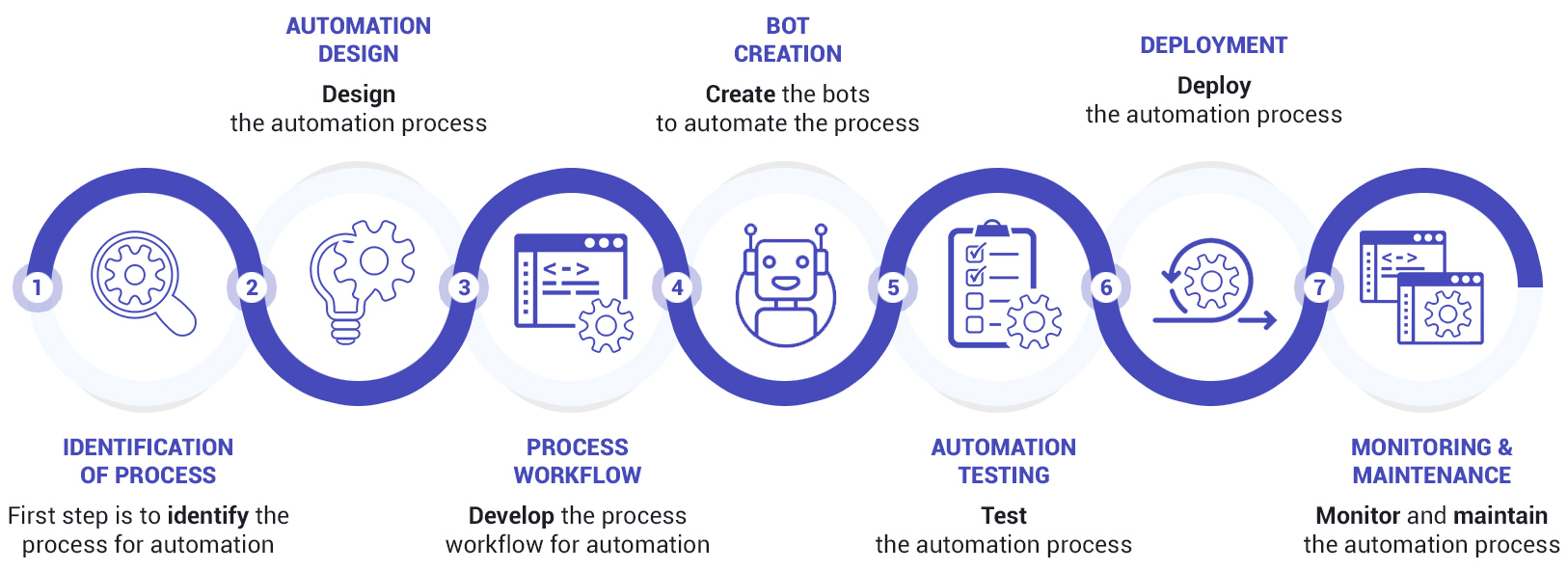
Automation refers to the design and deployment of systems that perform pre-defined tasks or workflows with minimal human intervention. The tasks are usually repetitive, structured, and rule-based.
Image placeholder:
6
Key characteristics:
- A trigger leads to a predictable action (“If X then Y”). For example: when a new employee joins, send welcome email & set up access rights.
- Usually no “intelligence” in the sense of learning or adapting beyond the rules. As one source puts it: “Automation is about setting up predefined workflows—‘When X happens, do Y’ to complete repetitive or routine tasks without manual effort.” FXMedia+3Zapier+3Moveworks+3
- High reliability for known routines; lower cost and risk if the process is stable.
Artificial Intelligence (AI)
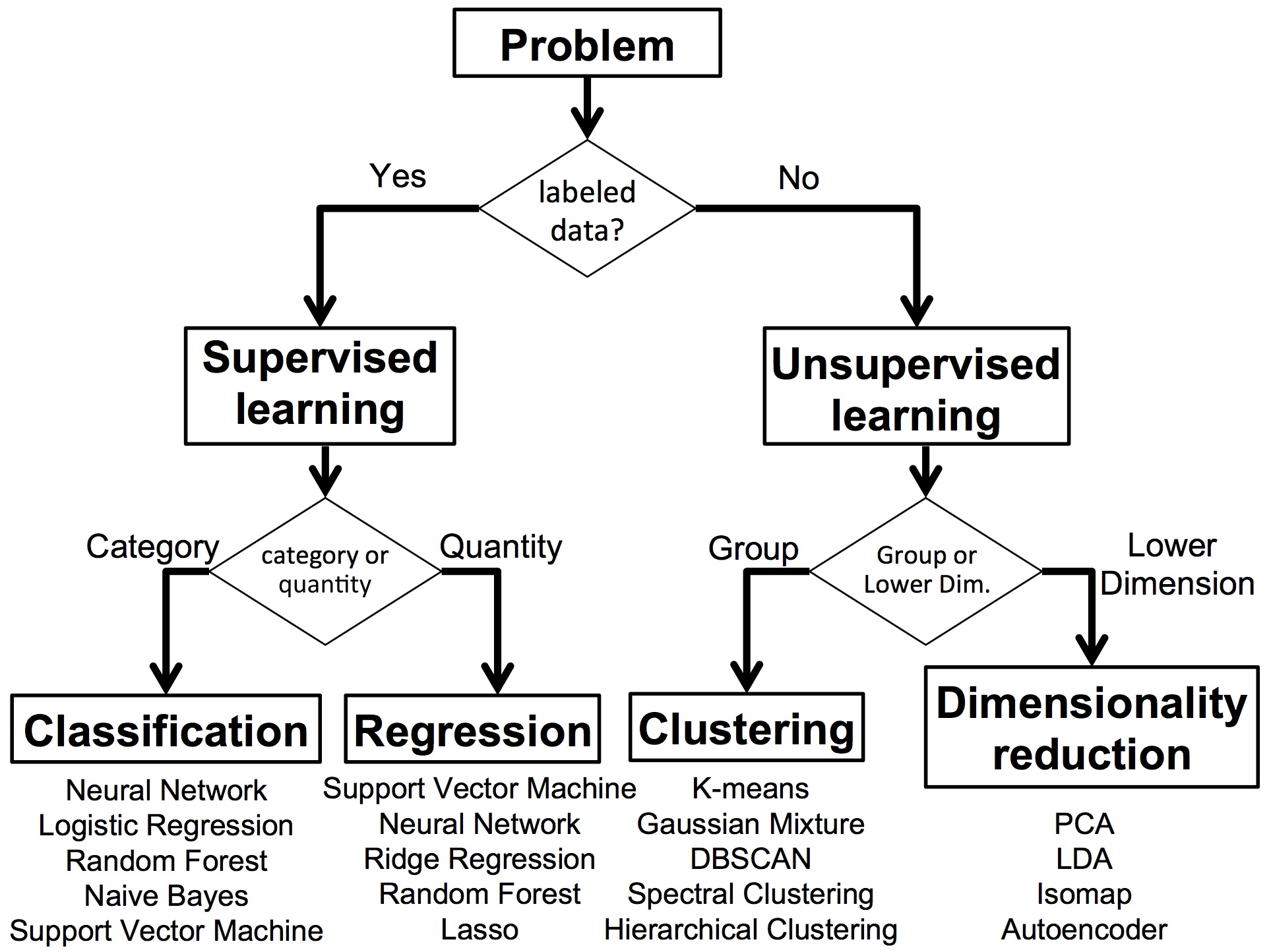
AI is a broader umbrella, it includes systems that can learn patterns, make decisions, or adapt based on data, not just follow rigid rules.
Image placeholder:


6
Key characteristics:
- Analyses data, recognises patterns, sometimes predicts outcomes. For example: an HR analytics tool uses historical turnover data to predict which employees are at risk of leaving.
- It can include machine learning, natural language processing, computer vision etc. According to one article: “Automated systems focus on repetitive tasks based on predefined rules… AI adds a layer of intelligence that … can autonomously learn from a defined dataset, recognise patterns, problem-solve, and make decisions based on that new information.” Moveworks
- AI typically requires data, training, validation; it’s not necessarily plug-and-play.
Agents (AI Agents)
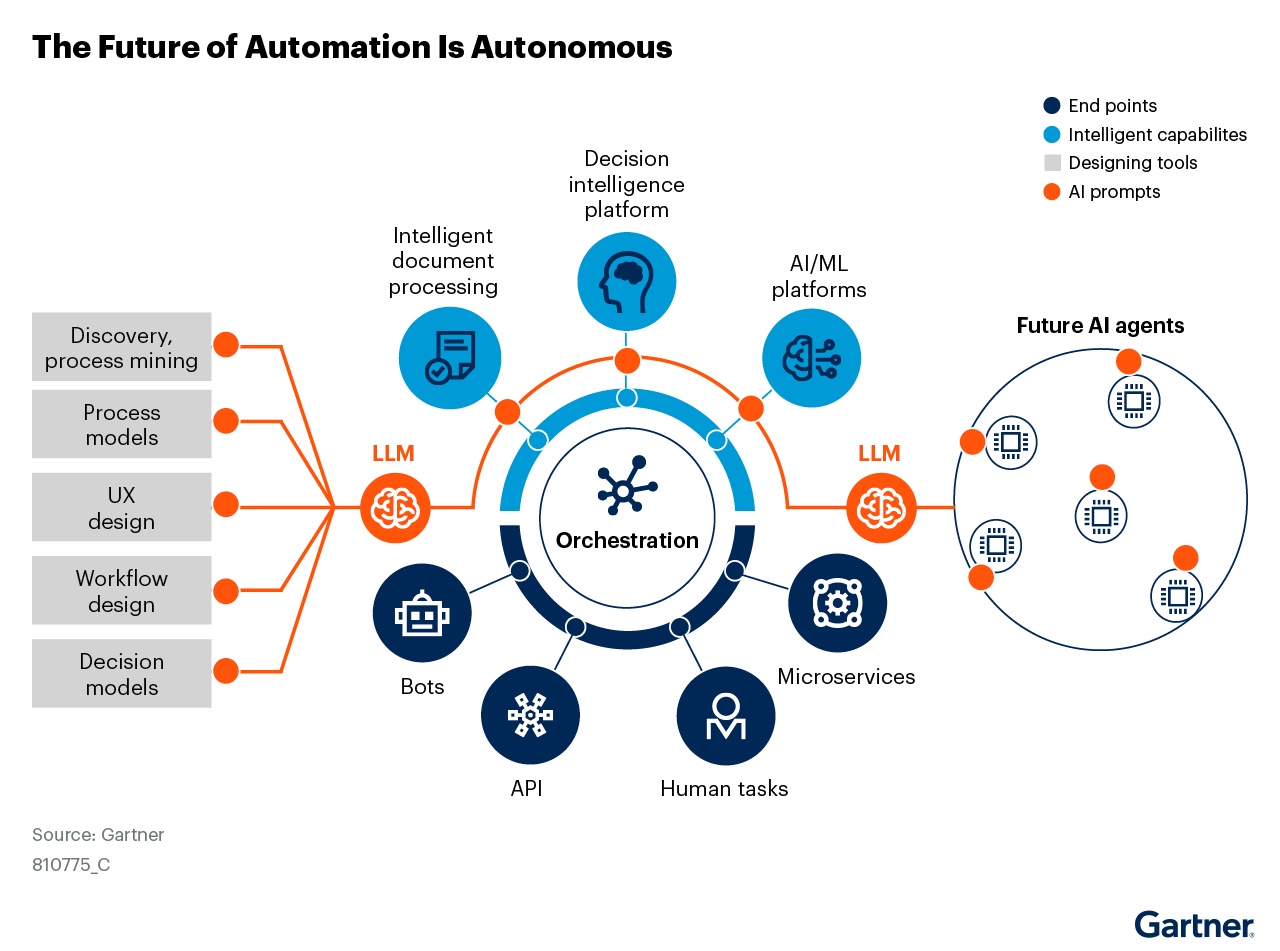
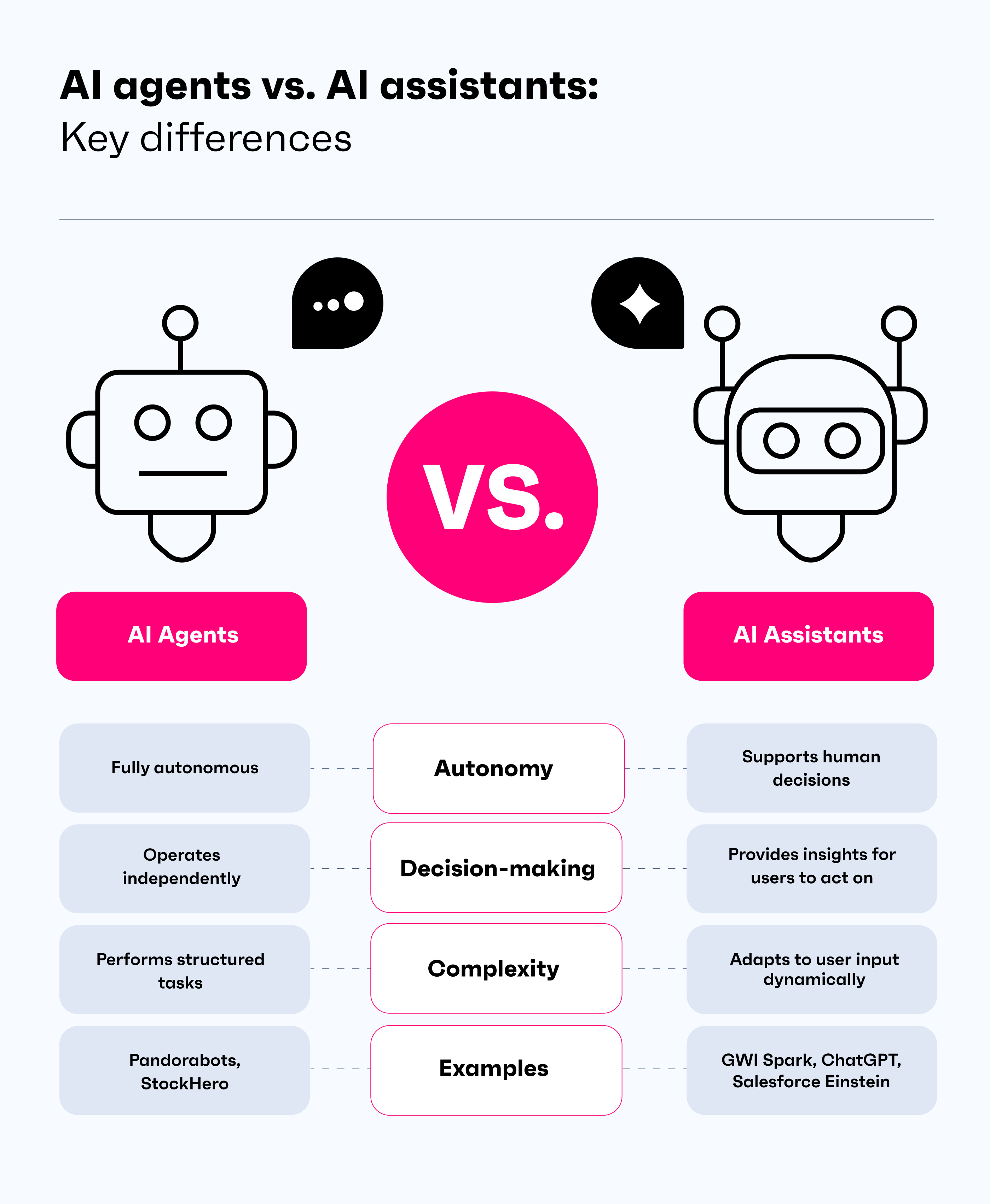
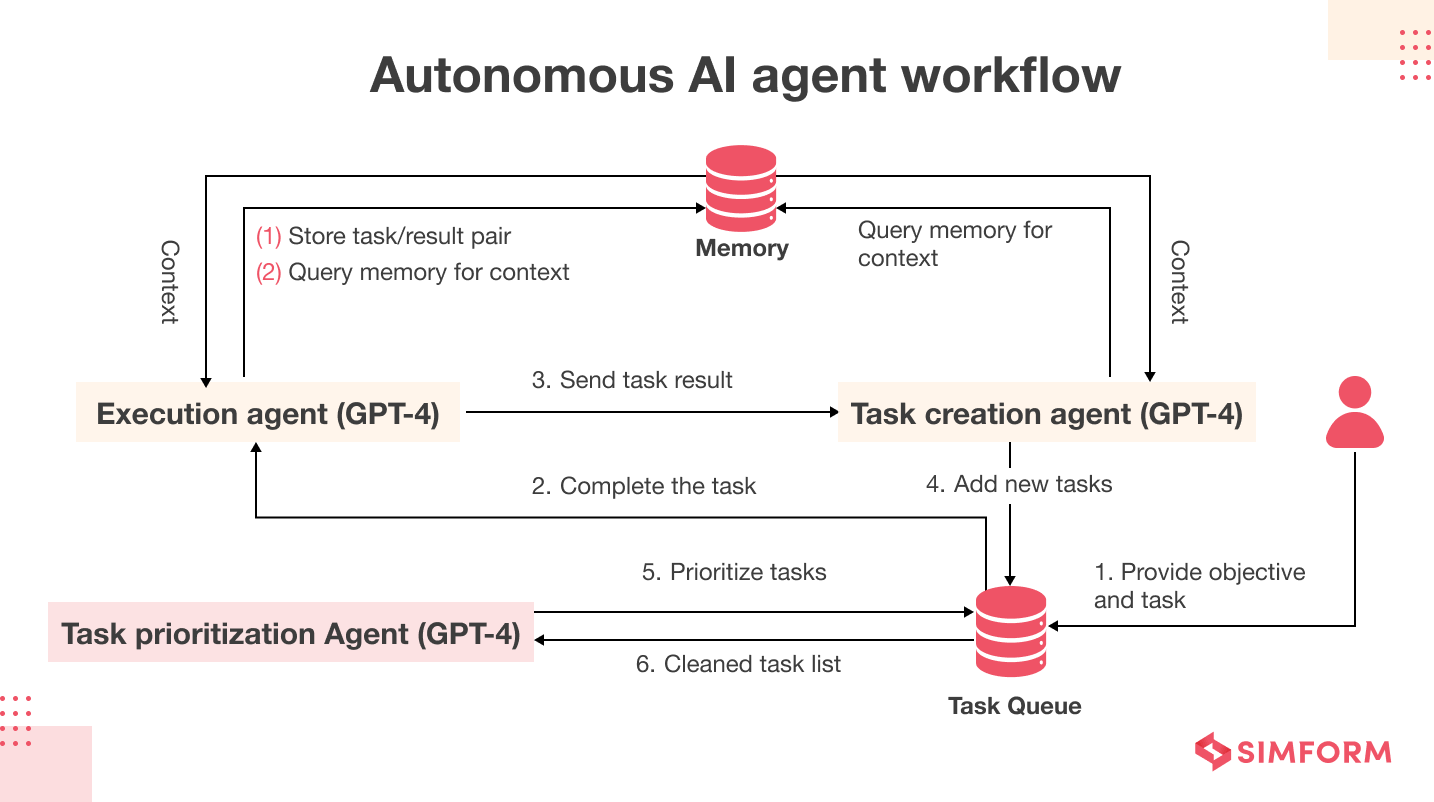
“Agent” is a newer and somewhat more advanced concept: an AI Agent is a system that acts autonomously, often taking decisions or executing tasks in complex environments rather than just responding to fixed rules or prompts.
Image placeholder:

6
Key characteristics:
- Acts with some degree of autonomy: perceives its environment, makes decisions, executes steps toward a goal. For example: a digital agent that monitors incoming resumes, identifies promising ones, schedules interviews, and sends follow-ups — with minimal human guidance.
- From resources: “What automation tools don’t do is make decisions or consider context. That’s where AI agents shine. They can assess live inputs, adapt to real-time situations, make decisions, and take action.” Salesloft+1
- They can be more unpredictable and require closer governance / oversight. For instance: “AI agents … are highly adaptive to new variables and scenarios … but may produce unpredictable or undesired outcomes, necessitating oversight.” FXMedia
2. Key Differences – Side by Side
Here’s a table summarising how to distinguish them (especially from a PeopleOps/ business lens):
| Feature | Automation | AI | Agent |
|---|---|---|---|
| Input / Trigger | Known event, structured data, rule-based | Data (historical + current), may require training | Same as AI + environment context, may act without explicit trigger |
| Decision-making | Minimal (just following rules) | Moderate (learning, adapting) | High (autonomous decision making, planning) |
| Suitability | High-volume, repetitive tasks (e.g., onboarding checklist) | Pattern recognition, prediction (e.g., attrition risk) | Complex workflows, dynamic context, end-to-end tasks (e.g., full recruiting pathway) |
| Predictability | High (behaviour fixed) | Medium | Lower than automation — more variability |
| Risk / Oversight | Low to medium | Medium | Higher: must monitor for unexpected actions/ethics |
| PeopleOps Use-cases | Auto-assign access, send reminders, generate reports | Predict turnover, sentiment analysis, chatbots for FAQs | Digital “assistant” that autonomously engages with candidate, schedules, updates system, escalates issues |
Real-world scenarios
Automation scenario:
The HR team uses automation to trigger a welcome kit email and IT access request when a new hire form is completed in the HRIS. The process is fixed and predictable.
AI scenario:
The PeopleOps team deploys an AI-powered analytics tool that reviews past exit-interview transcripts and identifies patterns suggesting high turnover risk in certain teams. It flags those teams so PeopleOps can intervene.
Agent scenario:
A digital recruiting agent monitors job board replies, parses candidate responses, checks their fit via a quiz, and automatically schedules interviews without manual hand-offs. The agent also adapts if volume shifts, learning which sources produce better candidates and re-allocating outreach.
Why the difference matters
- Expectation management: You don’t implement an agent with the same budget, risk management, or timeframe as simple automation.
- Governance & ethical considerations: Agents may make decisions (e.g., rejecting a candidate) so you need oversight, transparency, and fall-backs.
- ROI and scaling: Automation might deliver quick wins (efficiency), AI might deliver insights, agents might deliver new capabilities but also require more investment in data, change-management and trust.
- PeopleOps role: You need to align with business strategy, pick the right mode, and support adoption, not just deploy tools.
3. Pain Points & Mistakes When They’re Confused
From a PeopleOps perspective, mixing up the three can lead to problems:
- Over-promising: Market hype around “AI agents” may encourage HR to believe you’ll just plug in an agent and it will magically solve recruiting or engagement issues. In reality, many so-called “agents” are simply automation or chatbots. One vendor blog warns of “agent washing” giving the name ‘agent’ to any smart tool when it isn’t one. Salesloft
- Wrong tool for the job: Using an agent framework for tasks better suited for simple automation (or vice-versa) leads to wasted time, cost and mistrust.
- Data & change-management gaps: AI and agents depend heavily on good data, processes and culture. Without that, they under-deliver.
- Governance & bias risks: Especially with agents making autonomous decisions, you must consider ethics, fairness, transparency, explainability.
- Change fatigue: PeopleOps may implement multiple systems (automation, AI, agent-tools) without clear integration, confusing end-users.
Example: Recruiting process gone wrong
Suppose a company adopts what they believe is an “AI Agent” for screening candidates. However, they only configure a rules-based system (“if years of experience <3 then reject”), which is really automation. It rejects many candidates, including diverse ones, leading to complaints. Because the system isn’t truly adaptive or context-aware, the HR team mis-labels it, fails to monitor bias, and the initiative loses trust.
4. How PeopleOps Can Help Organisations Choose & Implement the Right Solution
Here are steps PeopleOps can lead:
Step 1: Clarify business outcome & process
- What problem are we solving? (e.g., time to hire too long; engagement drop; manual admin burden)
- Is it a repetitive structured task or something that requires decision-making/learning?
- Example: If HR admin time for onboarding is high and the process is fixed, automation is first port of call.
Step 2: Map to the right technology option
- Use automation for standardising and scaling known workflows (e.g., employee off-boarding checklist).
- Use AI for analytics, pattern-detection, predictions (e.g., attrition risk; sentiment analysis).
- Use an Agent when you need an autonomous workflow that integrates steps, decides contextually, adapts (e.g., full digital agent recruiting pipeline).
Step 3: Assess readiness
- Data: Is the data clean, tagged, structured? Agents need more.
- Process maturity: Are workflows documented? Do you know where to intervene?
- Culture & change management: Are stakeholders ready to trust and adopt?
- Governance: Do you have oversight, transparency, auditing in place?
Step 4: Pilot / iterate
- Start small: automation first, then incremental AI, then agent-pilot.
- Measure outcomes: time saved, quality improved, stakeholder satisfaction.
- Monitor for issues: bias, unintended outcomes, user resistance.
Step 5: Scale thoughtfully
- Once the pilot succeeds, scale with guidelines: data governance, ethical guardrails, continuous monitoring.
- PeopleOps needs to partner with IT, business units and vendor teams, not just plug-and-play.
How PeopleOps adds value
- Translating tech speak into business value for HR/people teams.
- Ensuring alignment between technology adoption and people strategy (culture, engagement, skills).
- Managing change: training, communication, oversight.
- Ensuring fairness and transparency: especially when decisions impact people (hiring, performance, retention).
- Measuring ROI in people metrics, not just cost savings.
5. Summary & Practical Checklist
Summary
- Automation = rule-based, predictable, structured tasks.
- AI = adds intelligence: learns, predicts, adapts to data and patterns.
- Agent = autonomous actor: makes decisions, takes actions in complex or dynamic environments.
- In PeopleOps context: pick the right match between your process maturity, data readiness, business problem and risk/benefit trade-offs.
- Avoid hype: ensure clarity on what technology you are deploying, what it can and cannot do.
- PeopleOps have an important role, not just in technology adoption, but in people, process and governance aspects.
Checklist for PeopleOps Teams
- Have we clearly defined the business/people problem we want to solve?
- Is the task repetitive and well-structured (automation) or does it require pattern-recognition and adaptation (AI) or full autonomy (agent)?
- Do we have the quality of data and documented processes needed?
- Do we have the governance, ethical oversight and transparency for decision-making systems (especially agents)?
- Have we planned stakeholder adoption & change management?
- Have we defined the metrics of success (time-saved, quality improved, employee experience) and how to monitor them?
- Do we have a scalable roadmap (start small → iterate → scale) rather than “big bang” agent rollout?
Final Thoughts
As PeopleOps professionals, our mandate is not only to adopt technology but to enable people to do better, faster and more meaningfully. While the language around automation, AI and agents may seem technical, at the end of the day the questions we must ask are quite human:
- Will this technology free up our people to focus on higher-value work (e.g., strategy, culture, engagement) rather than routine tasks?
- Are we ensuring fairness, transparency and trust in how decisions are made and actions taken?
- Are we choosing the right scale of technology for our current maturity or chasing hype and risking failure?
The future of work will involve humans and machines collaborating. But it’s PeopleOps that often holds the key to making that collaboration effective, ethical and aligned with business-and-people goals. By understanding clearly the difference between automation, AI, and agents, you’ll be in a stronger position to lead that transformation.

Leave a Reply