
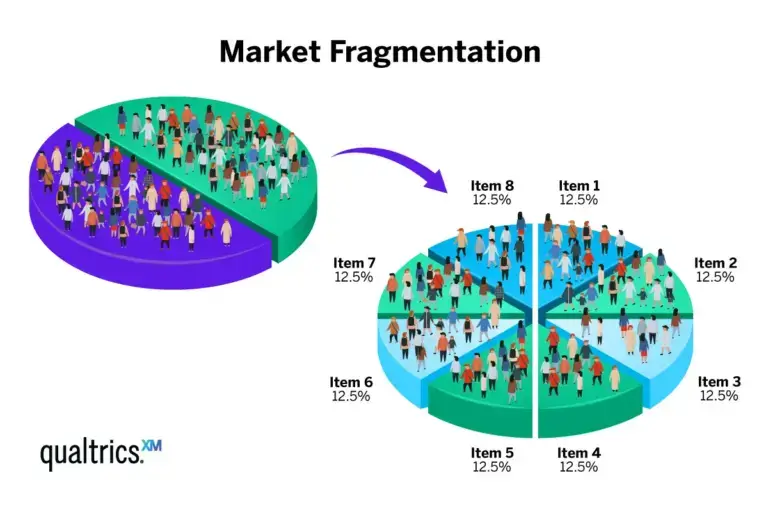


In today’s fast-moving business environment, small and medium-sized businesses (SMBs) face a key challenge: financial fragmentation. This means their financial processes, data, tools and reporting are spread across multiple silos and that causes real pain. In this article we’ll explore:
- What financial fragmentation means for SMBs
- The typical pain points and business/technical impacts
- Why automation is the first place to invest to correct that fragmentation
- How PeopleOps can help your business build a cleaner, more integrated financial operations framework
1. What is financial fragmentation?
Financial fragmentation refers to a state where a business’s financial data and workflows are scattered across multiple systems, tools, spreadsheets and teams, making it difficult to get a unified view or efficient execution. For SMBs, this means things like:
- Accounts receivable, payables, expense management, payroll each on different platforms
- Cash flow and forecasting done manually or via spreadsheets, disconnected from the core system
- Invoices, payments, bank feeds, ledger data not integrated, leading to duplicated work or delays
- Multiple vendors, point-tools and legacy systems that don’t talk to each other
For SMBs specifically:
- A recent article noted that “nearly 8 out of 10 SMBs juggle multiple systems, and almost all would prefer a single platform to manage finance”. rutter.com+2monite.com+2
- The fragmentation leads to manual reconciliation, lost visibility and delayed decision-making. monite.com+1
In short: fragmentation = “we know we have the data, we just can’t efficiently get to it and act on it.”
2. Why it matters: pain points for SMBs
Financial fragmentation isn’t just an annoyance. It leads to measurable problems. Here are some of the key pain-points SMBs face:
a) Reduced visibility & slower decisions
When data is scattered: you don’t have real-time cash-flow pictures, you can’t easily forecast, you may not see risks until they crystallise. The 2025 SMB survey found: 93% of SMBs see moderate to high value in financial automation to gain visibility and reduce errors. smb-gr.com
b) Manual work, inefficiency & higher cost
Switching between tools, manually reconciling, chasing up invoices and payments — this adds cost, takes time, distracts teams from strategic work. One article puts it: “Switching between multiple tools results in lost time, errors, and an incomplete view of their financial standing.” monite.com
c) Cash-flow risk & forecasting errors
With fragmented systems the bank account might be on one tool, receivables on another, expenses and payroll elsewhere. Leading to late payments, surprise shortfalls, missed opportunities.
d) Technology & integration debt
As SMBs grow, they often adopt point solutions (e.g., payroll tools, AP tools, AR tools) independently. Without integration, the stack becomes brittle. One article referenced how “SMB IT leaders tackle data fragmentation across hybrid clouds”; the same logic applies to finance systems. BizTech Magazine
e) Growth becomes harder
Fragmentation slows onboarding of new business units, scaling of processes, and makes it more difficult to support growth or investment because your financial infrastructure isn’t keeping pace.
Real-world scenario
Imagine a mid-sized services company with these characteristics:
- They use one tool for billing, another for expense management, a third for payroll, and spreadsheets for cash forecasting.
- Quarterly, the finance manager spends 5 full working days reconciling bank feeds with invoices and manually adjusting spreadsheets to get a “real” picture of cash flow.
- Because of this delay, they don’t realise a large client has delayed payment until it hits the next month’s forecast, so they have to delay hiring a new resource, impacting growth.
- Meanwhile, the CFO is spending time building ad-hoc dashboards rather than focusing on strategic advisory.
This kind of scenario is typical of fragmentation in SMBs.
3. Why automation is the first place to pay
Given the fragmentation and pain, why should automation be one of the first levers to pull? Because automation helps to:
a) Integrate and simplify workflows
By automating financial workflows (e.g., invoice capture → approval → payment; bank feed → reconciliation → reporting) you reduce manual hand-offs and tie together systems. As one article said: embedded finance solutions can integrate essential workflows directly into the platforms SMBs already use. monite.com
b) Improve data quality and speed
Automation reduces human error, increases speed of transaction processing and allows real-time or near‐real-time visibility. In the 2025 report, 34% of SMBs said automation had significantly improved accounts receivable processing. smb-gr.com
c) Enable strategic focus
When you automate repetitive tasks, your finance team can shift from “keep the lights on” to “drive business insight”. That means forecasting, scenario-modelling, cash optimisation, more value-added work.
d) Prepare the foundation for growth
Automation sets the stage for scale once processes are standardised and systems integrated, adding new business units, geographies or services becomes easier and lower risk.
e) Boost competitive/financial resilience
With better, faster visibility and control over finances, SMBs are better positioned to weather external shocks (e.g., inflation, supply chain disruptions), optimise working capital or access financing. For example, the article on SMB banking noted “SMBs now expect real-time payments, FX visibility, and embedded trade tools but most banks still deliver them through fragmented channels.” Backbase
Where automation pays first: the key workflows
In practice, the “lowest hanging fruit” for automation in fragmented SMB finance tend to be:
- Accounts Payable (AP) automation (invoice capture → approval → payment)
- Accounts Receivable (AR) automation (invoice generation, digital payments, dunning)
- Bank feed integration & reconciliation (linking bank → ledger automatically)
- Cash-flow forecasting and reporting (pulling data from systems rather than manually building)
- Expense management (employee expenses captured, approved, coded)
By tackling these, SMBs often see rapid gains in time savings, reduced errors and improved visibility allowing them to build momentum for more ambitious automation later.
4. How PeopleOps helps your business fix financial fragmentation
At PeopleOps, we understand both the business and technical sides of SMB finance. Our approach is designed to help you move from fragmentation to a streamlined, automated financial operations environment. Here’s how we partner with you:
Discovery & diagnosis
We begin by mapping your current financial workflows, tools and systems: what you use for AP, AR, payroll, cash-flow, bank feeds, forecasting. We highlight where data is siloed, where manual tasks dominate, where visibility lags.
Target process selection
Together we identify the high-impact workflows to automate first (often AP/AR/bank feed). We set clear business metrics (time saved, error reduction, improved days-sales-outstanding (DSO), better cash visibility).
Tool and integration planning
We recommend tools and platforms that fit your SMB scale and growth ambitions, whether SaaS platforms or embedded solutions. We design the integrations (bank feed, ledger, expense tool) and data flows needed to reduce fragmentation.
Implementation & change management
Automation is not just tech, it’s about process and people. We help you implement the tools, migrate data, retrain teams and manage change so that adoption is high. We also build dashboards so your leadership gets visibility from day one.
Monitor, optimise & scale
Once the initial workflows are automated, we help you measure the business outcomes (faster closes, fewer errors, real-time cash flow) and build on that foundation for the next phase, e.g., forecasting automation, embedded finance, analytics.
Why this matters for business & technical readers
- For business stakeholders: fewer surprises, better cash flow control, lower cost of finance operations, and more time for strategy.
- For technical stakeholders: reduced complexity in integrations, fewer manual hand-offs, better data integrity, and a cleaner architecture for future scale.
5. Final thoughts
Financial fragmentation might seem like an inevitable cost of doing business in a fast-growing SMB, but it doesn’t have to be. The fragmented financial tool-stack and processes impose hidden costs: time, risk, missed opportunities.
By focusing on automation as a first step, you get both quick wins and build the foundation for future growth and scale.
And with the right partner, namely PeopleOps, you can ensure that automation is implemented not just as a tech project, but as a business transformation: uniting your finance workflows, improving visibility, and enabling your team to spend less time on repetitive tasks and more time on strategic value.
If you’re ready to take the first step in un-fragmenting your finance operations, reach out, let’s talk about your current state, your goals, and how we can help you get there.
Leave a Reply