
Introduction
In today’s fast-moving business environment, automation isn’t just a “nice to have”, it’s becoming a strategic imperative. Whether you’re looking to streamline repetitive workflows, reduce error-risk, boost productivity or elevate employee experience, the rise of technologies such as Robotic Process Automation (RPA), artificial intelligence (AI)-powered workflow automation, and connected systems means transformational change is possible.
For PeopleOps teams, the implications are significant: automating components of HR, onboarding, compliance, reporting, performance tracking can free up human effort, enhance consistency and allow teams to focus on strategic value.
In this article, we’ll explore real-world business examples of companies that transformed through automation, the problems they faced, the automation they applied, the results they achieved and how PeopleOps can draw lessons from them.
1. Manufacturing & Industrial Automation, Rockwell Automation

Situation / problem:
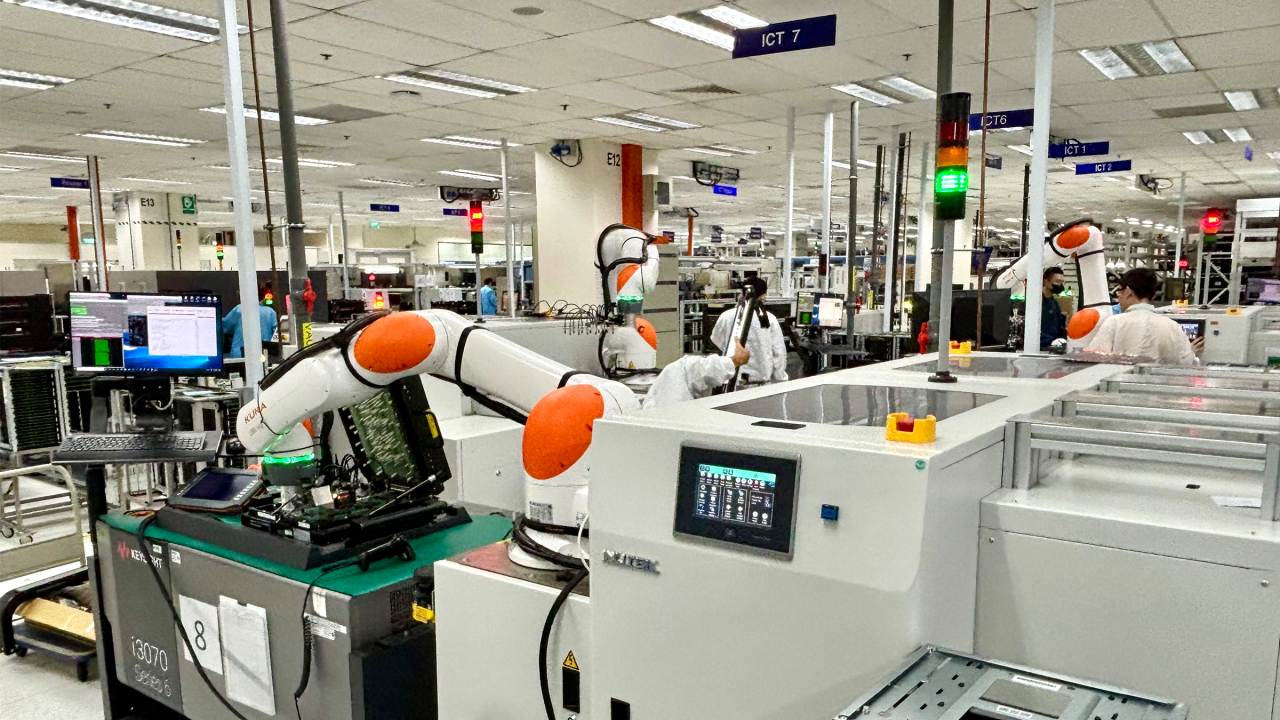
Rockwell Automation, itself a major industrial‐automation business, faced the challenge of connecting disparate factories, legacy machines, diverse SKUs, and global sites. They needed to shift from manual, siloed systems toward a unified, intelligent, connected production operation. ptc.com+1
Automation / transformation applied:
- They adopted an Industrial Internet of Things (IIoT)-enabled architecture: integrating OT (operational technology) and IT systems, using sensors, analytics, and machine-learning. ptc.com
- Standardised workflows across global plants.
- Applied real-time monitoring, predictive analytics for asset health, and augmented reality (AR) for training and work instructions. ptc.com
Results:
- 33% increase in labour efficiency, 70% increase in output at one facility. ptc.com
- Training time reduced by about 50%. ptc.com
- Inventory days cut from 120 to 82; lead times halved; global capabilities uplifted. ptc.com
PeopleOps relevance / takeaway:
For PeopleOps functions within manufacturing / industrial operations:
- Automation of routine training tasks (AR-guided work instructions) means HR/L&D teams can scale onboarding more efficiently.
- With real‐time data on worker productivity, you can shift HR from “how many hours did people work?” to “how effectively are they enabled?”
- Predictive analytics can highlight skill gaps or training needs early, so PeopleOps can intervene proactively rather than reactively.
2. Healthcare / Administrative Process Automation, Omega Healthcare Management Services


Situation / problem:
Omega Healthcare supports hundreds of healthcare organisations, managing huge volumes of administrative tasks, billing, claims, documentation. These are typically labour-intensive, prone to error and slow. (Reported earlier this year.) Business Insider
Automation / transformation applied:
- They partnered with a leading automation vendor (UiPath) to deploy AI-powered document understanding: automatically extracting data from documents (insurance letters, correspondence) and processing large transaction volumes. Business Insider
- Created an internal team of developers, business analysts and data scientists to identify repetitive tasks for automation and shift employees to higher‐value roles. Business Insider
Results:
- Over 100 million transactions processed by automation. Business Insider
- Time saved: >15,000 employee hours per month. Business Insider
- Documentation time reduced by ~40%, turnaround time cut by ~50%. Accuracy reached ~99.5%. Business Insider
- Reported ~30% return on investment (ROI) for clients. Business Insider
PeopleOps relevance / takeaway:
- In PeopleOps for healthcare / large services organisations: automating administrative HR workflows (employee records, compliance, credentialing, periodic retraining, claims‐related HR work) can yield huge efficiency gains.
- Employees redeployed to more strategic or judgment-based tasks (rather than data entry) improves job satisfaction and retention.
- Metrics shifted: instead of “how many forms processed,” you can measure “how many hours freed for decision-making,” “error reductions,” etc.
3. Retail / Supply Chain Automation, Symbotic Inc. (working with major retailers)



Situation / problem:
Retail & wholesale companies face immense pressure on supply chain, inventory movement, fulfilment speed, and labour costs. Traditional warehouses were large cost centres. Symbotic builds autonomous warehouse‐robot systems for clients including very large retailers. Wikipedia
Automation / transformation applied:
- Deployment of untethered robots in warehouse/distribution centres to pick, sort, store and retrieve cases / pallets, increasing speed and throughput. Wikipedia
- Together with AI software enabling optimisation of warehouse space, movement, routing, and integration with fulfilment workflows.
Results:
- Retail clients of Symbotic have scaled up warehouse automation and robotics, enabling operations at a pace and scale not feasible manually. (For example, large US retailer deploying in many centres). Wikipedia
- Benefits include increased capacity, faster fulfilment, better space utilisation, reduced labour cost per unit.
PeopleOps relevance / takeaway:
- In a PeopleOps context for operations/retail employers: when warehouse or fulfilment labour is partly replaced or augmented by automation, PeopleOps must proactively manage workforce transition, retraining, redeployment, change management.
- The “human + machine” model: employees increasingly become monitors, exception-handlers, supervisors instead of purely manual staff.
- PeopleOps can lead the rather critical work of aligning job-roles, updating competency profiles, and measuring success post-automation (e.g., fewer errors, faster fulfilment, happier staff).
4. Financial Services / Process Automation, Generic Industry Use Case


Situation / problem:
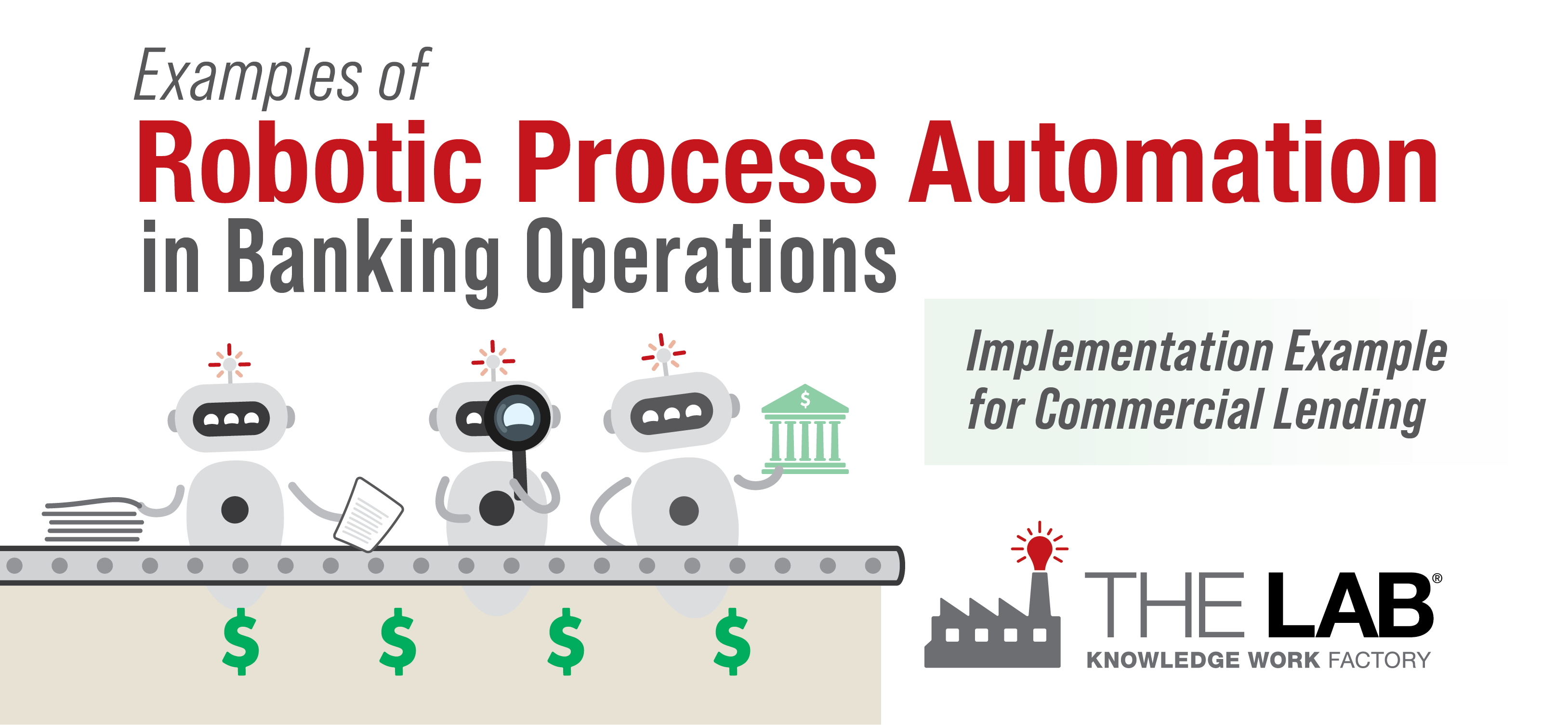
In banking, insurance, wealth-management firms, many business processes remain manual: application processing, fraud detection, client onboarding, compliance monitoring. These manual steps are slow, error-prone, expensive. FlowForma+1
Automation / transformation applied:
- Use of RPA (robotic process automation) to automate repetitive, rule-based tasks (data entry, cross-checking, report generation). Medium+1
- Use of AI/ML to detect fraud patterns, evaluate credit applications by analysing large data sets, enabling faster decisionmaking. FlowForma+1
Results:
- Firms report faster processing times, lower cost per transaction, fewer manual errors, improved compliance and auditing capabilities. bizagi.com+1
- As per one compiled list: multiple firms across industries saw quantifiable gains by deploying RPA/automation. Medium
PeopleOps relevance / takeaway:
- In PeopleOps for financial services, the need is two-fold: (1) HR/PeopleOps workflows themselves (onboarding, credentials, KYC checks, compliance training) can be automated; (2) the workforce roles are shifting from “doer” to “overseer/analyst” of automated systems, this requires capability development and change management.
- PeopleOps must plan for change management: how to upskill employees, manage culture shift, resolve fears about job displacement, align incentives.
5. Why PeopleOps Should Care About Automation
Beyond technology and cost savings, automation has a direct impact on PeopleOps in the following ways:
- Talent & Retention: Automating mundane tasks means people spend more time on meaningful work, increasing job satisfaction.
- Skill-Mapping & Future Roles: As automation takes over repetitive tasks, HR must redefine roles, map new competencies (e.g., robot-supervision, data-analysis, exception-handling).
- Change Management: Automation projects often fail because of resistance, lack of alignment, or inadequate training. PeopleOps is ideally positioned to lead the human side of transformation.
- Metrics & Reporting: With automation, new KPIs emerge (e.g., cycle-time reduction, error-rate drop, hours freed). PeopleOps can track metrics around workforce time allocation, quality, error reduction, and impact on business outcomes.
- Governance & Ethics: With AI and automation in the mix, PeopleOps must ensure that processes stay fair, transparent, and aligned with ethical considerations (e.g., when algorithmic decision-making affects employees).
- Scalability & Agility: Automation enables scaling operations faster; PeopleOps must structure workforce planning, recruitment, training to keep pace.
6. Common Pain Points & How PeopleOps Can Help
Pain Point 1: “We have many manual, repetitive HR workflows”
Solution: Conduct a process audit: map workflows (employee onboarding/offboarding, performance review, training enrolment). Identify which are rule-based and suitable for automation (RPA, self-service portals). Partner with IT/automation teams.
Pain Point 2: “Employees resist automation, fearing job cuts”
Solution: Develop a communication and training plan. Highlight that automation frees people from mundane tasks and allows them to develop higher-value skills. Engage employees early, provide reskilling pathways, involve them in redesigning their roles.
Pain Point 3: “We implemented automation but ROI is slow / change is patchy”
Solution: Use the case-study lessons: scale via picking strong use-cases first (high-volume, low‐complexity tasks). Get quick wins to build momentum. Measure clearly (hours saved, error reduction, cost avoidance) and communicate results. Make sure change management is embedded (PeopleOps + leadership).
Pain Point 4: “Our workforce skill-profiles don’t match the new needs post-automation”
Solution: Redefine job roles, update competency frameworks, align performance appraisal to new tasks (data-monitoring, exception handling, continuous improvement). Provide training and career pathways for “automation-augmented” roles.
7. How PeopleOps Can Ensure Success in Automation Initiatives
- Partner early with process/IT/automation teams: PeopleOps should sit at the table when automation projects are scoped.
- Define people-impact metrics: Hours freed, redeployed tasks, satisfaction scores, error reduction, employee engagement not just cost savings.
- Embed change management plan: Onboarding, training, role redesign, communication to the workforce.
- Ensure governance and ethics: Especially when AI/decision automation is used, make sure transparency, bias mitigation, accountability are in place.
- Celebrate wins and scale: Use strong case-stories (internal) to build confidence; automate incrementally, expand scope.
- Build a culture of continuous improvement: Automation is not “run once and forget”. Like the Rockwell example, continuous improvement is key.
Conclusion
The examples above, from manufacturing (Rockwell), healthcare (Omega), retail warehouse automation (Symbotic + clients), and financial services, illustrate that real transformation through automation is well within reach. The benefits go beyond cost savings: faster cycle times, better quality, freed human capacity, increased agility.
For PeopleOps professionals, automation is more than a technical project: it’s a chance to redefine how work gets done, how people engage with systems, how value is created. By taking a strategic, people-centric approach, you can help your organisation not only deploy automation, but make it work, for the business and for your workforce.
If you’re considering starting or expanding an automation initiative in HR / PeopleOps (onboarding workflows, performance management, training, employee-service portals, analytics dashboards) it’s a smart move. And with the right planning, measurement and people strategy, the payoff can be significant.
Leave a Reply