
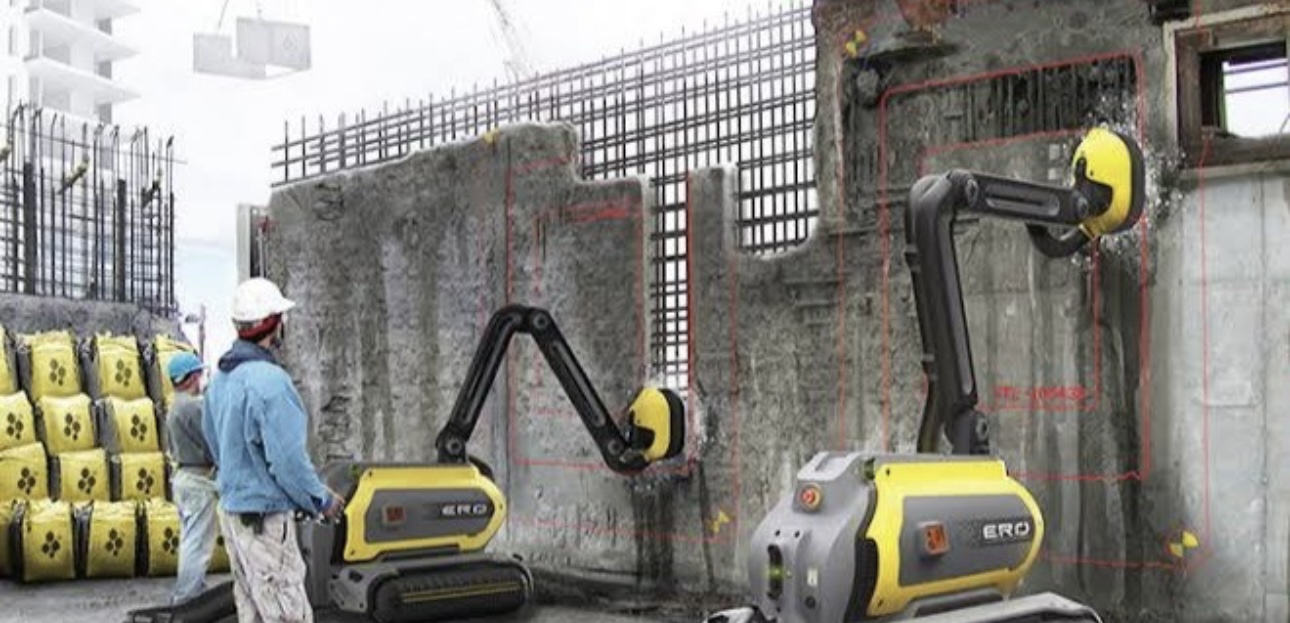


In today’s fast-moving construction industry, the demand for automation, digital tools, and smarter site workflows is higher than ever. Companies are no longer satisfied with manual processes; they’re looking for solutions that boost productivity, reduce cost overruns, and improve safety. As a PeopleOps / services business supporting this domain, you can package your construction automation offerings in tiered plans that speak to different customer needs and budgets and in doing so, convert more leads into paying clients, scale your operations effectively, and deliver differentiated value.
In this blog we will discuss:
- The key pain-points in construction automation.
- Why tiered plan packaging matters in this space.
- How to design tiered packages for construction automation offerings.
- Real-world scenario examples.
- How PeopleOps (internal service, skills, process) can help your business deliver and scale these offerings.
1. Key pain-points in the Construction Automation Space
Before you package anything, you must understand the problems your target clients face. Here are some of the major pain-points:
a) Fragmented workflows and manual hand-offs
Construction projects often involve multiple teams (design, procurement, logistics, on-site operations, inspections). Without automation, many tasks still rely on spreadsheets, manual data entry, paper drawings, or siloed tools. This leads to delays, miscommunication, rework, and cost overruns.
b) Adoption barriers and complexity
While technology vendors offer robotic arms, drones, BIM tools, IoT sensors, etc., many construction firms struggle to adopt these because they lack internal expertise, change-management capabilities, or clear ROI. Automation often gets stuck at pilot stage.
c) Unclear value and ROI
Construction clients expect a clear business case: “By how much will my cost or schedule improve if I adopt this automation?” If you aren’t clear on value, conversion becomes hard.
d) Scalability of solutions
Often automation is implemented on one job site or one project, but scaling it across multiple sites, projects, or teams is challenging. Clients worry about training, operational consistency, support, and integration with legacy processes.
e) Differentiating service levels
Different clients have different needs: some want a light-touch solution (just software dashboards); others want full end-to-end automation (robots + sensors + data analytics + ongoing support). Packaging all this as a “one size” offering usually fails.
f) Talent and process readiness
Internally, firms must have people with the right skills (automation engineers, data analysts, site operations staff) and processes to support the solution. From a vendor’s (your) PeopleOps perspective, delivering the right team and process is essential.
2. Why Tiered Plan Packaging Matters
Packaging your offerings into tiered plans is more than a “nice-to-have”, it’s a strategic must. Here’s why:
- Segmenting by need and budget: Tiered plans allow you to serve smaller clients with simpler needs as well as enterprise clients with full automation ambitions.
- Making choices easy: Too many options or a “one size fits all” approach creates decision paralysis. A clear tier structure helps clients pick the right offering fast.
- Upsell and upgrade path: As a client’s confidence grows and their automation journey evolves, they can move up tiers. This drives lifetime value. This is well-documented in tiered pricing strategy literature. Zuora+2Orb+2
- Clarity of value differentiation: Each tier can clearly articulate what extra value the next tier brings (e.g., extra analytics, full robotics, higher support).
- Operational scalability for you: Internally, you can build standardized modules for each tier (people, process, tech) which improves delivery efficiency and margin predictability.
- Risk management for clients: A lower tier acts as a “safe entry” helping clients adopt automation gradually rather than commit massive budgets blindly.
As an example from the construction industry, Trimble launched tiered subscription bundles for construction technology, “Core, Pro, Premium”, targeting different sizes and needs of contractors. Trimble Mediaroom. This shows the market is already embracing tiered packaging in construction automation.
3. Designing Tiered Packages for Construction Automation Offerings
When you sit down to design your package structure, follow a structured process:
Step A: Define your customer segments and their motivations
- Entry-level / small site: A smaller contractor or single-site client who needs basic automation (digital workflows, site sensor network, dashboard).
- Growth / medium-scale: Multiple sites, wants predictive analytics, robotics pilot, integration across sites.
- Enterprise / high complexity: Large multi-site operations, full robotics, AI-powered analytics, global rollout, high support & SLA.
Step B: Define value metrics and features per tier
Choose the dimensions along which tiers differ. For construction automation these could include:
- Scope of automation (software only → sensors & IoT → robotics + IoT + analytics)
- Number of sites or machines covered
- Level of support (remote support → on-site support → dedicated team)
- Data & analytics maturity (basic dashboard → predictive analytics → prescriptive/AI)
- Training and change-management services
- Upgrades and future-proofing (e.g., hardware refresh, expansion)
Step C: Create tier names and descriptors
Keep it simple and intuitive. Example:
- Foundation Plan – Digital workflows, sensors, dashboard, basic training.
- Advanced Plan – Adds multi-site support, robotics pilot, predictive analytics, more training & change-management.
- Transform Plan – Full-scale site automation (robotics + IoT + AI), enterprise rollout, premium support, continuous innovation.
Step D: Price and package appropriately
- Ensure each tier offers clear, incremental value.
- The jump from tier to tier should feel meaningful (so clients see why upgrade).
- Have “anchor pricing”, often the middle tier becomes the default.
- Consider usage-based or scalable elements (number of machines, sites).
- Make entry tier low enough to reduce barrier to adoption, higher tiers reflect high value and premium support. Use best practices in tiered pricing. Maxio+1
Step E: Articulate the benefits in business language
Technical features are important, but decision-makers want business outcomes: faster schedule, fewer defects, less downtime, better safety, higher ROI. Each tier should clearly link features to outcomes.
Step F: Build internal PeopleOps readiness
- Define the roles and team structure required for each tier (e.g., Tier 1: digital specialists; Tier 3: robotics engineers + data scientists + dedicated support).
- Create standardized playbooks for delivery, onboarding, training, change-management, and ongoing support per tier.
- Track metrics: client conversions, upgrades, churn, ROI delivered.
4. Real-World Scenario Examples
Here are two illustrative scenarios of how tiered packaging might play out in the field.
Scenario 1: Mid-sized contractor embracing automation
Client: A regional construction contractor with 5 job sites, moderate size machines, still using manual scheduling and data-collection.
You propose:
- Foundation Plan: Digital workflow + site sensors + dashboard across 3 sites → they start seeing real-time data rather than weekly manual reports.
- After 12 months, they upgrade to Advanced Plan: add robotics pilot for earth-moving equipment, predictive analytics to anticipate downtime and material delays.
- Results: 15 % reduction in idle machine hours, 10 % faster schedule, improved safety metrics (because fewer manual inspections).
- Later, they consider Transform Plan for full robotics rollout across all 5 sites.
Scenario 2: Large enterprise with multi-site global operations
Client: Large international construction firm with 50+ sites, high regulation, major cost overruns due to manual processes and machine downtime.
You pitch:
- Advanced Plan as their starting point (because entry tier may be too light) → multi-site sensor network, centralized analytics, machine-learning-based downtime prediction, change-management across sites.
- Transform Plan: robotics for modular construction assembly, IoT + AI for logistics and materials flow, continuous upgrade path, dedicated support team.
- Value proposition: A 20 % reduction in rework costs, 25 % less unplanned downtime, stronger safety compliance and better sustainability metrics (which they must report).
- With this premium package, the price is higher, but so is the value and commitment and your PeopleOps team supplies high-touch onboarding, site training, performance monitoring.
5. How PeopleOps Helps You Deliver and Scale
In service businesses, the “people” and “process” side is as important as the tech. Here’s how PeopleOps can underpin your tiered packaging strategy.
a) Role definition and skills mapping
- Define the roles needed for each tier (automation engineer, field technician, data analyst, change-manager).
- Map skills and certifications: e.g., robotics integrator, IoT specialist, construction site safety compliance.
- Ensure you have career paths and training programmes so team members can grow into higher-tier delivery roles.
b) Onboarding & deployment processes
- For each tier, build deployment checklists: site assessment, pilot design, training modules, rollout schedule, ROI measurement.
- Use standardised templates so you can scale delivery across clients without reinventing the wheel each time.
c) Change-management and client training
- Automation adoption is not just tech, it’s people. For each tier, include change-management services: stakeholder buy-in, site team training, process redesign.
- The higher the tier, the deeper the change required. Your PeopleOps function ensures training plans, adoption metrics, and culture shift.
d) Performance monitoring & feedback loops
- Establish KPIs by tier: e.g., average machine idle reduction, schedule adherence improvement, safety incident reduction.
- Use these metrics to show clients ROI, justify upgrades, and refine your offering.
e) Scaling and efficiency
- With standardized tiers and internal PeopleOps structure, you can deploy more clients with less custom overhead.
- Maintain a “tiered delivery” model that aligns overhead/costs to tier-level, protecting margin.
f) Upsell & growth path management
- Your PeopleOps can manage client success lifecycle: after deployment, track use, suggest upgrades, manage contract renewals.
- Insights from delivery teams feed back into packaging refinement and pricing strategy.
Conclusion
Packaging your construction automation offerings into well-designed tiered plans is a powerful way to convert more clients, deliver value at different budget levels, and scale your business effectively. The combination of clear segmentation, value-based packaging, and strong PeopleOps support ensures you’re not just selling “automation” but delivering outcomes.
When you design your tiers, Foundation, Advanced, Transform—make sure each level is backed by:
- A clear set of features and support services.
- A compelling value proposition (outcome-driven).
- A roadmap for clients to upgrade and grow.
- Internal readiness (people, processes, metrics) to deliver.
In the world of construction automation, where clients are serious about productivity, cost savings, and future-proofing, your role as an automation-services provider is not just to install tech, but to partner in transformation. And tiered packaging is your vehicle for that.
Leave a Reply