Tag: Construction
-

Adaptive, RedHammer, Hammr: Filling QBO’s Construction Gaps
Introduction In today’s construction industry, firms of all sizes, especially those in the $2 M–$50 M revenue range, are relying on cloud-accounting tools like QuickBooks Online (QBO) to manage their books. But when it comes to construction-specific requirements (job costing, contract types, compliance, payroll, retainage, lien waivers, etc.), QBO often leaves critical gaps. This is…
-

Knowify, Buildertrend, Procore: Which PM Tool Plays Nicest with QuickBooks?
Introduction In the construction and contracting world, having your project-management (PM) tool talk smoothly with your accounting system is critical. Seamless sync means fewer spreadsheet imports, less double-entry, fewer errors, better job-cost visibility. For many U.S. contractors, that accounting system is QuickBooks Online (or in some cases QuickBooks Desktop). In this blog we compare three…
-

Progress Billing with Retainage: AIA G702/AIA G703 Without the Spreadsheet Pain
In today’s People Ops world, where the overlap between operations, construction finance, and human/contractor management is growing fast, mastering progress billing with retainage is a real differentiator. Yet many teams still struggle because they treat the billing process like a spreadsheet exercise instead of a strategic workflow. In this blog we’ll walk through: 1. What…
-

QuickBooks Online for Contractors: What Works, What Needs Add-Ons
When you run a contracting business, whether it’s electrical, plumbing, landscaping, general construction or speciality trade, you live in two worlds: the field where the crews and jobs are, and the office where the numbers, bookings and back-office operations happen. As part of your PeopleOps/Finance/Operations stack, having the right accounting platform is critical. One of…
-

Where Fragmentation Hides in Construction Back Offices
In the construction world, the action we tend to see is on site: cranes, scaffolds, concrete pouring, labour crews. But behind every well-running site is a back-office operation, the administrative, financial, HR, procurement, compliance and information systems that keep the job moving. For many firms, the back office is where fragmentation quietly hides, eroding productivity,…
-
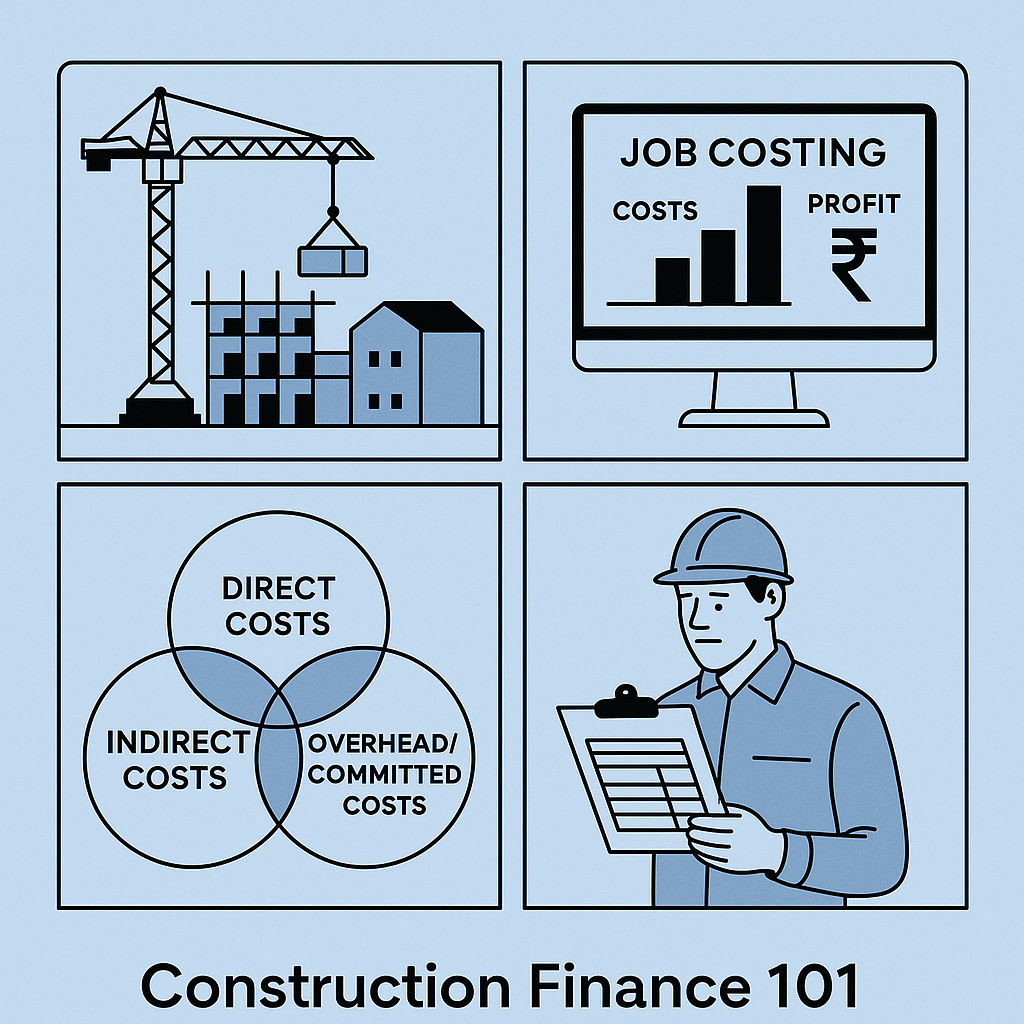
Construction Finance 101: Why Job Costing Drives Every Decision
In the world of construction, every structure, slab, beam, and bolt carries not just physical weight but financial consequence. For teams operating in a competitive market, navigating rising materials costs, labour scarcity, inflation, and tight margins, understanding job costing isn’t optional, it’s foundational. In this article, we’ll unpack what job costing means for construction companies,…
-

Packaging Your Construction Automation Offerings (Tiered Plans That Convert)
In today’s fast-moving construction industry, the demand for automation, digital tools, and smarter site workflows is higher than ever. Companies are no longer satisfied with manual processes; they’re looking for solutions that boost productivity, reduce cost overruns, and improve safety. As a PeopleOps / services business supporting this domain, you can package your construction automation…
-

Desktop vs Cloud: When to Push QuickBooks Online vs QuickBooks Desktop for Contractors
Introduction In the contracting world, whether general contracting, subcontracting, trade work, or site-based services, the choice of accounting software is not just a “which package” decision; it impacts mobility, job-costing accuracy, collaboration across field and office, and ultimately the profit margins. As PeopleOps professionals, you are tasked with guiding business leaders and finance/accounting teams to…
-

Why Construction Is the Easiest SMB Niche to Automate (and How to Win It)
In this blog for PeopleOps, I want to explore why the construction sector, especially small and medium-sized contractors (SMBs), is arguably the “easiest” niche to automate, and then walk through how you can win it from a PeopleOps and technology perspective. The language will be plain and approachable, but we’ll still use key industry terms…