
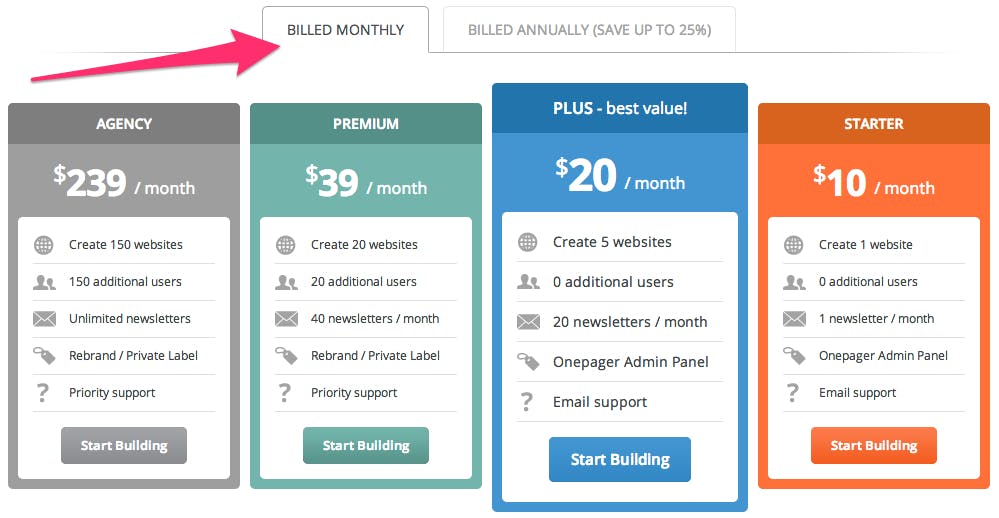
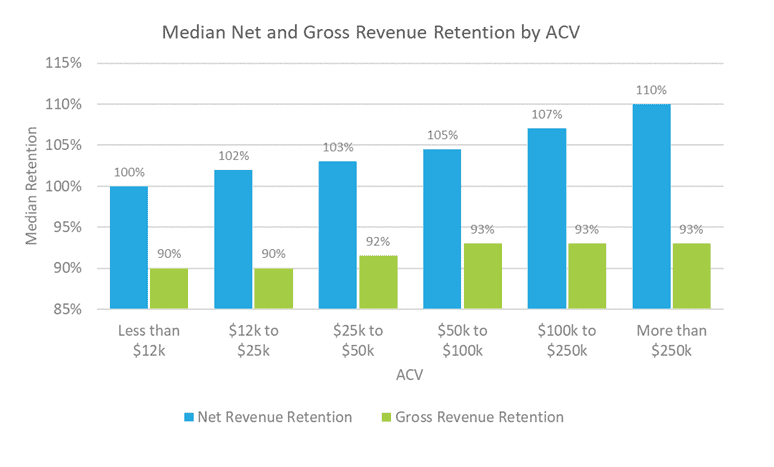

In the world of business operations, especially for services that lean heavily on automation, recurring workflows, and ongoing support, the choice between offering monthly vs. annual subscription plans is more than a billing format. It’s a strategic lever that affects retention, lifetime value (LTV), cash flow, marketing cost, and ultimately the success of your PeopleOps/automation-services business.
In this article we’ll explore:
- Why the billing cadence matters in automation services
- The pain points and the trade-offs of monthly vs annual models
- Evidence and data behind retention differences
- How PeopleOps (internal HR + operations teams) and businesses offering automation services can use these insights to craft smarter offerings
- Real-world scenario(s) to illustrate the thinking
- Actionable recommendations for service providers
Why does it matter for automation services?
Automation services (e.g., workflow automation, orchestration, continuous integration/deployment pipelines, automated HR/PeopleOps tooling, RPA, etc.) often have characteristics that make retention and recurring contracts particularly important:
- Once the automation is set up (onboarding, configuration, integration), switching away is painful and switching cost is non-trivial. That means retention potential is high if the service is delivering value.
- The value often accrues over time: the longer the automation runs, the more data is generated, optimisations happen, process improvements are realised.
- Fixed costs in support, infrastructure, and customer success remain relatively stable, so the longer a customer stays, the better the unit economics.
- For PeopleOps teams or vendors offering automation, predictable recurring revenue helps budgeting, planning, hiring, and investing in process improvements.
Because of this, the billing cadence isn’t just a convenience, it becomes a strategic choice that shapes the business model.
Monthly Plans: pros, cons and when they make sense
Advantages of Monthly Plans
- Lower barrier to entry: Prospects are more willing to sign up for 1 month than commit for a full year. This can accelerate acquisition. For example: “Try our automation workflow for one month, see the benefits, then scale.”
- Flexibility appeals to businesses uncertain about long-term commitment or those with variable needs.
- Easier to experiment with pricing or packaging: you can adjust monthly tiers, run promotions, test features without locking in long contract lengths.
- Cash flow is more evenly distributed rather than upfront.
Disadvantages of Monthly Plans
- Higher churn risk: Customers may cancel after a short period if they don’t see enough value. The lower commitment means they feel less locked in.
- Lower customer lifetime value (LTV) on average: Because the contract length is shorter, you may end up spending more on acquisition per unit revenue.
- More frequent billing administration, more “renewal” events (even if automated) meaning more points of potential failure (card declines, payment issues).
- Forecasting is harder since churn and upgrade behaviour matter more.
When monthly plans make sense
- For small and medium-sized businesses (SMBs) exploring automation for the first time, you may want a low-risk monthly option.
- You have a high-touch onboarding or service offering that enables you to show value quickly (within a month).
- Your product or service is evolving quickly and you need flexibility for pricing/testing.
Annual Plans: pros, cons and when they make sense
Advantages of Annual Plans
- Better retention. For instance, research shows that annual subscriptions can have significantly higher retention than monthly ones. One study found: after one year, the median retention rate for annual subscriptions was ~28% vs ~11% for monthly subscriptions in apps. RevenueCat Another study in the publishing sector found annual contracts retained ~70% after year one vs ~34% for monthly. INMA
- Predictable revenue, often upfront payment improves cash flow. This allows firms to invest in onboarding, customer-success, infrastructure with more confidence.
- Reduced “renewal events” frequency means fewer churn-points. When someone is locked in for 12 months, you only worry about renewal once per year.
- Typically the customers who choose annual plans are more committed and higher-value, they believe in the service’s value and are willing to lock in.
- Better economics per customer: lower acquisition cost amortised over longer lifetime.
- For automation services with long-term success curves, annual plans align with the time it takes for clients to see full value (e.g., process improvement over 6-12 months).
Disadvantages of Annual Plans
- Higher barrier to up-front commitment: Some clients may balk at paying 12 months upfront, especially if still assessing or just piloting.
- Less flexibility: If the service isn’t delivering expected value quickly, the customer may be locked in and unhappy (which risks reputation or churn at renewal).
- Offer discounts: Usually annual plans are offered at a discount vs 12 * monthly, so revenue per month may be lower. For example, one source noted annual subscribers generated lower ARPU than monthly for a publisher. Mather
- The business bears more risk: you commit to deliver value for a full year for that payment; if onboarding fails or value isn’t realised, you may have a dissatisfied customer for a long period.
When annual plans make sense
- When you know your service delivers measurable value over the medium/long term (6-12+ months) and clients will see improvement over time.
- When your onboarding/on-ramp is strong, you can quickly demonstrate initial success (to avoid the customer regretting the annual commitment).
- When your target customers are comfortable with longer contracts (e.g., mid-market to enterprise clients) and you want to lock in more committed users.
- When you need cash up-front to scale operations or invest in customer success.
The Pain Points & Trade-Offs: For PeopleOps/Automation Service Providers
Pain Point: Acquisition vs Retention Trade-off
If you emphasise monthly plans to boost acquisition, you may face higher churn and more cost per retained dollar. If you push annual plans exclusively, you might slow acquisition because of the higher upfront commitment. You need a balance. One blog noted: “Monthly subscriptions have a 50% higher conversion rate than annual offers … but annual subscribers are your highest lifetime value subscribers.” Membership and Subscription Growth
Pain Point: Onboarding & Time to Value
If your automation service takes time to deliver results (e.g., process mapping, integrations, change management), a monthly plan may not give enough runway for the customer to realise value. That delays the “aha moment” and raises the risk of early churn.
Pain Point: Forecasting & Cash-Flow
Annual clients help with predictable budget planning; monthly plans can lead to volatility. But relying solely on annual can risk front-load cash and expose you to renewal risk in a concentrated period.
Pain Point: Customer Success & Engagement
With monthly plans, you have more frequent renewal touchpoints but also more frequent potential churn trigger events. With annual, you need to ensure you keep customers engaged across the year so they don’t become “quiet” and exit at renewal.
Pain Point: Matching Customer Segment to Model
Different customer segments may prefer different cadences. SMBs may prefer monthly (flexibility, lower commitment); enterprises may expect annual. Automation services must tailor the offer rather than “one-size-fits-all”.
Real-World Scenario: Two Automation Services Firms
Scenario A: “FastStart Automations”, Monthly-First Strategy
FastStart Automations offers workflow automation for SMBs (10-100 people). Their onboarding is light: within the first month they deploy a set of ready-made workflows (e.g., HR onboarding automation, leave requests, expense approvals).
- They offer a monthly plan: ₹ 30,000/month (just for example).
- Advantages: Prospects join quickly, the barrier is low, they sign up and see immediate benefits (faster approvals, less manual work).
- After 3 months, they upsell to more complex flows (integration with payroll, CRM).
- They accept that churn may be higher but they are focused on scaling fast, acquiring many clients, and then using customer success to upsell and anchor these customers.
- To manage risk, they embed strong onboarding checkpoints at 30 days, 60 days to ensure value is visible early.
Outcome & dynamics: Their conversion rate is high, but they monitor churn closely: if a customer hasn’t engaged or seen value by month 2–3 they proactively intervene. Their LTV is lower but volume is higher.
Scenario B: “EnterpriseFlow Automation”, Annual-First Strategy
EnterpriseFlow targets mid-market and enterprise clients (500+ employees) who are looking for strategic automation (end-to-end workflow orchestration, change management, analytics). They know the project takes ~6 months to roll out properly.
- They offer: Annual plan at ₹ 3,00,000/year (i.e., ₹ 25,000/month equivalent) with option to pay quarterly for small surcharge.
- They still allow a 3-month pilot monthly billing for first phase, then convert to annual. This pilot strategy reduces risk for the client, then locks them in.
- The benefit: After year one, the client is embedded, switching cost is high, and renewal rate is much better. Cash-flow for EnterpriseFlow is upfront, enabling them to invest in client-specific onboarding, training, dashboards.
Outcome & dynamics: Lower acquisition volume compared to monthly-first model, but higher retention, higher LTV, more strategic relationships.
What the Research Tells Us: Backed Data
- According to a study of apps, after one year the median retention rate for annual subscriptions was ~28%, versus ~11% for monthly subscriptions. RevenueCat
- For publishers, the research from Piano found that after one year, median retention for annual subscribers was ~70% vs ~34% for monthly. After two years: 52% (annual) vs 22% (monthly); after three years: 40% vs 15%. INMA
- Churn benchmarks from Recurly: for subscription companies, a “good” monthly churn rate is ~4%. Recurly, Inc.
- One analysis notes that although monthly models can have higher conversion rates, annual plans tend to have higher lifetime value subscribers. Membership and Subscription Growth
- Another bench-marking study notes “Blended retention above 50% is considered top quartile; and annual pricing plans tend to have higher month-12 retention than monthly.” Medium
What this means for automation services:
- If you offer monthly-only, expect higher churn and shallower lifetime value unless you proactively manage retention and deliver value fast.
- If you offer annual (or encourage annual) you can lock in better retention and predictability but you must still deliver value and manage onboarding well.
- Data supports a tiered approach with both options being used depending on customer segment, lifecycle stage (pilot → annual), and risk appetite.
How PeopleOps Can Help Drive Better Retention for Automation Services
As a PeopleOps partner or internal PeopleOps leader working with automation-services vendors (or internal operations teams adopting automation), you can play a key role:
- Design onboarding and value-realisation pathways
- Set milestone checkpoints: “By Month 1: X widgets automated / Y hrs saved; By Month 3: dashboard reporting live; By Month 6: integration with payroll done.”
- Assign automation champions, training sessions, health checks. This helps mitigate early churn especially in monthly plans.
- Segment customers and tailor cadence
- Use segmentation: SMB vs enterprise, simple automation vs complex orchestration. Offer monthly for high-flexibility segments, annual for high-value segments.
- Use pilot-to-annual conversions: offer a 3- or 6-month monthly trial, then transition to annual once customer sees value.
- Build in check-ins and success metrics
- Automations services often succeed when the customer is actively using them. PeopleOps can set usage dashboards, send automated nudges, host Q&A clinics.
- Use “health score” metrics: e.g., number of workflows live, number of manual tasks reduced, ticket backlog down, stakeholder satisfaction.
- Offer incentives and escalation paths
- Discount for annual upfront payment (but ensure you don’t erode unit economics).
- Early-renewal offers, loyalty benefits, referral bonuses.
- Simplify renewal/cancellation process (avoid dark patterns). Research shows manipulative subscription flows damage trust. arXiv
- Measure & iterate pricing strategy
- Monitor conversion rate to monthly vs annual, retention difference, cost of acquisition per cohort.
- Use cohort analysis: for monthly plans, key risk window is often first 1-3 months; for annual, it may be later when value doesn’t ramp up.
- Adjust plan mix accordingly (e.g., 60% monthly, 40% annual or vice-versa).
- Communicate value continuously
- Especially for annual contracts, you need to keep the customer engaged throughout the year so that renewal feels natural, not a surprise.
- Share dashboards, ROI reports, quarterly reviews to reinforce value.
Recommendations: A Balanced Strategy
Here are practical recommendations for an automation-services provider (or internal PeopleOps automation team) deciding between monthly vs annual plans:
- Offer both cadences, but clearly differentiate: Monthly for flexibility/pilot/SMB; Annual for commitment/enterprise/high-value.
- Use pricing incentives but keep economics under control: E.g., annual = ~10-20% discount vs 12× monthly.
- Require a minimum value demonstration window: If you know value is realised over ~4-6 months, design onboarding accordingly and consider restricting monthly only to services that deliver value fast.
- Monitor cohorts: Measure retention by cohort (monthly vs annual), monitor when churn happens, track LTV.
- Pivot depending on segment: If you find that monthly customers churn heavily after 3-4 months with low engagement, then shift them to only annual offers or require an annual commitment.
- Cash-flow planning: If you need upfront investment (e.g., integrations, custom onboarding), favour annual plans to balance risk.
- Renewal focus: For annual lots, invest in mid-term check-ins (six months in) to keep value top-of-mind; for monthly lots, invest in early value tracking and retention triggers.
- Communicate the option clearly: Don’t hide annual vs monthly differences; make the value proposition transparent.
- Make switching/cancellation painless: Ethical design builds trust and helps reduce involuntary churn/fraud complaints.
Summary
Choosing between monthly vs annual billing for your automation service offering is not just a billing design; it’s a strategic decision that influences acquisition, retention, lifetime value, cash flow, and customer success. The data supports that annual plans generally yield stronger retention, better LTV, and more predictable revenue. But monthly plans have their place, especially for flexibility, scaling quickly, and onboarding new clients.
For companies in the PeopleOps/automation services space: align your billing cadence with your value-delivery timeline, customer segment, onboarding strength, and business goals. Use PeopleOps best practices, onboarding, segmentation, success metrics, continuous engagement, to maximise retention regardless of the billing frequency.
By doing so you’ll be better positioned to lock in retention, reduce churn, improve lifetime value, and build a sustainable recurring-revenue automation business.
Leave a Reply