
In the world of construction, every structure, slab, beam, and bolt carries not just physical weight but financial consequence. For teams operating in a competitive market, navigating rising materials costs, labour scarcity, inflation, and tight margins, understanding job costing isn’t optional, it’s foundational.
In this article, we’ll unpack what job costing means for construction companies, why it’s the financial backbone of decision-making, what problems it solves (and often causes when done poorly), and how a PeopleOps function (or PeopleOps-informed leadership) can help embed job-costing discipline into operations across people, processes and systems.
What is Job Costing in Construction?

Definition
“Job costing” in construction is a method of attributing costs and revenue to individual projects (“jobs”) so that each job’s profitability and cost performance can be analysed. Procore+2Deltek+2
Rather than simply booking all costs into a general ledger and looking at the company-wide picture, job costing drills down into each contract or project and tracks labour, materials, equipment, sub-contractor costs, overheads, etc. miter.com+1
Why it matters
- When you can say “Project X cost us ₹ Y in labour and ₹ Z in materials, plus overhead of ₹ A”, you get sharper visibility into cost-drivers and risk.
- You can compare actuals to budget, see variances early, intervene when things go off track. Procore
- You build a cost-history database: future bids can be more accurate, pricing more defensible, margins less guess-work. buildern.com+1
- You empower teams to make better operational decisions, eg, “Should we invest in that high-end drilling rig or rent it?” because you understand cost impacts.
Key cost categories
To make job costing work you need to break out the costs:
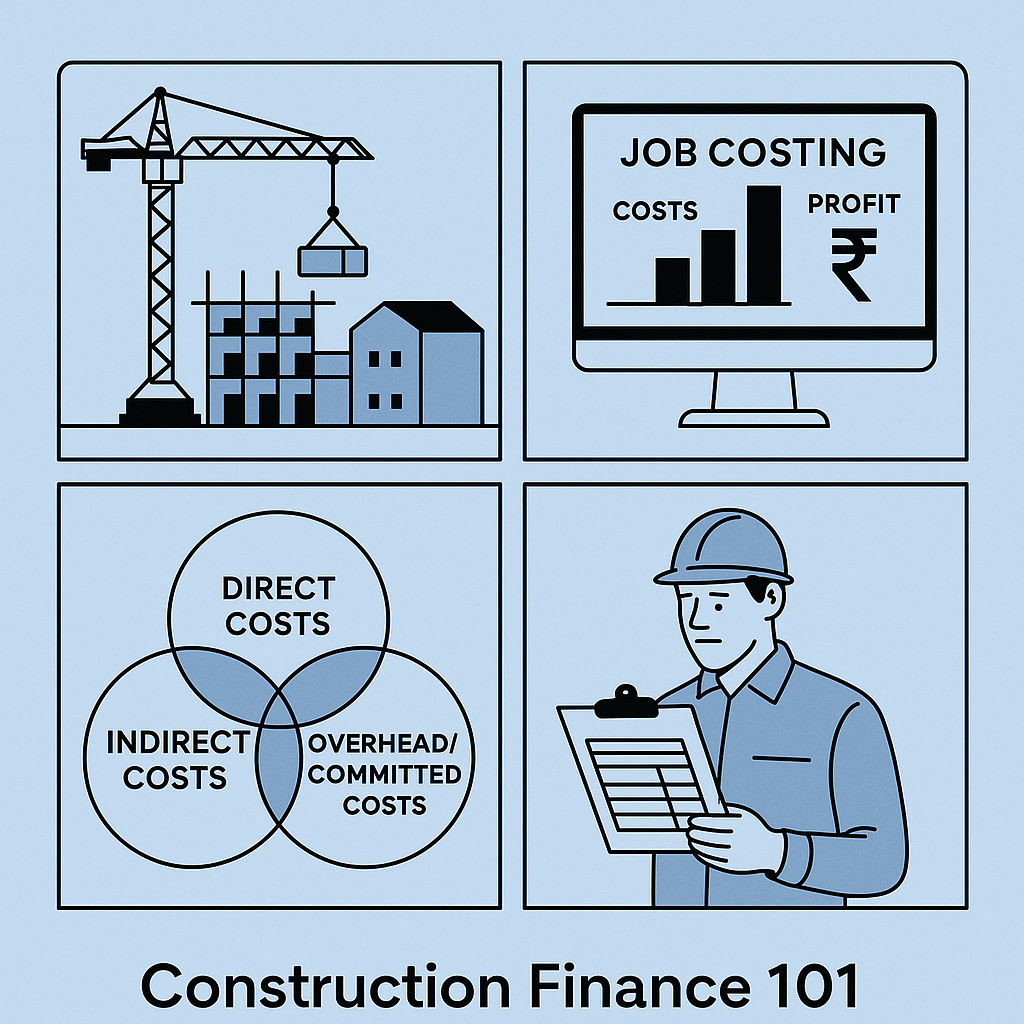
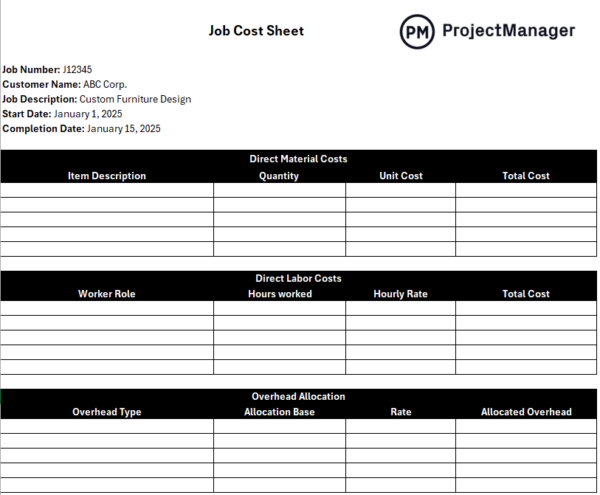
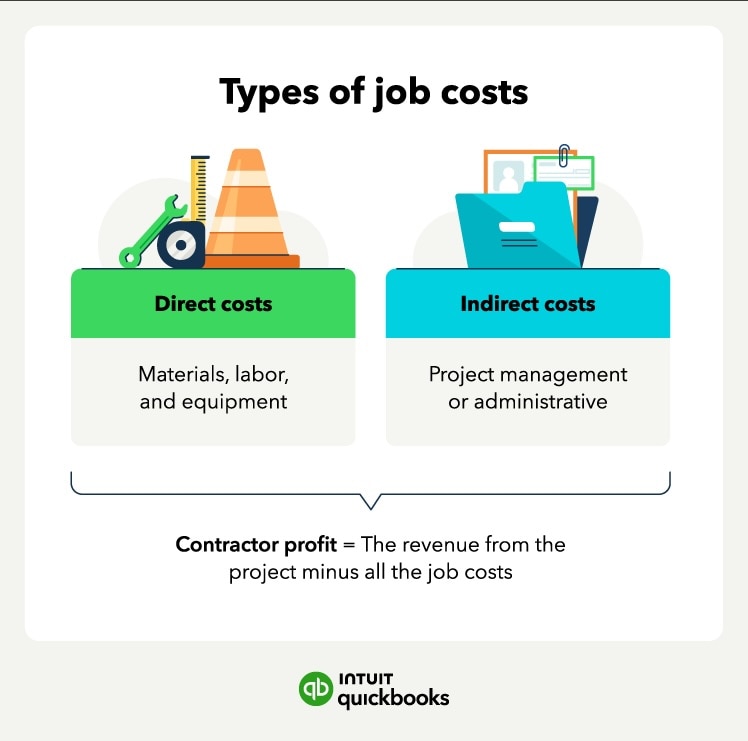
- Direct costs: labour hours for the job, materials used specifically for that job, equipment assigned to that job. Procore+1
- Indirect costs: costs not easily tied to one task but still necessary (site supervision, utilities, safety equipment, administration). Deltek+1
- Overhead / committed costs: business-wide costs allocated across jobs (office rent, corporate salaries, etc) and committed costs like approved change orders. njba.org+1
Example scenario
Imagine a mid-sized contractor in Pune picks up a commercial office build. They budget: labour ₹ 50L, materials ₹ 60L, equipment & rentals ₹ 10L, indirect & overhead ₹ 15L → total cost budget ₹ 1.35 cr.
Half-way through, they’ve spent labour ₹ 35L, materials ₹ 45L, but equipment rentals are ₹ 12L already and indirects ₹ 18L. Without job costing, they may only recognise later that the equipment rentals and indirects are ballooning and eating margin. With job costing, the project manager flags the variance and corrective action (rent less equipment, negotiate usage) can happen sooner.
The Pain Points Without Job Costing
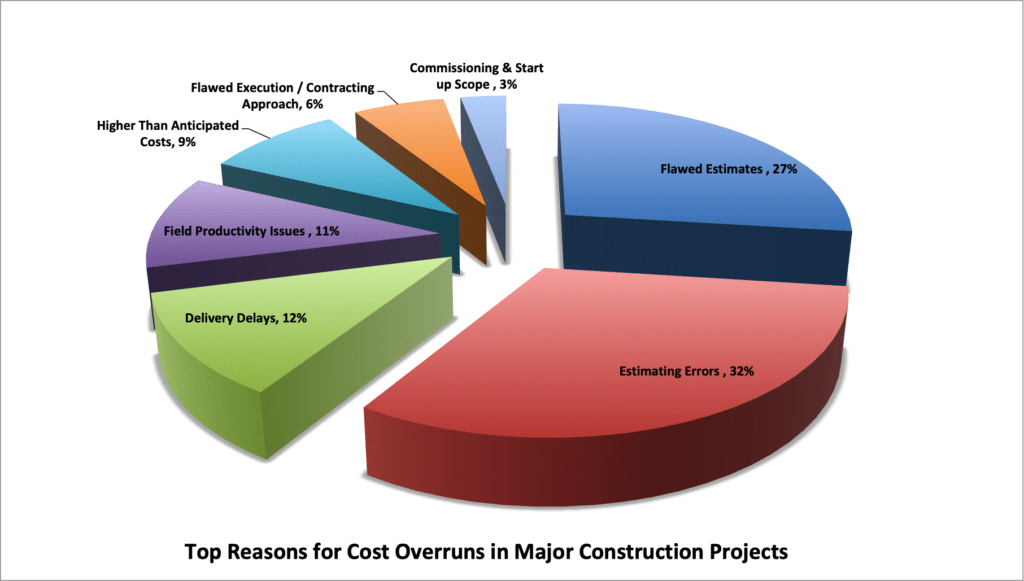


When job costing is weak or absent, construction firms face a series of recurring problems:
1. Cost overruns and margin erosion
Without detailed visibility, small leaks in cost (material wastage, inefficient labour, idle equipment) accumulate. The project might look “on track” overall but margin may have already shrunk. cfma.org
2. Poor bid pricing and lost opportunities
You can’t bid competitively if you don’t know true cost base. Under-pricing leads to losses; over-pricing means losing jobs. Job costing builds that base. Procore+1
3. Delay in detecting problems
If you only see cost issues at project end (or worse, post-close), you have no chance to intervene. Job costing enables early warning signals.
4. Limited strategic decision-making
For example: should you bring in a new equipment type? Hire additional crew? Expand into a new segment (gleaner tracks)? Without job-level cost data you’re flying blind.
5. Human resource, PeopleOps implications
Often things like overtime creep, sub-optimal subcontractor usage, or skill mismatches drive cost. If PeopleOps, project HR and finance are not aligned, cost control suffers.
How Job Costing Drives Every Decision
Here’s how job costing influences and improves key decisions in construction finance, operations and people strategy:
Decision 1: Bidding & Project Selection
- With reliable job cost history you can assess whether a new job is strategically viable (margin, risk, equipment fit).
- You can decide to decline projects that have thin margins or high uncertainty rather than burning cash.
- PeopleOps angle: Align crew skill levels, subcontractor mix and labour strategy ahead of bid. You know what cost your workforce brings.
Decision 2: Budgeting & Resource Allocation
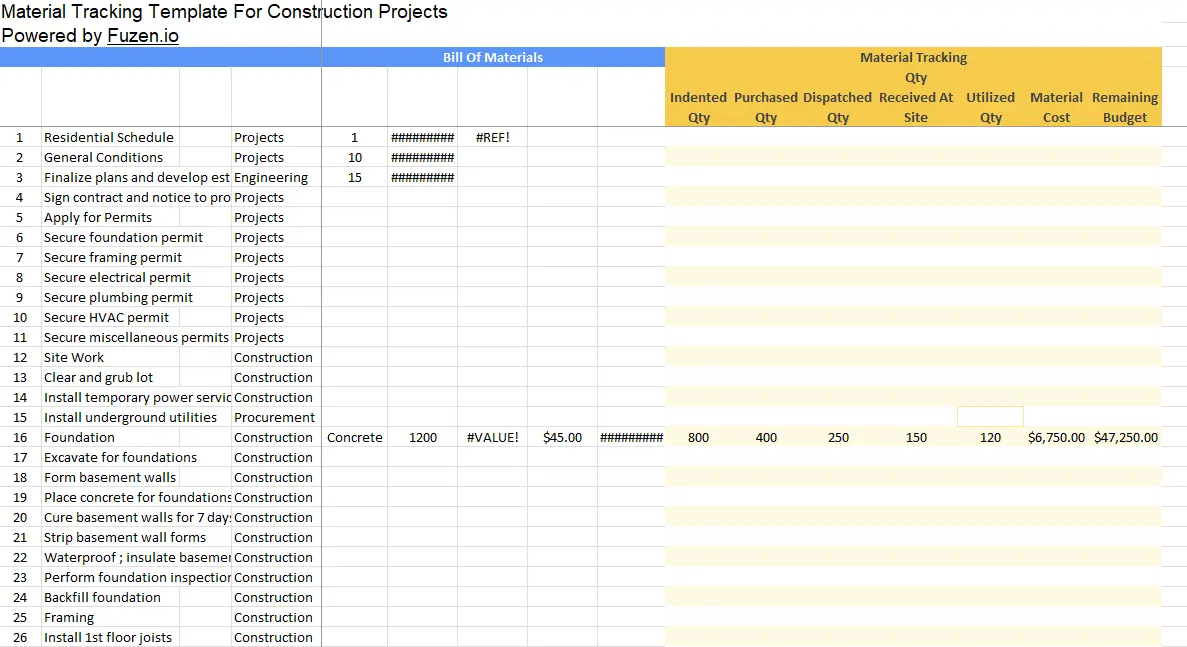
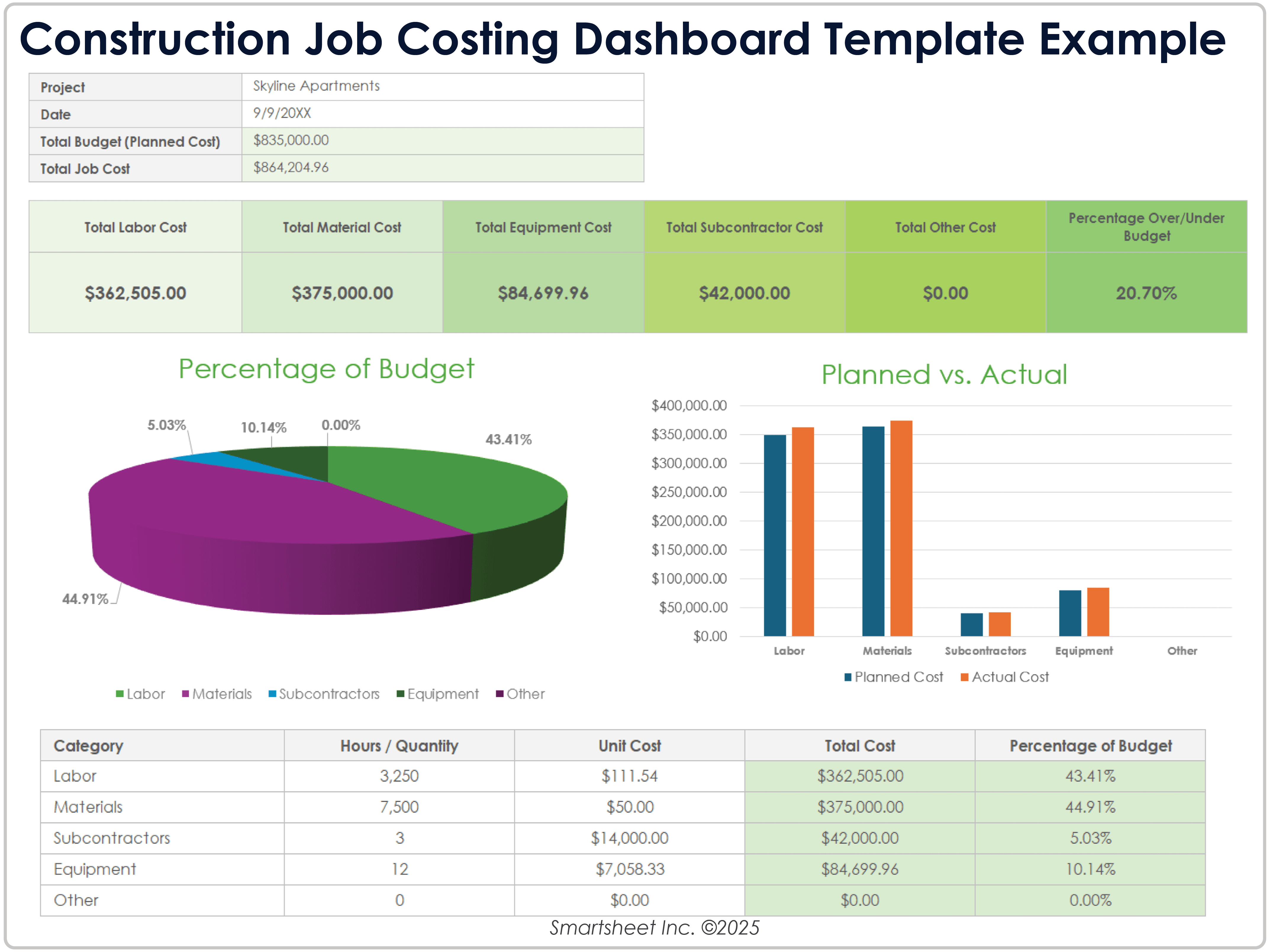
- Job costing gives you the breakdown: labour vs materials vs equipment vs overhead. That means budget can be broken properly and monitored.
- You can allocate resources (skilled labour, plant, subcontractors) based on cost performance, not gut feel.
- PeopleOps can ensure resource planning ties to cost-codes: which skillsets cost more, which crews have better productivity metrics.
Decision 3: On-Project Monitoring & Corrective Action
- Real-time (or frequent) cost tracking enables quick reaction: e.g., “Equipment rentals are 20% over budget, must renegotiate or stop”.
- You can trigger change orders, adjust scope, manage subcontractor claims proactively.
- For PeopleOps: workforce productivity and labour cost variances become visible, you can decide training, shift scheduling, overtime strategy.
Decision 4: Cash Flow & Financing
- Construction firms often struggle with cash flow: large outlays for materials, payroll, equipment ahead of payments. Job costing helps forecast cash-needs job by job.
- It also helps identify “work in progress” and “costs in excess of billings” to manage financing and working capital.
- PeopleOps: payroll timing, subcontractor payment terms, labour utilisation, all feed into cash-flow planning.
Decision 5: Strategic Growth & People Strategy
- Job cost data over multiple jobs reveals which types of contracts (residential vs commercial vs infra) yield better margin and cost control.
- PeopleOps can use that insight to build workforce strategy: hire more of the high-productivity crews, invest in training where cost + skill gaps appear.
- It also feeds into performance management for project managers and site leads: “You managed to keep overhead at X% vs company average Y%”.
How PeopleOps Can Support Strong Job Costing Culture
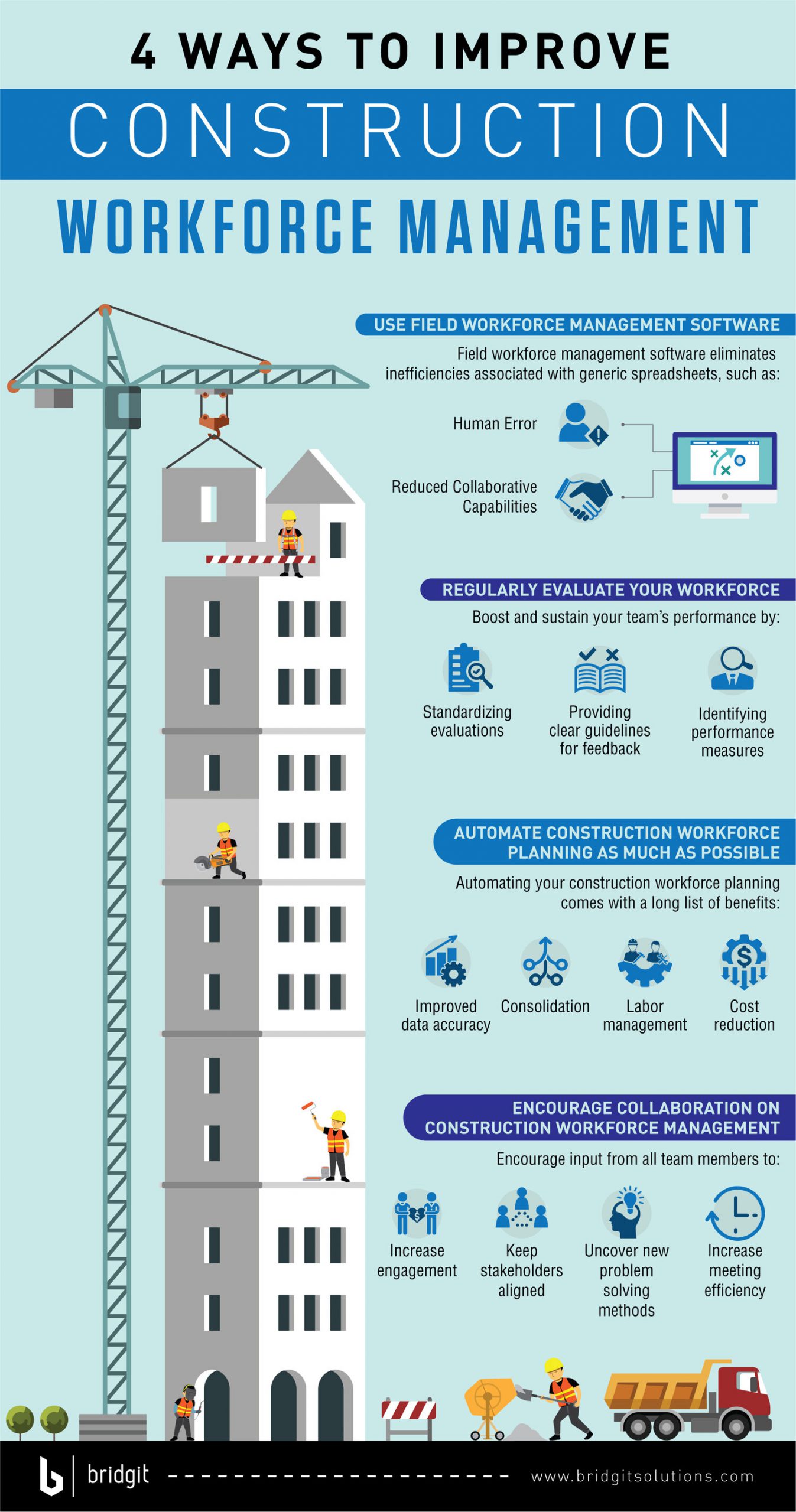


For construction firms wanting to get serious about job costing, PeopleOps (or HR / People-Operations) can play a vital role beyond just hiring and training. Here’s how:
1. Hiring and skill-mapping for cost effectiveness
- Hire crew leads not just for technical skill but also cost-awareness: do they understand how labour hours, downtime, equipment use drive cost?
- Map skills to cost-codes: If you know a more skilled welder costs more per hour but is more productive (less rework), job costing will show that trade-off. PeopleOps can help allocate the right people for the right cost-effectiveness mix.
2. Training and cost-awareness culture
- Train site teams on cost codes, job-costing logic, what “indirect cost” means on site. This helps convert cost data across the company.
- Encourage a culture of cost-visibility: site leads reporting variances, crews understanding that idle time, change orders, material wastage all hit cost lines.
3. Performance metrics and incentives
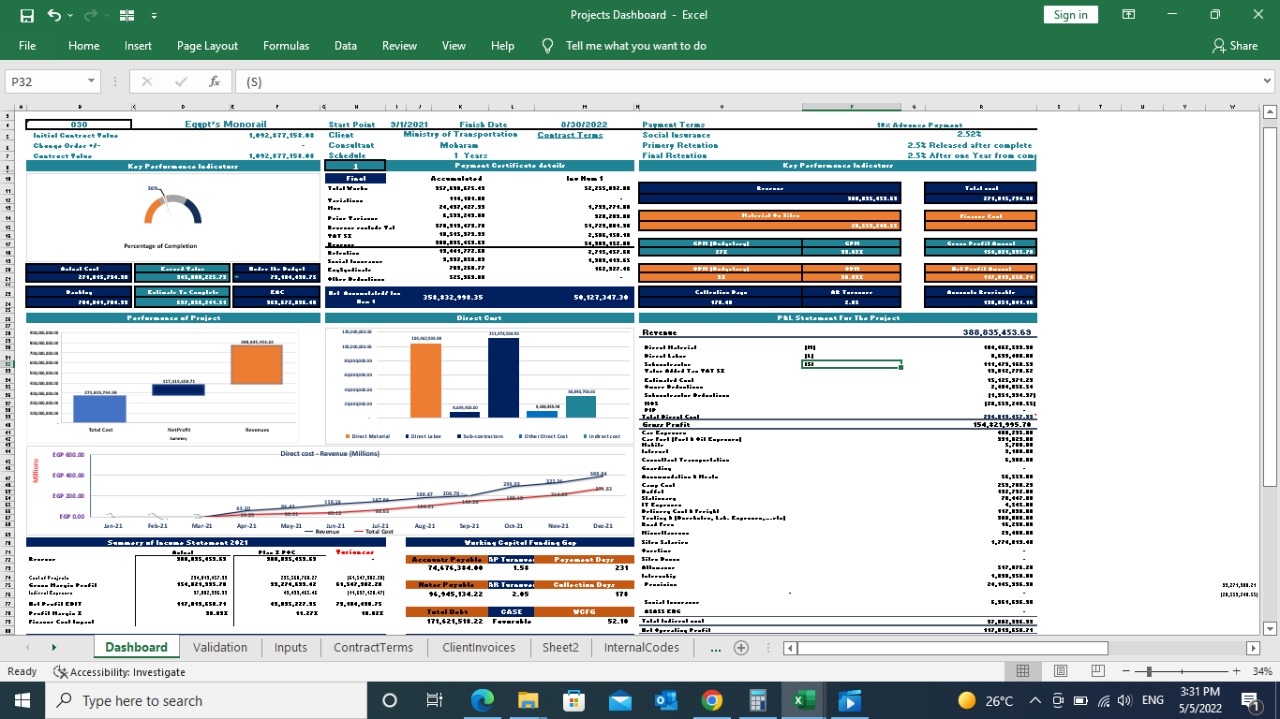
- Build performance dashboards tied to cost KPI’s: e.g., labour cost per unit, material wastage percentage, subcontractor cost variance.
- Align incentives: if a project lead reduces indirect cost by 5% vs benchmark, they share in savings. This flips cost control from a finance issue to a front-line operational metric.
4. Cross-functional coordination
- Finance + Operations + PeopleOps must speak the same “cost language”. Job costing data should be accessible and understandable to non-finance teams.
- PeopleOps can help enable this by creating simple training modules, dashboards, and cost-ownership forums (site-lead reviews, crew meetings).
- They also help integrate new tools (software, dashboards) and manage change-management for adopting job-costing disciplines.
5. Change order & labour planning governance
- Change orders often blow budgets. Job costing systems should flag change-orders as their own cost-object so firms can track impact. Procore+1
- PeopleOps can help ensure that labour allocations (overtime, subcontractor vs internal) are approved and captured in cost systems, reducing “untracked” cost creep.
Real-World Scenario: How Job Costing Saved Margin
Let’s take a realistic example of a contractor doing a mid-sized retail build-out in Mumbai where margin was under threat.
Situation:
The contractor budgeted ₹ 8 crore: labour ₹ 2 crore, materials ₹ 4 crore, equipment & rentals ₹ 50 lakh, indirects/overhead ₹ 1.5 crore. They had 6 crews across multiple trades.
Problem discovered via job costing:
- After month one they saw labour on one crew was 30% over budget (due to rework & casts done twice) and materials wastage in one trade (drywall off-cuts) was higher than expected.
- Equipment rental cost was already at 75% of monthly budget due to mis-scheduled standby time.
- Overhead allocation was creeping due to additional site administration required because subcontractor change-over took longer.
Action taken:
- Site lead did a root-cause review: rework due to design change, breakdown of some rented plant, and ineffective subcontractor coordination.
- They renegotiated with the rental supplier for standby waiver, tightened rework tracking, replaced the under-performing subcontractor.
- Labour overtime was reduced by true-up scheduling; leftover materials were tracked and reusable where possible.
- PeopleOps conducted a crew review, and re-assigned higher-productivity crew to that site, offering training on change-order adaptation.
Result:
By month two the variance was reversed: labour over-run dropped to under budget, equipment rentals were back on track, and waste reduced. The project ended at margin of ~8 % rather than anticipated 3 %. The data from that job was fed into next bids, improving their bid hit-rate.
Implementing Job Costing, Practical Steps
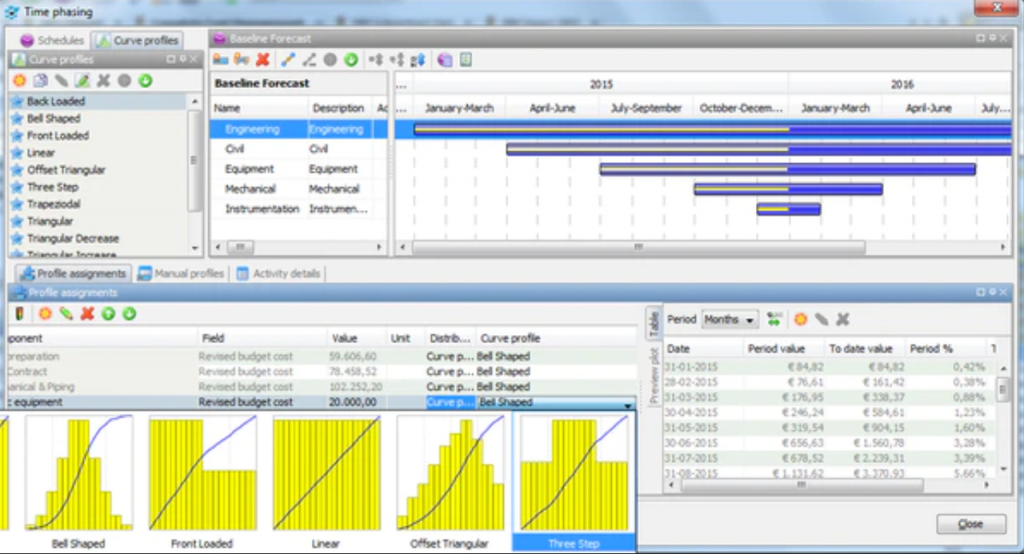
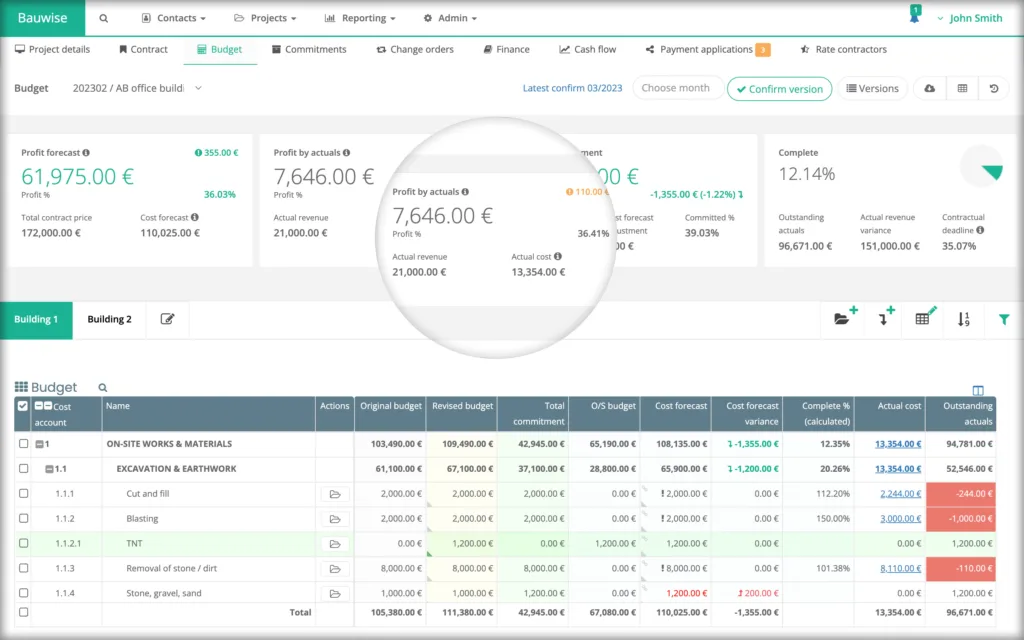
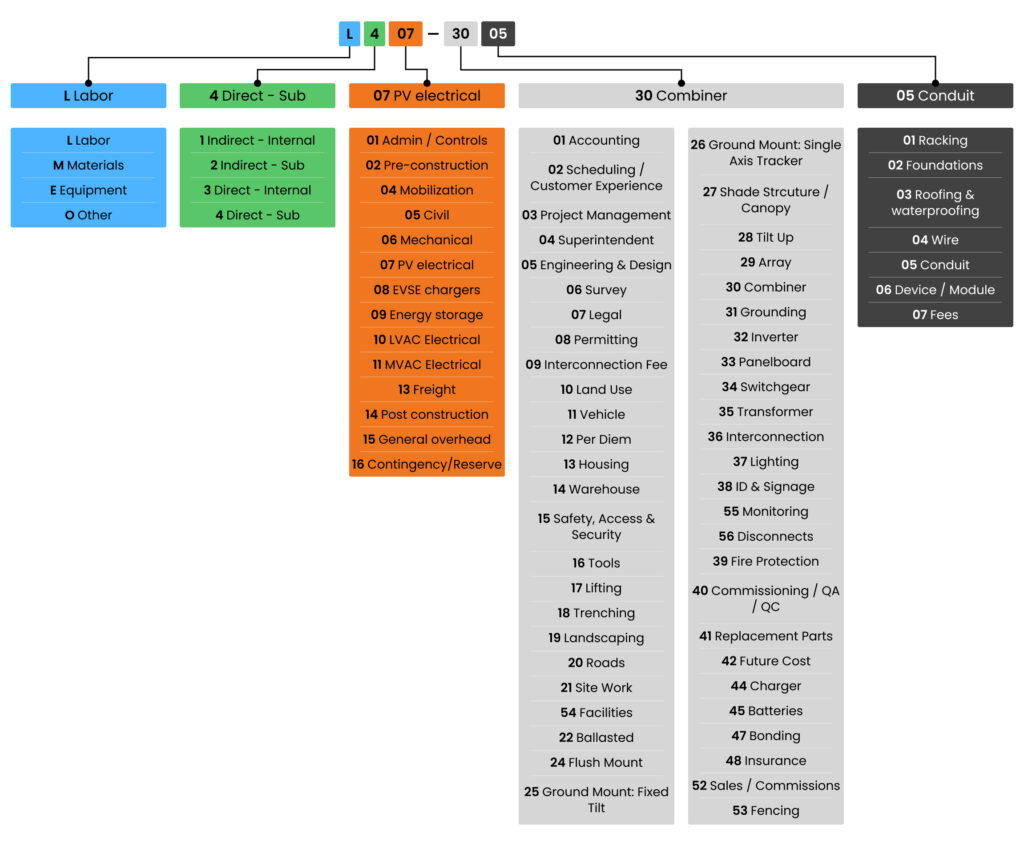
Step 1: Define cost-codes & breakdown structure
Set up a cost-code structure that reflects the business: trades, subcontractors, equipment, labour, indirects. Consistency across projects is key. Procore+1
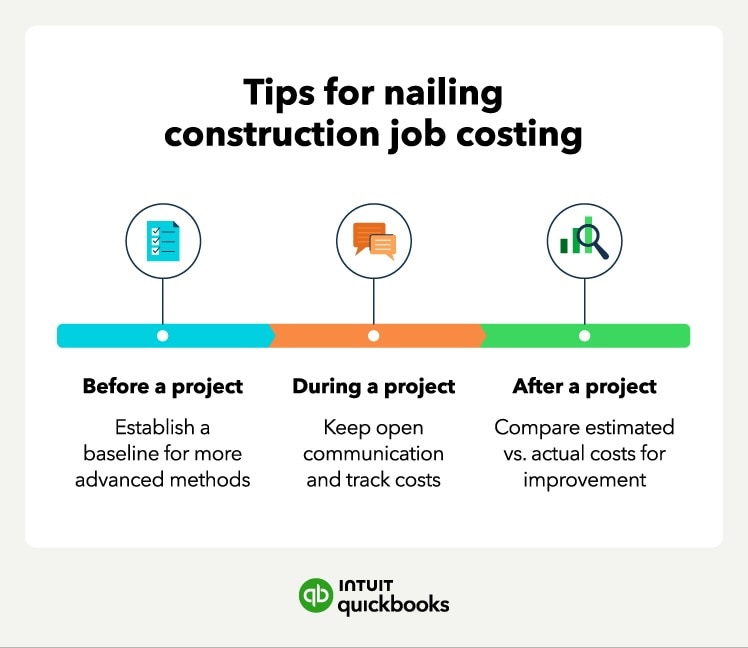
Step 2: Establish baseline budgets before contract start
Every job should start with an approved budget: direct/indirect cost lines, revenue, margin target. This becomes the benchmark. Deltek
Step 3: Track actual costs in near real-time
Labour hours, material usage, equipment hours, subcontractor invoices, change orders, all recorded against cost codes.
Timely capture is critical: “Effective job costing can identify indicators of financial stress” only if the data is current. cfma.org
Step 4: Compare actuals vs budget, analyse variances
Monthly (or more frequent) reports should flag cost overruns, variances by cost-category, trends. Use this to trigger corrective action.
Step 5: Feed learnings into future bids & decision-making
Use cost-history data to refine estimating, make decisions about which jobs to bid for, resource strategy, risk allocation.
Step 6: Integrate software & mobile tools
Modern construction firms use ERP / project accounting systems tailored for job costing. These help link field data, labour hours, equipment usage to cost codes. Procore
PeopleOps should ensure training, adoption and governance around these tools.
Step 7: Align PeopleOps, Finance and Operations
- PeopleOps: workforce cost-control, training, productivity metrics.
- Finance: job-cost data capture, reporting, margin analysis.
- Operations: execution, cost performance, resource allocation.
All three must collaborate around job costing as a business-wide lens.
Why Job Costing Drives Every Strategic Decision
Because for construction firms, projects are the business model and each project is unique. That uniqueness means generic financial-reporting (just total costs, total revenue) is insufficient. Job costing elevates the level of control and insight.
From bidding to staffing to equipment strategy to cash-flow to organisational growth, job costing provides the factual basis for decisions rather than intuition. In volatile cost-environments (material inflation, supply-chain delay, labour shortages), it becomes a risk-management tool.
When PeopleOps gets involved by embedding cost-awareness into hiring, training, performance management and cross-functional workflows, the firm builds not just a “finance function” but a cost-conscious culture. That culture enables better margin, better predictability and better strategic growth.
Final Thoughts
If you’re in construction finance, operations or PeopleOps, treat job costing not as a bookkeeping chore but as the heartbeat of your decision-making system.
When you know the true cost of each job, you are equipped to:
- Bid right, execute with discipline and finish profitably
- Monitor costs real-time, catch variances early, intervene
- Direct your people strategy (hiring, training, deployment) toward cost-effectiveness
- Gauge which segments, which crews, which equipment drive margin and which drag it
- Grow strategically, with data-backed insight rather than hope
At the end of the day: structures don’t just rise from steel and concrete, they rise from clarity in cost, discipline in execution and alignment across finance, operations and people.
Leave a Reply