
Introduction
Every organisation that engages subcontractors, whether in construction, IT services, facilities management or other third-party work, knows that managing risk and ensuring compliance are non-negotiable. Yet often, the compliance side gets treated as paperwork to tick off rather than a strategic lever for smooth operations, cost control, and stronger business partnerships.
In this article we explore three key tools in subcontractor compliance:
- Certificates of Insurance (COIs)
- Waivers (especially lien waivers or subrogation waivers)
- Pay Holds that link payment release to compliance status
We’ll explain why they matter, the pain points organisations face, and how a PeopleOps / vendor-compliance function can design systems that enforce compliance automatically, reducing manual effort and risk. We’ll use real-world style scenarios, plain language, and include industry keywords such as “risk transfer”, “additional insured”, “mechanics lien”, “document verification”, “subcontractor prequalification”, and “automation”.
1. Why these three compliance tools matter
1.1 Certificates of Insurance (COIs)
A certificate of insurance is often the first document requested from a subcontractor. It shows evidence that the subcontractor carries insurance coverage meeting project or contract requirements. For example: general liability, workers’ compensation, commercial auto, umbrella liability. Jones+1
The key reasons COIs matter:
- They help transfer risk: if the subcontractor causes property damage or bodily injury, you want their insurer involved rather than your organisation absorbing cost. PlusOne Solutions+1
- They signal validation of subcontractor financial strength/insurance discipline. myCOI | myCOI+1
- They are often required contractually by project owners, lenders, or insurance carriers of the “prime” contractor. lumberfi.com+1
But: a COI is only a summary. It doesn’t guarantee that endorsements (e.g., “additional insured”, “waiver of subrogation”) are in place, or that the policy covers every risk you care about. Jones
Image placeholder

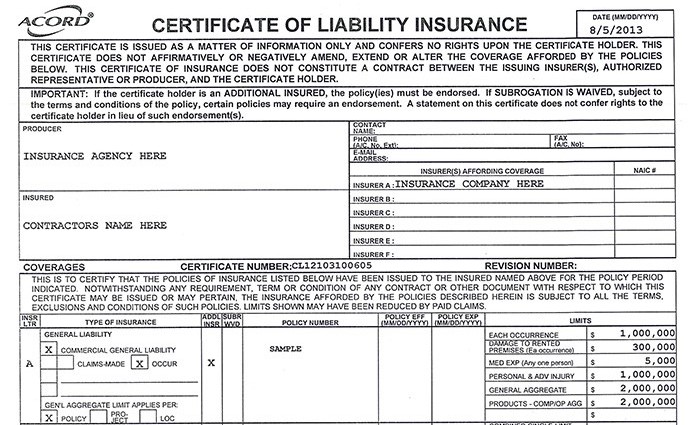
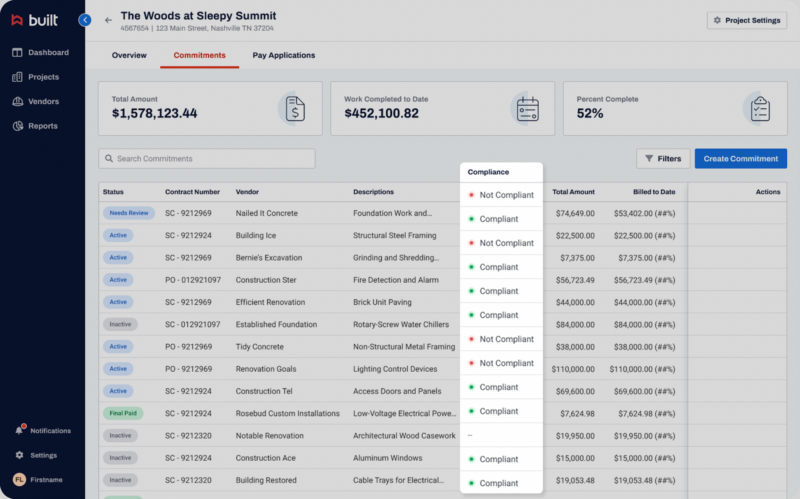
Description: sample COIs, compliance tracking dashboards, how to read relevant fields
1.2 Waivers (Lien Waivers, Subrogation Waivers)
In many industries, especially construction, subcontractors are required to sign waivers. The most common are lien waivers (mechanics liens) and waivers of subrogation.
- A mechanics lien waiver means that once the subcontractor has been paid, they waive the right to file a mechanics lien (a claim against property) for work performed. constrafor.com+1
- A waiver of subrogation means the subcontractor (or their insurer) gives up the right to pursue your organisation (or another party) to recoup losses after paying a claim. lumberfi.com
Why they matter:
- For the “prime” contractor or owner, a lien filed by a subcontractor can stall financing, affect title, create legal headaches. Having a valid waiver reduces that risk. constrafor.com
- For the subcontractor, signing waivers only once appropriate payment / conditions are met preserves their rights; if they sign too early (especially unconditional waivers) they may lose leverage. constrafor.com+1
- Integrating waivers into your compliance workflow links document collection with payment release, which drives better behaviour and protects all parties.
Image placeholder
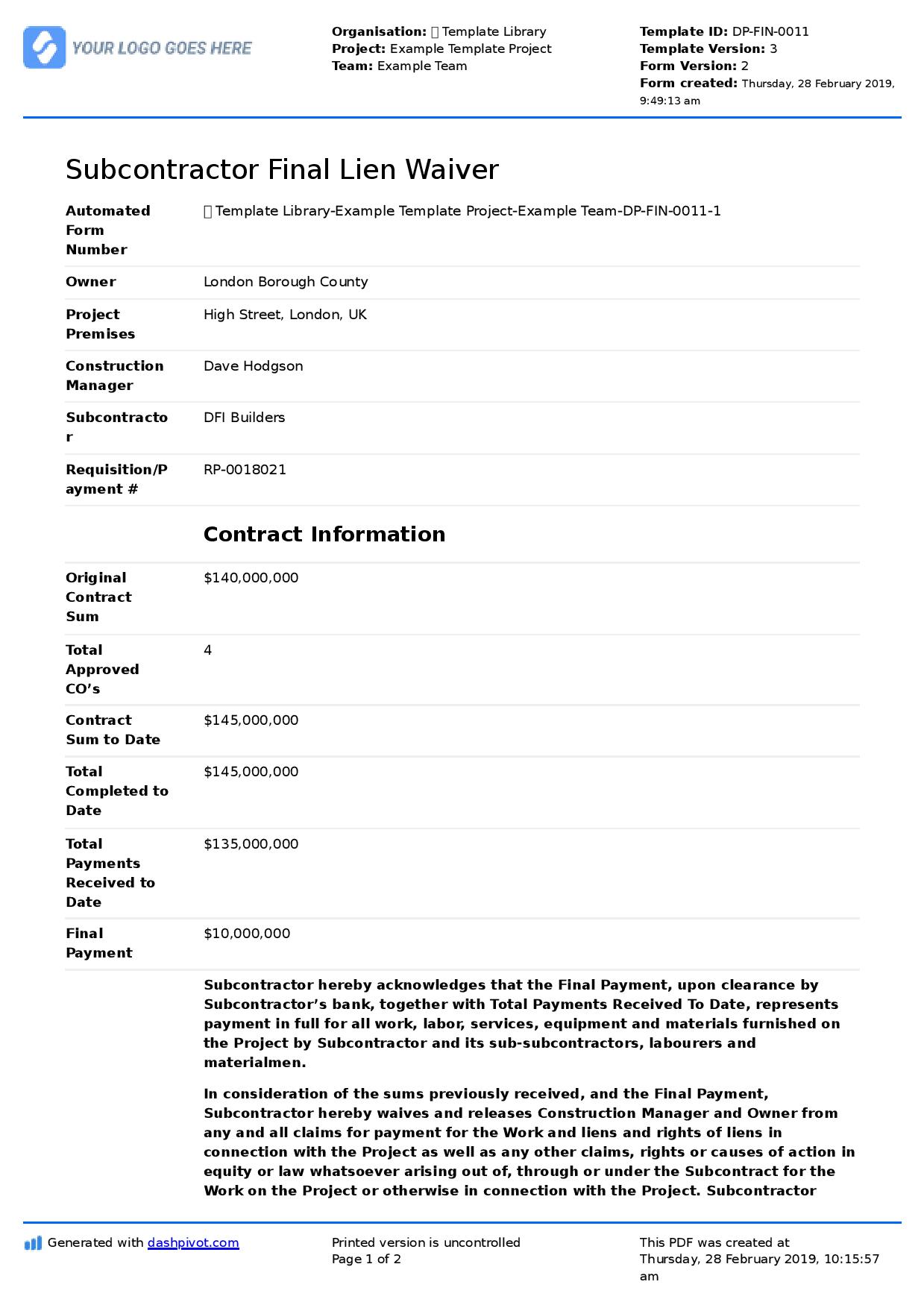
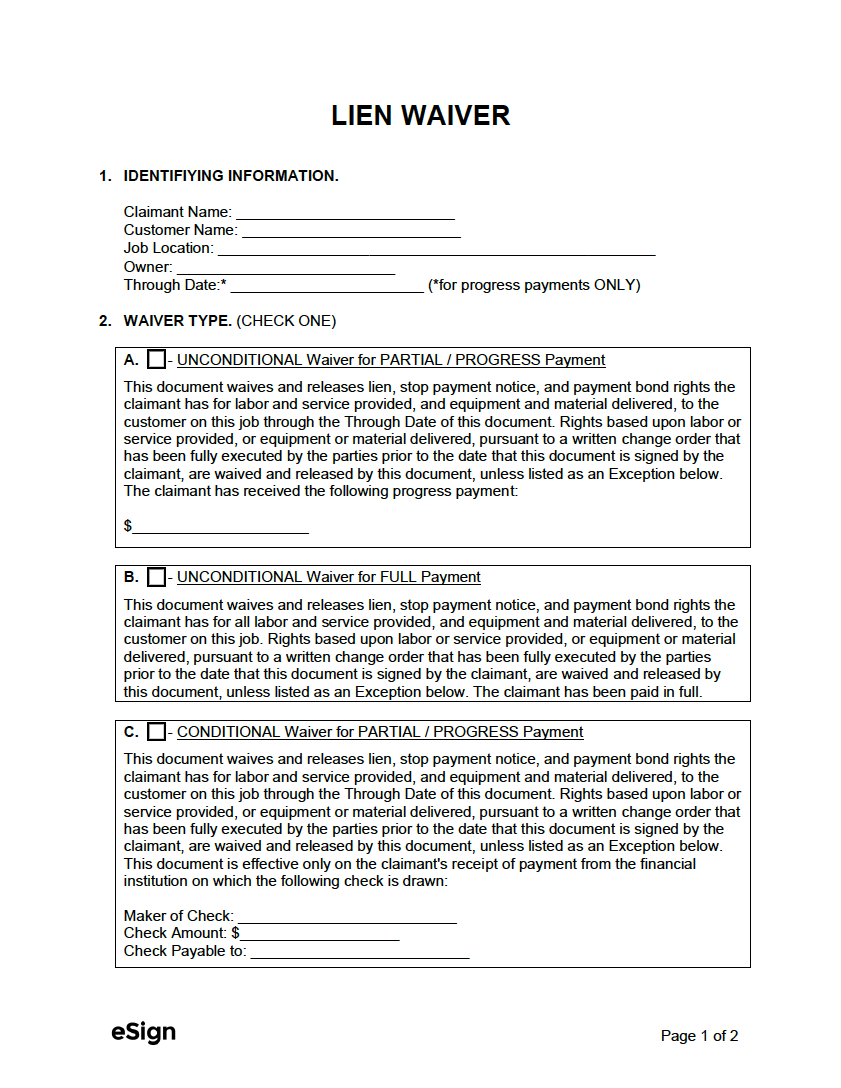

Description: lien waiver forms, subrogation waiver samples, workflow diagram
1.3 Pay Holds and Self-Enforcing Compliance
One of the most effective levers that PeopleOps (or vendor/compliance teams) can deploy is payment hold: i.e., withholding payment to a subcontractor until required compliance documents (COIs, waivers, licences, etc.) are submitted and verified.
Why this matters:
- It aligns financial incentive with compliance: subcontractors know that unless documents are in, payment won’t flow.
- It shifts compliance from “nice-to-have” to “must do before payment”.
- When integrated with digital systems, it can become self-enforcing: the system blocks payment release until the document status is “approved” or “verified”. For example: see how ERP systems handle “document compliance” and lien waiver status. Oracle Docs
- It reduces risk of non-compliance, delays, claims, and clean-out disputes.
Real-world scenario:
Imagine a general contractor hires a plumbing subcontractor. The subcontractor submits some work, invoices it. But the COI has expired (the expiration date passed) and the subcontractor hasn’t submitted a new one listing the GC as Additional Insured. Under your policy you have a pay hold in place until the compliance team uploads and verifies the new COI. Payment is withheld until verification is done. Result: you reduce your exposure and the subcontractor is incentivised to submit the right documents quickly.
2. Pain points organisations face
For PeopleOps / vendor compliance teams, working with multiple subcontractors can become a bottleneck. Some common pain points:
- Manual tracking and chasing
- Spreadsheets, email threads, physical files. Very high risk of error or lapse.
- COIs expire and get overlooked. myCOI | myCOI+1
- Waivers may be missing, or the wrong type (e.g., unconditional rather than conditional) signed too early.
- Lack of visibility
- Do you know which subcontractors are non-compliant today?
- Do you know which projects have missing documentation?
- Payment-flow misalignment
- If payment is released before compliance is confirmed, you lose leverage and increase risk.
- Subcontractors may/probably will expect payment and exert pressure; if your system doesn’t tie compliance to payment, you may end up paying late, dealing with claims, or renegotiating.
- Document validity & endorsement issues
- A COI may show coverage but not endorsements like “Additional Insured” or “Waiver of Subrogation”. Jones
- Lien waiver forms may not be properly signed, filled, or referenced to the correct payment period.
- Project delays and cost risk
- If a subcontractor works without proper insurance or fails to execute a waiver and then there’s an incident, your company or the project owner may face cost, delay, insurance premium increases, or litigation.
- Example: Filing of a mechanics lien after payment claimed due to missing waiver.
3. How PeopleOps can design a self-enforcing compliance framework
Here’s a roadmap of what a robust compliance framework looks like, tuned for PeopleOps teams who interface between business leadership, project operations and vendor/subcontractor management.
3.1 Define the compliance “rulebook”
Start by defining what documentation is required for each class of subcontractor:
- COI, minimum coverages, limits, required endorsements (Additional Insured, Waiver of Subrogation)
- Waivers, what type (conditional/unconditional), when to collect (progress payment vs final payment)
- Other documents: licences, safety certifications, background checks, site access permits
- Payment hold criteria: what triggers a hold (missing COI? expired COI? missing waiver?)
Make sure contracts with subcontractors reference these requirements clearly.
3.2 Pre-qualification & onboarding
- Before a subcontractor begins work, they must submit their COI and initial required documentation.
- Systematically verify: certificate holder name, coverage types, effective/expiry dates, endorsements. Use a checklist. Jones+1
- For waiver requirements: decide when each waiver needs to be submitted (e.g., before invoicing, before final payment) and whether it’s conditional or unconditional.
3.3 Integration with payment/finance workflow
- Establish a pay-hold workflow: finance/Accounts Payable should be keyed into compliance status. If documentation is missing or expired, payment is blocked.
- Automate notifications: subcontractor receives reminder if COI is about to expire, or waiver is pending. Use compliance software. Superdocu
- Link payments to compliance milestones: e.g., “Invoice + current COI + signed waiver = approval for payment”.
3.4 Monitoring, renewal, and expiration tracking
- Maintain a compliance dashboard: track status of each subcontractor (compliant vs non-compliant).
- Set calendar or automated alerts: COIs expire, waivers due; system flags and sends reminders.
- Audit periodically: ensure endorsements are valid, waiver forms are correctly filled and signed.
3.5 Mitigating non-compliance risk
Even with the best processes, non-compliance may occur. Some mitigation steps:
- If COI is missing/expired, suspend work until resolved (if contractual terms allow).
- If waiver is missing and payment is requested, hold payment and resolve documentation before release.
- Document incidents and enforce remedies: e.g., subcontractor must rectify missing documents or face contract termination.
3.6 Real-world story
Let’s say a PeopleOps team at a mid-sized construction firm handles 120 subcontractors across multiple projects. Historically they’d tracked COIs via spreadsheets; many expired COIs slipped through. One time a subcontractor’s coverage lapsed, an accident occurred, and the general contractor ended up as named insured with no valid policy. The result: a multi-million-rupee claim and insurance premium hike next year.
After establishing a self-enforcing pay-hold process, the PeopleOps team implemented a compliance platform, set up automatic COI expiry alerts, required waiver submission linked to payment release, and created a dashboard showing “compliance score” per subcontractor. Over a year, expired-COI incidents dropped by 85 %, payment delays dropped by 40 % (as subcontractors responded faster), and risk exposure was markedly reduced.
4. Key benefits for business + technical stakeholders
When you build this framework, both business leaders and technical teams win.
- Business/Operations: smoother project execution, fewer delays, lower risk of claims, stronger subcontractor relationships, better cash-flow control.
- PeopleOps/Compliance: less manual chasing, clearer workflows, better metrics and dashboards, scalable process.
- Finance/Accounts Payable: predictable payment processes, fewer surprises, better alignment of compliance and payment.
- Risk Management/Insurance: improved insurance claims handling, better risk transfer, lower likelihood of uncovered incidents.
5. Best practices & industry trends
- Use dedicated compliance software: The market has multiple tools that automate document collection, validation, and expiry tracking. Superdocu
- Link compliance to finance systems: As discussed earlier, tying document status to pay hold is a trend enabling “self-enforcement”.
- Standardise waiver types and timing: Especially in construction, ensure correct waiver type is collected (conditional/unconditional) and at the right moment. constrafor.com
- Ensure endorsements beyond COI: Never assume a COI alone suffices, check whether Additional Insured and Waiver of Subrogation status are included. Jones
- Maintain audit trail and documentation retention: For insurance audits, legal claims it’s essential to keep records for years. lumberfi.com
- Educate subcontractors: Make your vendors/subcontractors aware that compliance documents are non-negotiable, linked to payment, and form part of the service delivery expectation.
6. Role for PeopleOps: Your action plan
Here’s a quick checklist that a PeopleOps team can use to roll out this compliance framework:
- Map all subcontractor-types and the required documents for each (COI, waiver, licence, safety certificate).
- Update contracts and vendor agreements to include documentation requirements, pay holds, and audit rights.
- Select and deploy a compliance tracking tool/platform or build process inside existing systems.
- Configure automated alerts for expirations and document submission.
- Collaborate with Finance/Accounts Payable to integrate compliance status as a gate for payment release.
- Build dashboard metrics: e.g., % of subcontractors compliant, # of payments withheld for missing docs, # of expired COIs.
- Conduct periodic audit and training: ensure the process is followed, update as regulatory or contract requirements change.
- Communicate clearly with subcontractors: send pre-onboarding guidance, set expectations, provide portal/training for document upload.
Conclusion
Subcontractor compliance isn’t just a “nice to have” box-checking exercise; it’s a strategic lever that protects your organisation from risk, ensures smoother project execution, and aligns people-ops, finance, and operations. By focusing on COIs, waivers, and payment holds and building a self-enforcing framework around them, you can elevate vendor/subcontractor management from “paper chase” to a value-add function.
For PeopleOps teams working at the intersection of business and technical operations, this represents an opportunity: implement systems, automate processes, surface metrics, reduce friction, and build trust across stakeholders. The reward is fewer surprises, stronger vendor relationships, and a lower risk profile for your organisation.
If you’d like a template compliance requirement checklist, waiver form sample, or vendor-portal workflow example, we can provide one. Let’s make subcontractor compliance a differentiator, not a headache.
Leave a Reply