

In today’s People Ops world, where the overlap between operations, construction finance, and human/contractor management is growing fast, mastering progress billing with retainage is a real differentiator. Yet many teams still struggle because they treat the billing process like a spreadsheet exercise instead of a strategic workflow.
In this blog we’ll walk through:
- What progress billing & retainage mean in the context of the American Institute of Architects (AIA) forms G702/G703,
- The pain points and real-world scenarios where things go off track, and
- How a smarter PeopleOps approach (and tools) can help your organisation apply these correctly without the spreadsheet agony.
1. What is Progress Billing with Retainage?
Progress Billing
Progress billing means invoicing the client or owner based on work completed to date, rather than waiting for 100% completion. It improves cash-flow for contractors and keeps the owner informed of progress. Foundation Software+2Sage+2
Retainage
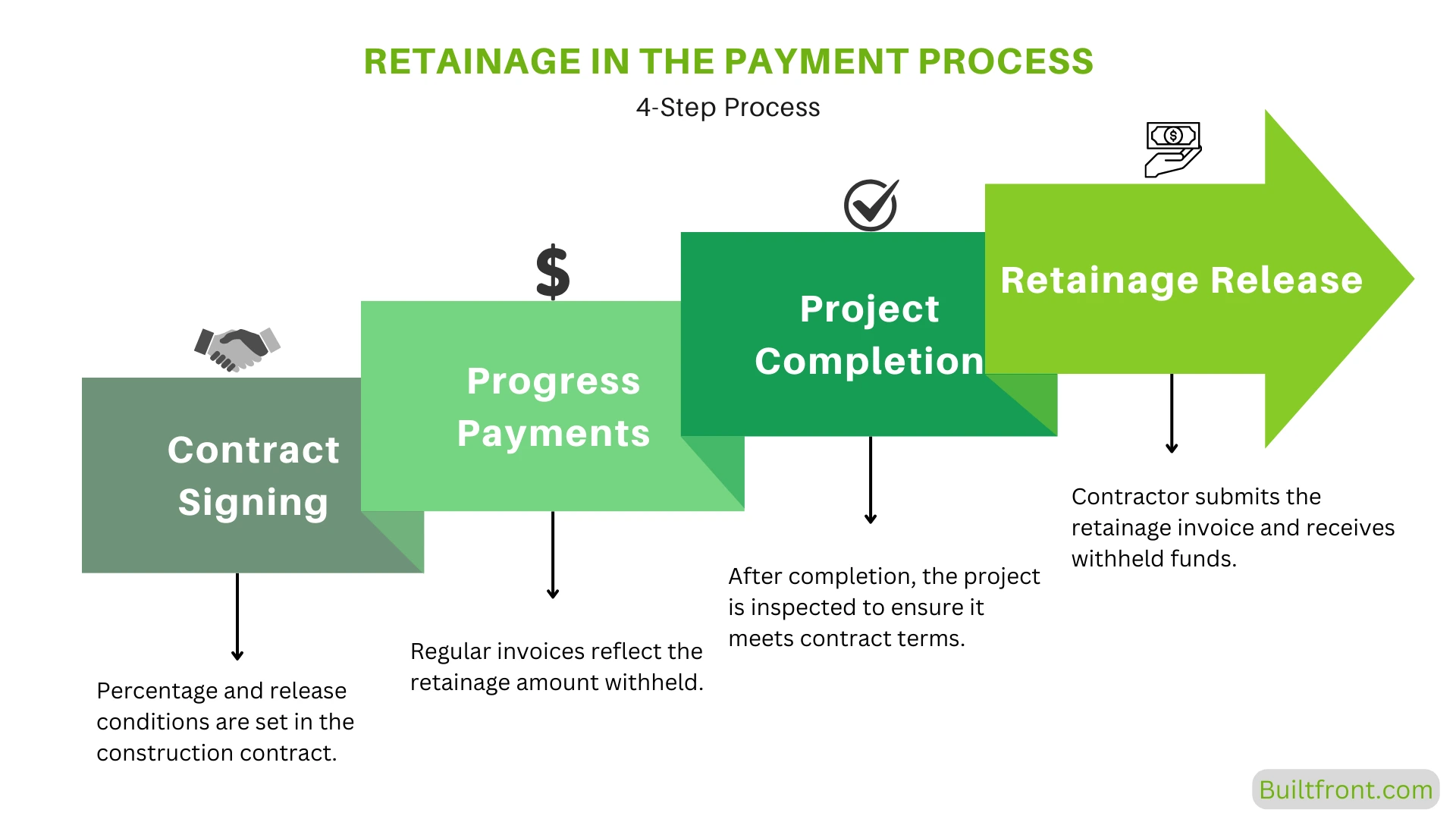
Retainage (also called “retention”) is the portion of a payment withheld by the owner (or general contractor) until the project (or a portion of it) is satisfactorily completed. Typically 5-10% but may vary. Levelset+2NetSuite+2
Why is it used?
- Protects the owner: ensures work gets finished, corrective items addressed. Milestone Information Solutions+1
- Protects contractors/subcontractors: if used properly it becomes a predictable part of earning revenue rather than a surprise.
AIA G702 / G703
- G702 (“Application & Certificate for Payment”) is the summary form submitted by the contractor. It includes original contract amount, change orders, work completed to date, retainage, prior payments, and current payment requested. Flashtract+2Procore+2
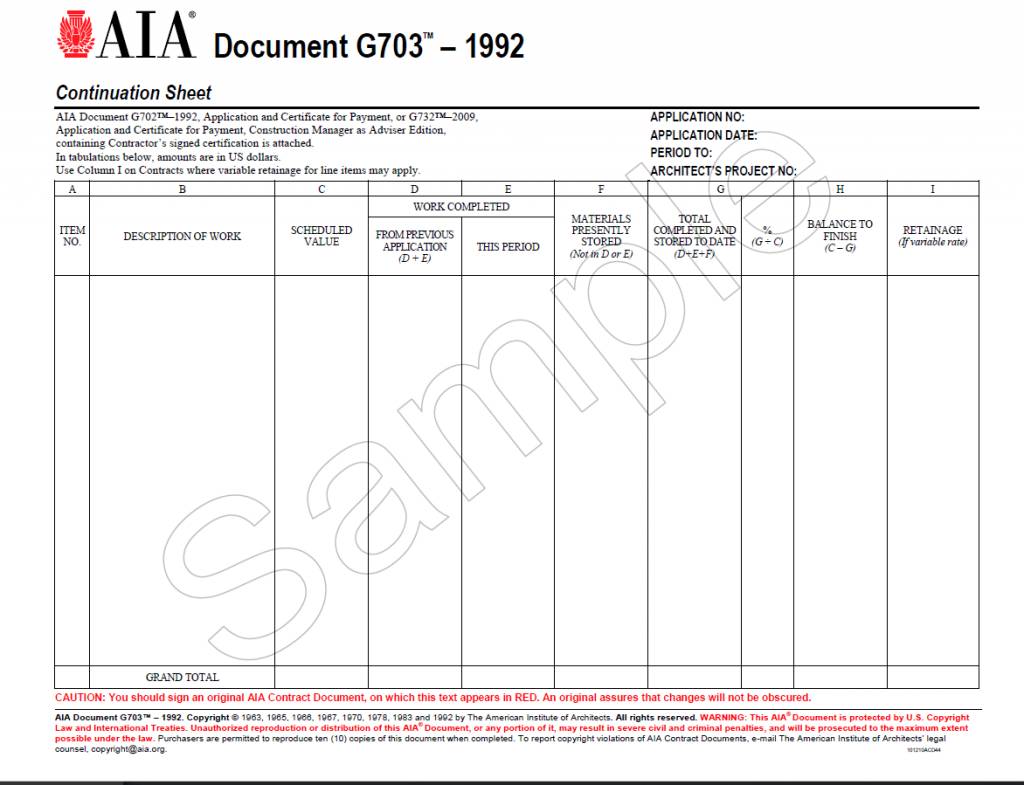
- G703 (“Continuation Sheet”) works alongside G702: it breaks down by line item (Schedule of Values) the work completed this period, materials stored, retained amounts, etc. Procore+1
Together, these forms establish a standardized direction for progress billing with retainage.
2. Common Pain Points & Why PeopleOps Should Care
Pain Point #1 – Spreadsheet Overload & Manual Errors
Many firms still use Excel to track Schedule of Values (SOV), work-in-progress, retainage, change orders, and then translate those numbers into G702/G703 manually. That creates:
- Mistakes in math or versioning. Trimble
- Time wasted in reconciling.
- Disjointed communication between project teams (site), finance, and people/contractors.
PeopleOps implication: The contractor workforce, subcontractor links, payroll, labour costing etc often feed into these numbers. If billing is late or inaccurate, it impacts cash flow, trust and workforce morale.
Pain Point #2 – Retainage Mis-Calculation or Untracked
- Retainage may be fixed or variable (e.g., 10% then drops to 5% after certain milestone). Levelset+1
- Some firms don’t account for retainage on stored materials vs work completed. G702 has separate lines. Flashtract+1
- If the contractor forgets to bill for retainage release at final pay‐app, they lose money.
PeopleOps implication: Subcontractor teams may think they’ve “done their work” and expect payment but retainage holds that back until final certification. Lack of clarity leads to disputes, delays, and unhappy workers.
Pain Point #3 – Change Orders & Scope Creep
Each pay application must consider change orders (additions/deductions). Incorrect treatment means G702 line 2 is wrong. Planyard+1
Worse: if change orders are unapproved, billing can be rejected and cause cash-flow disruption.
PeopleOps implication: The human side of contract changes (who did what work, what was approved, variations) often lives outside the finance system. Coordinating contract management, site operations and billing is a PeopleOps challenge.
Pain Point #4 – Lack of Real-Time Visibility & Delayed Decisions
Construction is fast moving. By the time the spreadsheet is updated, the site may be further ahead, work may be stored materials, or retainage milestones may have changed.
PeopleOps implication: Without real-time data, PeopleOps cannot forecast workforce payables, subcontractor payments, or anticipate retention-release obligations. Cash-flow risk escalates.
3. Real-World Scenario: How Things Go Wrong
Let’s walk through a scenario to illustrate the havoc of poor process, and then contrast with a good one.
Scenario A – The Spreadsheet Trap
Contractor “BuildRight Co.” has a $2 million contract, 10% retainage. They track everything in Excel.
- Month 1: Work completed $200k. They forgot to apply retainage correctly (should deduct $20k). They bill for $200k and expect payment. Owner rejects parts because stored materials line not correct. Payment delayed by 4 weeks.
- Month 3: There have been change orders (+$100k approved) but site team failed to notify billing team. The G702 line 2 is not updated. Their application is rejected again.
- At project close: They believe they’ve earned the final retainage release but forgotten to submit final G702 with retainage line blank (special case). The owner refuses to release retainage because paperwork not complete.
- Result: Subcontractors unpaid, site crew morale low, admin overhead high, cash flow stressed.
Scenario B – The Optimised Process
Contractor “ConstructOps Ltd.” has same contract, but uses integrated billing/workflow tools and PeopleOps coordination.
- From Day 1: SOV established, change order workflow set up, billing schedule aligned.
- Retainage rules set up (10% until 50% complete, then step-down to 5%). Everyone knows this in advance.
- At each billing cycle: site team uploads stored materials receipts, work completed values; PeopleOps & finance validate G703 line items automatically; G702 generated automatically with proper retainage lines.
- At substantial completion: final retainage release event triggered, notification to site, owner, and PeopleOps. Subcontractors paid promptly.
- Result: Smooth cash-flow, fewer disputes, workforce morale steady, admin overhead much lower.
4. How PeopleOps Can Help Beyond Just Form Filling
As a PeopleOps leader (or part of an operations/financial interface team), you can influence process, technology and culture. Here’s how.
4.1 Set Up the Right Foundations
- Ensure the Schedule of Values (SOV) is established early, agreed-upon, and tied into both billing and people/contractor workflows.
- Clarify retainage terms in contracts: % withheld, when step-down happens, conditions for release. (Fixed vs variable retainage) NetSuite
- Define clear owner/contractor/subcontractor roles for who inputs what (site team, contract admin, billing team).
- Establish clear change‐order notification workflows so billing isn’t blindsided by scope changes.
4.2 Use Technology to Remove Spreadsheet Pain
- Move away from disparate spreadsheets: adopt systems (or modules) that link SOV, progress tracking, stored materials, and billing. Not just finance but site & PeopleOps. Deltek
- Implement dashboards that track “work completed to date”, “retainage withheld”, “retainage to release”, “change orders pending”.
- Automate errors and alerts: e.g., if G702 line 5 (retainage) doesn’t match rules, trigger review.
- Link PeopleOps functions (subcontractor payments, workforce payroll, retention releases) to billing system so everyone sees the cash-flow implications.
4.3 Align People, Culture & Communication
- Educate site/operational teams on what implications billing/retainage have: stored materials, work completed by percentage, payment approvals.
- Foster collaboration: finance and PeopleOps should hold billing “pre-check” sessions before G702 submission.
- Communicate subcontractor payment timelines: If retainage is held, ensure subcontractors know when they’ll be paid to maintain trust.
- Use the billing cycle as a rhythm for operational meetings: progress review, change orders, billing readiness, and PeopleOps implications (payments, workforce payables).
4.4 Monitor Retainage Risks
- Track how much retainage is tied up at any given time. High retainage = higher risk for subcontractor cash flow. Milestone Information Solutions
- Monitor jurisdictions/regulations: some states limit how much retainage can be withheld or when it must be released. Deltek
- Be proactive about release: people/operations teams should prepare punch list closure, inspections, lien waivers etc so retainage release isn’t delayed.
5. Your 6-Step Checklist for Smoother G702/G703 Billing with Retainage
| Step | What to Do | Why It Matters |
|---|---|---|
| 1. Establish SOV & baseline | Create Schedule of Values aligned with contract, site deliverables, billing cycles. | Foundation for G703 line items and progress billing. |
| 2. Define retainage rules | Contract defines percentage(s), when step-down, what triggers release. | Removes surprises and disputes later. |
| 3. Track progress & stored materials | Site team logs work completed, material deliveries, status. | Enables accurate G703 col D/E/F and hence G702 line 4. |
| 4. Maintain change-order log | Every approved CO is logged, amount updated, communicated to billing. | Ensures G702 line 2 is accurate, avoids rejected applications. |
| 5. Automate billing submission | Use software/tools to generate G703 + auto-populate G702, check retainage formula. | Reduces manual error and admin burden. |
| 6. Manage retainage release | At milestone or substantial completion: trigger release of withheld funds, final billing, and subcontractor payouts. | Wraps cash-flow loop, sustains workforce trust. |
6. Why PeopleOps Should Care, Business & Technical Bridges
- Cash Flow & Workforce Stability: Timely payment (including retainage release) keeps subcontractors and labour teams happy. Delays cost more than just financial; they cost trust.
- Risk Management: Unreleased retainage, mismatches in billing, or disputed pay apps can escalate into liens, disputes or project delays. PeopleOps must monitor human/contractor risks just as financial ones.
- Operational Efficiency: Fewer billing rejections = less time chasing adjustments, fewer interruptions. That means site teams, contractors and admin teams can focus on delivering, not fixing.
- Data & Analytics: With integrated workflows you collect data (progress %, retained amounts, change-order impact) which helps forecasting, resource planning and strategic decisions.
- Scalability: As your organisation grows (more projects, more subcontractors), the “spreadsheet-based” approach breaks. PeopleOps strategy plus tool adoption becomes essential.
7. Summary & Call to Action
Progress billing using AIA G702/G703 with retainage is not just a finance exercise, it’s a cross-functional workflow that links site operations, contract management, subcontractor/ labour payments and PeopleOps strategy. The pain points, manual spreadsheets, last-minute retainage release, change-order confusion, delayed payments are solvable.
Here’s what you can do this week:
- Run a quick inventory: How many projects currently use spreadsheets for G702/G703?
- Identify one project where retainage has been delayed or payment was rejected. Ask: why?
- Convene a mini-workshop: Site + Finance + PeopleOps + Contracts. Map out the workflow end-to-end: SOV → progress tracking → G703 → G702 → payment → retainage release.
- Pilot a billing tool (or workflow automation) for one project to reduce manual steps.
- Create a dashboard for PeopleOps: “Retainage Out Standing”, “Pay Apps Rejected”, “Subcontractor Payment Delays”.
By doing these, you move from reactive billing chaos to proactive, integrated PeopleOps-driven financial workflows.
Leave a Reply